• 文献检索
  • 文档翻译
  • 深度研究
  • 学术资讯
  • Suppr Zotero 插件Zotero 插件
  • 邀请有礼
  • 套餐&价格
  • 历史记录
应用&插件
Suppr Zotero 插件Zotero 插件浏览器插件Mac 客户端Windows 客户端微信小程序
定价
高级版会员购买积分包购买API积分包
服务
文献检索文档翻译深度研究API 文档MCP 服务
关于我们
关于 Suppr公司介绍联系我们用户协议隐私条款
关注我们

Suppr 超能文献

核心技术专利:CN118964589B侵权必究
粤ICP备2023148730 号-1Suppr @ 2026

文献检索

告别复杂PubMed语法,用中文像聊天一样搜索,搜遍4000万医学文献。AI智能推荐,让科研检索更轻松。

立即免费搜索

文件翻译

保留排版,准确专业,支持PDF/Word/PPT等文件格式,支持 12+语言互译。

免费翻译文档

深度研究

AI帮你快速写综述,25分钟生成高质量综述,智能提取关键信息,辅助科研写作。

立即免费体验

从慢速冷却到低温储存的转变温度对冷冻保存的哺乳动物细胞的最佳恢复至关重要。

The transfer temperature from slow cooling to cryogenic storage is critical for optimal recovery of cryopreserved mammalian cells.

机构信息

Cytiva, Cambridge, United Kingdom.

INRAE, AgroParisTech, UMR SayFood, Université Paris-Saclay, Thiverval-Grignon, France.

出版信息

PLoS One. 2021 Nov 16;16(11):e0259571. doi: 10.1371/journal.pone.0259571. eCollection 2021.

DOI:10.1371/journal.pone.0259571
PMID:34784361
原文链接:https://pmc.ncbi.nlm.nih.gov/articles/PMC8594829/
Abstract

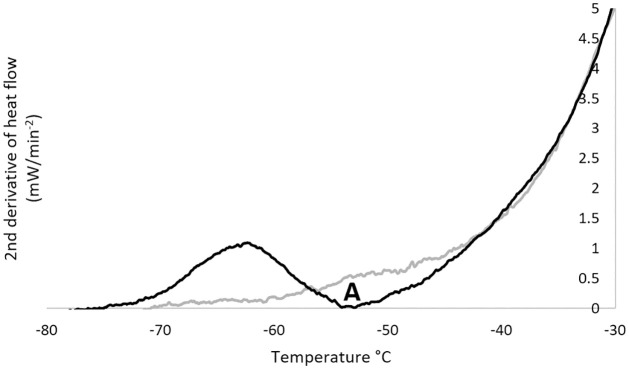
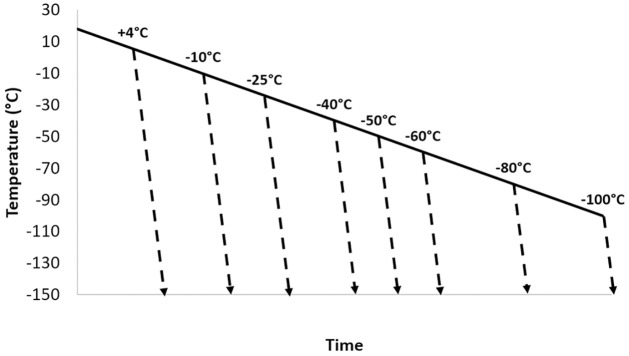
Cryopreservation is a key step for the effective delivery of many cell therapies and for the maintenance of biological materials for research. The preservation process must be carefully controlled to ensure maximum, post-thaw recovery using cooling rates slow enough to allow time for cells to cryodehydrate sufficiently to avoid lethal intracellular ice. This study focuses on determining the temperature necessary at the end of controlled slow cooling before transfer to cryogenic storage which ensures optimal recovery of the processed cell samples. Using nucleated, mammalian cell lines derived from liver (HepG2), ovary (CHO) and bone tissue (MG63) this study has shown that cooling must be controlled to -40°C before transfer to long term storage to ensure optimal cell recovery. No further advantage was seen by controlling cooling to lower temperatures. These results are consistent with collected differential scanning calorimetry data, that indicated the cells underwent an intracellular, colloidal glass transition between -49 and -59°C (Tg'i) in the presence of the cryoprotective agent dimethyl sulfoxide (DMSO). The glass forms at the point of maximum cryodehydration and no further cellular dehydration is possible. At this point the risk of lethal intracellular ice forming on transfer to ultra-low temperature storage is eliminated. In practice it may not be necessary to continue slow cooling to below this temperature as optimal recovery at -40°C indicates that the cells have become sufficiently dehydrated to avoid further, significant damage when transferred into ultra-low temperature storage.

摘要

冷冻保存是许多细胞疗法有效传递和生物材料用于研究的关键步骤。为了确保最大限度地提高冻存后复苏率,必须谨慎控制保存过程,使用足够缓慢的冷却速率,以便细胞有足够的时间进行充分的抗冷冻脱水,从而避免致命的细胞内冰形成。本研究重点关注确定在转移到低温储存之前,受控缓慢冷却结束时所需的温度,以确保加工细胞样品的最佳恢复。使用源自肝脏(HepG2)、卵巢(CHO)和骨组织(MG63)的有核哺乳动物细胞系,本研究表明,在转移到长期储存之前,必须将冷却控制在-40°C 以下,以确保最佳的细胞恢复。进一步将冷却控制到更低的温度并没有带来进一步的优势。这些结果与收集的差示扫描量热法数据一致,表明在含有冷冻保护剂二甲亚砜(DMSO)的情况下,细胞在-49 至-59°C(Tg'i)之间经历了细胞内胶体玻璃转变。玻璃在最大抗冷冻脱水点形成,此时细胞不可能进一步脱水。此时,转移到超低温度储存时形成致命细胞内冰的风险已消除。在实践中,可能没有必要将缓慢冷却继续到低于此温度,因为在-40°C 时的最佳恢复表明,细胞已经足够脱水,从而在转移到超低温度储存时避免进一步的显著损伤。
https://cdn.ncbi.nlm.nih.gov/pmc/blobs/4db5/8594829/d54d5341c541/pone.0259571.g004.jpg
https://cdn.ncbi.nlm.nih.gov/pmc/blobs/4db5/8594829/3d26fa46165c/pone.0259571.g001.jpg
https://cdn.ncbi.nlm.nih.gov/pmc/blobs/4db5/8594829/73ea114d5f5c/pone.0259571.g002.jpg
https://cdn.ncbi.nlm.nih.gov/pmc/blobs/4db5/8594829/d54fc3919e56/pone.0259571.g003.jpg
https://cdn.ncbi.nlm.nih.gov/pmc/blobs/4db5/8594829/d54d5341c541/pone.0259571.g004.jpg
https://cdn.ncbi.nlm.nih.gov/pmc/blobs/4db5/8594829/3d26fa46165c/pone.0259571.g001.jpg
https://cdn.ncbi.nlm.nih.gov/pmc/blobs/4db5/8594829/73ea114d5f5c/pone.0259571.g002.jpg
https://cdn.ncbi.nlm.nih.gov/pmc/blobs/4db5/8594829/d54fc3919e56/pone.0259571.g003.jpg
https://cdn.ncbi.nlm.nih.gov/pmc/blobs/4db5/8594829/d54d5341c541/pone.0259571.g004.jpg

相似文献

1
The transfer temperature from slow cooling to cryogenic storage is critical for optimal recovery of cryopreserved mammalian cells.从慢速冷却到低温储存的转变温度对冷冻保存的哺乳动物细胞的最佳恢复至关重要。
PLoS One. 2021 Nov 16;16(11):e0259571. doi: 10.1371/journal.pone.0259571. eCollection 2021.
2
Physical events occurring during the cryopreservation of immortalized human T cells.永生人类 T 细胞冷冻保存过程中发生的物理事件。
PLoS One. 2019 May 23;14(5):e0217304. doi: 10.1371/journal.pone.0217304. eCollection 2019.
3
Cryopreservation: Vitrification and Controlled Rate Cooling.冷冻保存:玻璃化和程序降温
Methods Mol Biol. 2017;1590:41-77. doi: 10.1007/978-1-4939-6921-0_5.
4
Cryopreservation: An Overview of Principles and Cell-Specific Considerations.冷冻保存:原理概述及细胞特异性考虑因素。
Cell Transplant. 2021 Jan-Dec;30:963689721999617. doi: 10.1177/0963689721999617.
5
Development of optimal techniques for cryopreservation of human platelets. I. Platelet activation during cold storage (at 22 and 8 degrees C) and cryopreservation.人类血小板冷冻保存最佳技术的发展。I. 冷藏(22摄氏度和8摄氏度)及冷冻保存期间的血小板活化
Cryobiology. 1999 May;38(3):225-35. doi: 10.1006/cryo.1999.2162.
6
Review of biomaterial thermal property measurements in the cryogenic regime and their use for prediction of equilibrium and non-equilibrium freezing applications in cryobiology.低温状态下生物材料热物性测量综述及其在低温生物学中预测平衡和非平衡冷冻应用的用途。
Cryobiology. 2010 Feb;60(1):52-70. doi: 10.1016/j.cryobiol.2009.11.004. Epub 2009 Dec 3.
7
Cryobiology of rat embryos II: A theoretical model for the development of interrupted slow freezing procedures.大鼠胚胎的低温生物学II:间断慢速冷冻程序发展的理论模型
Biol Reprod. 2000 Nov;63(5):1303-12. doi: 10.1095/biolreprod63.5.1303.
8
Subzero water permeability parameters of mouse spermatozoa in the presence of extracellular ice and cryoprotective agents.在存在细胞外冰和冷冻保护剂的情况下小鼠精子的零下透水性参数。
Biol Reprod. 1999 Sep;61(3):764-75. doi: 10.1095/biolreprod61.3.764.
9
Effect of cryoprotectant solution and of cooling rate on crystallization temperature in cryopreserved Hypericum perforatum cell suspension cultures.冷冻保护剂溶液和冷却速率对冷冻保存的贯叶连翘细胞悬浮培养物中结晶温度的影响。
Cryo Letters. 2016 May-Jun;37(3):173-87.
10
Cryopreservation of the ovary by vitrification as an alternative to slow-cooling protocols.玻璃化冷冻卵巢作为慢速冷却方案的替代方法。
Fertil Steril. 2006 Oct;86(4 Suppl):1243-51. doi: 10.1016/j.fertnstert.2006.05.019. Epub 2006 Sep 14.

引用本文的文献

1
A three-dimensional lattice-free agent-based model of intracellular ice formation and propagation and intercellular mechanics in liver tissues.一种基于无晶格代理的三维模型,用于研究肝脏组织中的细胞内冰形成与传播以及细胞间力学。
R Soc Open Sci. 2024 Jul 17;11(7):231337. doi: 10.1098/rsos.231337. eCollection 2024 Jul.
2
Efficacy of cryodehydration technique in preserving the gross and histoarchitectural details of goat visceral and musculoskeletal specimens.冷冻脱水技术在保存山羊内脏和肌肉骨骼标本大体及组织架构细节方面的效果。
J Adv Vet Anim Res. 2023 Dec 31;10(4):720-729. doi: 10.5455/javar.2023.j727. eCollection 2023 Dec.
3

本文引用的文献

1
Cryopreservation as a Key Element in the Successful Delivery of Cell-Based Therapies-A Review.冷冻保存作为基于细胞疗法成功应用的关键要素——综述
Front Med (Lausanne). 2020 Nov 26;7:592242. doi: 10.3389/fmed.2020.592242. eCollection 2020.
2
The impact of cryopreservation on bone marrow-derived mesenchymal stem cells: a systematic review.冷冻保存对骨髓间充质干细胞的影响:系统评价。
J Transl Med. 2019 Nov 29;17(1):397. doi: 10.1186/s12967-019-02136-7.
3
Technical Considerations in the Freezing, Low-Temperature Storage and Thawing of Stem Cells for Cellular Therapies.
Post-thaw application of ROCK-inhibitors increases cryopreserved T-cell yield.
解冻后应用ROCK抑制剂可提高冷冻保存的T细胞产量。
RSC Med Chem. 2023 Sep 5;14(10):2058-2067. doi: 10.1039/d3md00378g. eCollection 2023 Oct 18.
4
Are genetic drift and stem cell adherence in laboratory culture issues for cultivated meat production?基因漂移和实验室培养中的干细胞黏附是培养肉生产面临的问题吗?
Front Nutr. 2023 Aug 28;10:1189664. doi: 10.3389/fnut.2023.1189664. eCollection 2023.
细胞疗法中干细胞冷冻、低温储存和解冻的技术考量
Transfus Med Hemother. 2019 Jun;46(3):134-150. doi: 10.1159/000497289. Epub 2019 Mar 28.
4
Physical events occurring during the cryopreservation of immortalized human T cells.永生人类 T 细胞冷冻保存过程中发生的物理事件。
PLoS One. 2019 May 23;14(5):e0217304. doi: 10.1371/journal.pone.0217304. eCollection 2019.
5
Characterization of Phosphate Buffered Saline (PBS) in Frozen State and after Freeze-Drying.磷酸盐缓冲盐水(PBS)在冷冻状态和冷冻干燥后的特性研究。
Pharm Res. 2019 May 13;36(7):98. doi: 10.1007/s11095-019-2619-2.
6
The Impact of Varying Cooling and Thawing Rates on the Quality of Cryopreserved Human Peripheral Blood T Cells.不同冷却和复温速率对冷冻保存的人外周血 T 细胞质量的影响。
Sci Rep. 2019 Mar 4;9(1):3417. doi: 10.1038/s41598-019-39957-x.
7
Cryopreservation of human umbilical vein and porcine corneal endothelial cell monolayers.人脐静脉和猪角膜内皮细胞单层的冷冻保存。
Cryobiology. 2018 Dec;85:63-72. doi: 10.1016/j.cryobiol.2018.10.001. Epub 2018 Oct 4.
8
The 2018 Revision of the ISBER Best Practices: Summary of Changes and the Editorial Team's Development Process.国际生物与环境样本库协会(ISBER)最佳实践2018年修订版:变更摘要及编辑团队的制定过程
Biopreserv Biobank. 2018 Feb;16(1):3-6. doi: 10.1089/bio.2018.0001. Epub 2018 Feb 2.
9
Cryopreservation and re-culture of a 2.3 litre biomass for use in a bioartificial liver device.用于生物人工肝装置的2.3升生物量的冷冻保存与再培养。
PLoS One. 2017 Aug 25;12(8):e0183385. doi: 10.1371/journal.pone.0183385. eCollection 2017.
10
Cryoprotectants: A review of the actions and applications of cryoprotective solutes that modulate cell recovery from ultra-low temperatures.冷冻保护剂:对调节细胞从超低温状态恢复的冷冻保护溶质的作用及应用的综述。
Cryobiology. 2017 Jun;76:74-91. doi: 10.1016/j.cryobiol.2017.04.004. Epub 2017 Apr 18.