• 文献检索
  • 文档翻译
  • 深度研究
  • 学术资讯
  • Suppr Zotero 插件Zotero 插件
  • 邀请有礼
  • 套餐&价格
  • 历史记录
应用&插件
Suppr Zotero 插件Zotero 插件浏览器插件Mac 客户端Windows 客户端微信小程序
定价
高级版会员购买积分包购买API积分包
服务
文献检索文档翻译深度研究API 文档MCP 服务
关于我们
关于 Suppr公司介绍联系我们用户协议隐私条款
关注我们

Suppr 超能文献

核心技术专利:CN118964589B侵权必究
粤ICP备2023148730 号-1Suppr @ 2026

文献检索

告别复杂PubMed语法,用中文像聊天一样搜索,搜遍4000万医学文献。AI智能推荐,让科研检索更轻松。

立即免费搜索

文件翻译

保留排版,准确专业,支持PDF/Word/PPT等文件格式,支持 12+语言互译。

免费翻译文档

深度研究

AI帮你快速写综述,25分钟生成高质量综述,智能提取关键信息,辅助科研写作。

立即免费体验

不同冷却和复温速率对冷冻保存的人外周血 T 细胞质量的影响。

The Impact of Varying Cooling and Thawing Rates on the Quality of Cryopreserved Human Peripheral Blood T Cells.

机构信息

Cell and Gene Therapy Catapult, 12th Floor Tower Wing, Guy's Hospital, Great Maze Pond, London, SE1 9RT, UK.

Asymptote, General Electric Healthcare, Sovereign House, Histon, Cambridge, CB24 9BZ, UK.

出版信息

Sci Rep. 2019 Mar 4;9(1):3417. doi: 10.1038/s41598-019-39957-x.

DOI:10.1038/s41598-019-39957-x
PMID:30833714
原文链接:https://pmc.ncbi.nlm.nih.gov/articles/PMC6399228/
Abstract

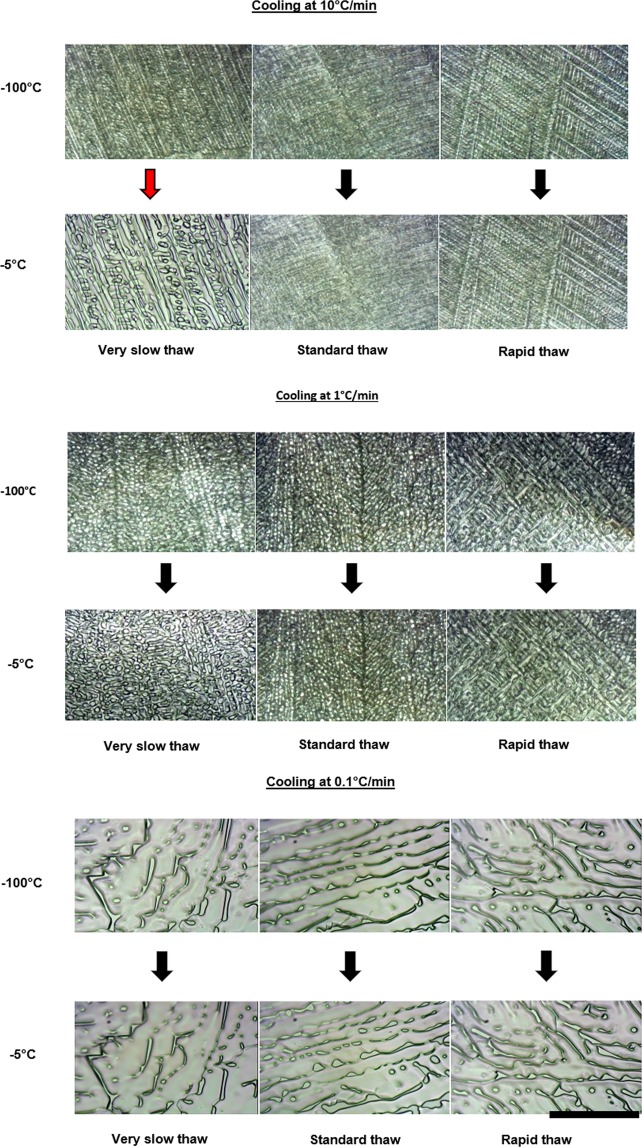
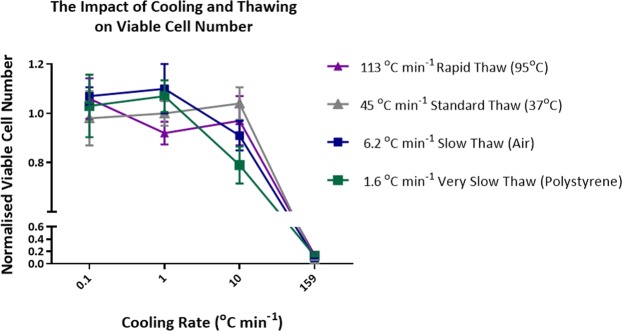
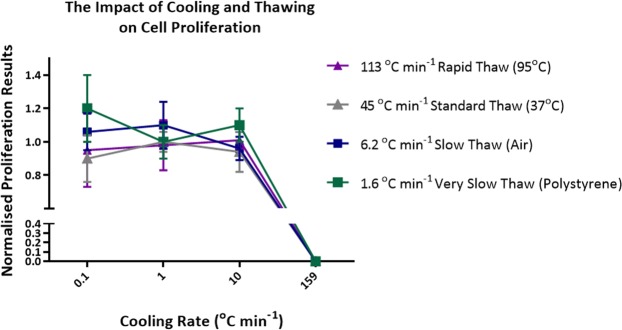
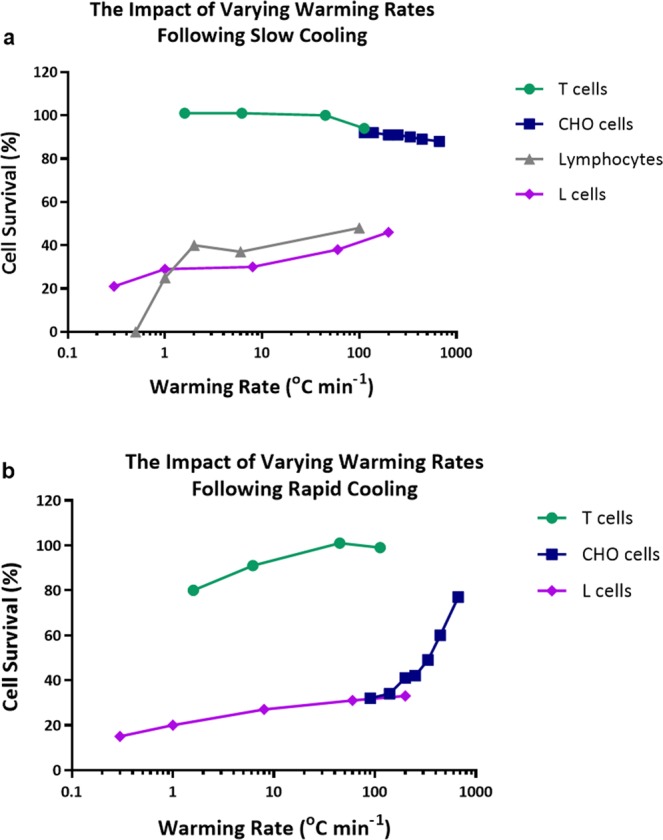
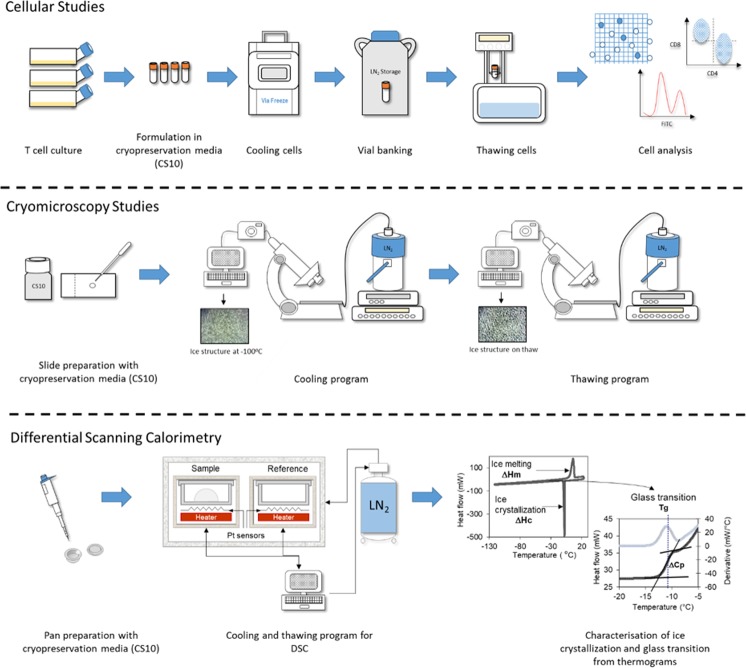
For the clinical delivery of immunotherapies it is anticipated that cells will be cryopreserved and shipped to the patient where they will be thawed and administered. An established view in cellular cryopreservation is that following freezing, cells must be warmed rapidly (≤5 minutes) in order to maintain high viability. In this study we examine the interaction between the rate of cooling and rate of warming on the viability, and function of T cells formulated in a conventional DMSO based cryoprotectant and processed in conventional cryovials. The data obtained show that provided the cooling rate is -1 °C min or slower, there is effectively no impact of warming rate on viable cell number within the range of warming rates examined (1.6 °C min to 113 °C min). It is only following a rapid rate of cooling (-10 °C min) that a reduction in viable cell number is observed following slow rates of warming (1.6 °C min and 6.2 °C min), but not rapid rates of warming (113 °C min and 45 °C min). Cryomicroscopy studies revealed that this loss of viability is correlated with changes in the ice crystal structure during warming. At high cooling rates (-10 °C min) the ice structure appeared highly amorphous, and when subsequently thawed at slow rates (6.2 °C min and below) ice recrystallization was observed during thaw suggesting mechanical disruption of the frozen cells. This data provides a fascinating insight into the crystal structure dependent behaviour during phase change of frozen cell therapies and its effect on live cell suspensions. Furthermore, it provides an operating envelope for the cryopreservation of T cells as an emerging industry defines formulation volumes and cryocontainers for immunotherapy products.

摘要

对于免疫疗法的临床应用,预计细胞将被冷冻保存并运送到患者所在的地方,在那里它们将被解冻并进行给药。在细胞冷冻保存中,一个既定的观点是,在冷冻后,细胞必须迅速升温(≤5 分钟),以保持高存活率。在这项研究中,我们研究了冷却速率和升温速率对保存在传统 DMSO 基冷冻保护剂中的 T 细胞的活力和功能的相互作用,并在传统的冷冻管中进行处理。所得数据表明,只要冷却速率为-1°C min 或更慢,在检查的升温速率范围内(1.6°C min 至 113°C min),升温速率对活细胞数量没有影响。只有在快速冷却速率(-10°C min)下,才会观察到缓慢升温速率(1.6°C min 和 6.2°C min)后活细胞数量减少,但快速升温速率(113°C min 和 45°C min)则不会。低温显微镜研究表明,这种活力的丧失与升温过程中冰晶结构的变化有关。在高冷却速率(-10°C min)下,冰结构似乎高度无定形,而当随后以缓慢的速率解冻(6.2°C min 及以下)时,在解冻过程中观察到冰晶再结晶,表明冷冻细胞受到机械破坏。该数据为冷冻细胞疗法相变过程中冰晶结构依赖性行为及其对活细胞悬浮液的影响提供了一个引人入胜的见解。此外,它为 T 细胞的冷冻保存提供了一个操作范围,因为新兴行业正在为免疫疗法产品定义制剂体积和冷冻容器。
https://cdn.ncbi.nlm.nih.gov/pmc/blobs/f57d/6399228/fd1d66ad93ba/41598_2019_39957_Fig8_HTML.jpg
https://cdn.ncbi.nlm.nih.gov/pmc/blobs/f57d/6399228/ad936413aab5/41598_2019_39957_Fig1_HTML.jpg
https://cdn.ncbi.nlm.nih.gov/pmc/blobs/f57d/6399228/188e6cd1bbc5/41598_2019_39957_Fig2_HTML.jpg
https://cdn.ncbi.nlm.nih.gov/pmc/blobs/f57d/6399228/4e296032e64e/41598_2019_39957_Fig3_HTML.jpg
https://cdn.ncbi.nlm.nih.gov/pmc/blobs/f57d/6399228/45f4d765936a/41598_2019_39957_Fig4_HTML.jpg
https://cdn.ncbi.nlm.nih.gov/pmc/blobs/f57d/6399228/e962eac82596/41598_2019_39957_Fig5_HTML.jpg
https://cdn.ncbi.nlm.nih.gov/pmc/blobs/f57d/6399228/460bccf77f33/41598_2019_39957_Fig6_HTML.jpg
https://cdn.ncbi.nlm.nih.gov/pmc/blobs/f57d/6399228/430e6c46c56b/41598_2019_39957_Fig7_HTML.jpg
https://cdn.ncbi.nlm.nih.gov/pmc/blobs/f57d/6399228/fd1d66ad93ba/41598_2019_39957_Fig8_HTML.jpg
https://cdn.ncbi.nlm.nih.gov/pmc/blobs/f57d/6399228/ad936413aab5/41598_2019_39957_Fig1_HTML.jpg
https://cdn.ncbi.nlm.nih.gov/pmc/blobs/f57d/6399228/188e6cd1bbc5/41598_2019_39957_Fig2_HTML.jpg
https://cdn.ncbi.nlm.nih.gov/pmc/blobs/f57d/6399228/4e296032e64e/41598_2019_39957_Fig3_HTML.jpg
https://cdn.ncbi.nlm.nih.gov/pmc/blobs/f57d/6399228/45f4d765936a/41598_2019_39957_Fig4_HTML.jpg
https://cdn.ncbi.nlm.nih.gov/pmc/blobs/f57d/6399228/e962eac82596/41598_2019_39957_Fig5_HTML.jpg
https://cdn.ncbi.nlm.nih.gov/pmc/blobs/f57d/6399228/460bccf77f33/41598_2019_39957_Fig6_HTML.jpg
https://cdn.ncbi.nlm.nih.gov/pmc/blobs/f57d/6399228/430e6c46c56b/41598_2019_39957_Fig7_HTML.jpg
https://cdn.ncbi.nlm.nih.gov/pmc/blobs/f57d/6399228/fd1d66ad93ba/41598_2019_39957_Fig8_HTML.jpg

相似文献

1
The Impact of Varying Cooling and Thawing Rates on the Quality of Cryopreserved Human Peripheral Blood T Cells.不同冷却和复温速率对冷冻保存的人外周血 T 细胞质量的影响。
Sci Rep. 2019 Mar 4;9(1):3417. doi: 10.1038/s41598-019-39957-x.
2
FTIR Analysis of Molecular Changes Associated with Warming Injury in Cryopreserved Leukocytes.傅里叶变换红外光谱分析冷冻保存白细胞复温损伤相关的分子变化。
Langmuir. 2019 Jun 11;35(23):7552-7559. doi: 10.1021/acs.langmuir.8b02982. Epub 2018 Nov 16.
3
Relevance of controlled cooling and freezing phases in T-cell cryopreservation.T 细胞冷冻保存中控制冷却和冷冻阶段的相关性。
Cryobiology. 2024 Sep;116:104907. doi: 10.1016/j.cryobiol.2024.104907. Epub 2024 May 26.
4
Interaction of cooling rate, warming rate, and extent of permeation of cryoprotectant in determining survival of isolated rat islets of Langerhans during cryopreservation.冷冻保存过程中,降温速率、升温速率以及冷冻保护剂渗透程度在决定分离的大鼠胰岛存活率方面的相互作用。
Diabetes. 1987 Jan;36(1):59-65. doi: 10.2337/diab.36.1.59.
5
The effect of temperature at which slow cooling is terminated and of thawing rate on the survival of one-cell mouse embryos frozen in dimethyl sulfoxide or 1,2-propanediol solutions.缓慢冷却终止时的温度以及解冻速率对在二甲亚砜或1,2 - 丙二醇溶液中冷冻的单细胞小鼠胚胎存活率的影响。
Cryobiology. 1994 Oct;31(5):423-33. doi: 10.1006/cryo.1994.1052.
6
Survival of mouse oocytes after being cooled in a vitrification solution to -196°C at 95° to 70,000°C/min and warmed at 610° to 118,000°C/min: A new paradigm for cryopreservation by vitrification.将小鼠卵母细胞在玻璃化溶液中冷却至-196°C,降温速度为 95°至 70,000°C/min,然后升温至 610°至 118,000°C/min:玻璃化冷冻保存的新范例。
Cryobiology. 2011 Feb;62(1):1-7. doi: 10.1016/j.cryobiol.2010.10.159. Epub 2010 Nov 3.
7
Cryopreservation of carotid artery segments via vitrification subject to marginal thermal conditions: correlation of freezing visualization with functional recovery.在边缘热条件下通过玻璃化法对颈动脉段进行冷冻保存:冷冻可视化与功能恢复的相关性
Cryobiology. 2008 Aug;57(1):1-8. doi: 10.1016/j.cryobiol.2008.03.002. Epub 2008 Mar 28.
8
Loss of viability during freeze-thaw of intact and adherent human embryonic stem cells with conventional slow-cooling protocols is predominantly due to apoptosis rather than cellular necrosis.采用传统慢速冷却方案对完整且贴壁的人胚胎干细胞进行冻融时,其活力丧失主要是由于凋亡而非细胞坏死。
J Biomed Sci. 2006 May;13(3):433-45. doi: 10.1007/s11373-005-9051-9. Epub 2005 Dec 23.
9
The development of the cell cryopreservation protocol with controlled rate thawing.具有程序复温功能的细胞冻存方案的开发。
Cell Tissue Bank. 2016 Jun;17(2):303-16. doi: 10.1007/s10561-015-9533-6. Epub 2015 Sep 18.
10
Effects of cooling and warming conditions on post-thawed motility and fertility of cryopreserved buffalo spermatozoa.冷却和升温条件对冷冻保存的水牛精子解冻后活力和受精能力的影响。
Anim Reprod Sci. 2001 Jul 3;67(1-2):69-77. doi: 10.1016/s0378-4320(01)00109-9.

引用本文的文献

1
Optimizing PBMC Cryopreservation and Utilization for ImmunoSpot Analysis of Antigen-Specific Memory B Cells.优化外周血单个核细胞冷冻保存及用于抗原特异性记忆B细胞的免疫斑点分析
Vaccines (Basel). 2025 Jul 19;13(7):765. doi: 10.3390/vaccines13070765.
2
Scale-down optimization of a robust, parallelizable human induced pluripotent stem cell bioprocess for high-throughput research.用于高通量研究的稳健、可并行化的人诱导多能干细胞生物工艺的缩小优化。
Biotechnol Rep (Amst). 2025 May 22;47:e00900. doi: 10.1016/j.btre.2025.e00900. eCollection 2025 Sep.
3
Modeling immune checkpoint inhibitor associated myocarditis and its therapeutic implications.

本文引用的文献

1
Cryopreservation and re-culture of a 2.3 litre biomass for use in a bioartificial liver device.用于生物人工肝装置的2.3升生物量的冷冻保存与再培养。
PLoS One. 2017 Aug 25;12(8):e0183385. doi: 10.1371/journal.pone.0183385. eCollection 2017.
2
The effect of thawing protocols on follicle conservation in human ovarian tissue cryopreservation.解冻方案对人卵巢组织冷冻保存中卵泡保护的影响。
Cryo Letters. 2017 Mar/Apr;38(2):137-144.
3
Viscosities encountered during the cryopreservation of dimethyl sulphoxide systems.二甲基亚砜体系冷冻保存过程中遇到的粘度
免疫检查点抑制剂相关心肌炎的建模及其治疗意义。
J Mol Cell Cardiol Plus. 2024 Dec;10. doi: 10.1016/j.jmccpl.2024.100122. Epub 2024 Nov 20.
4
Sudden Cardiac Death and Channelopathies: What Lies behind the Clinical Significance of Rare Splice-Site Alterations in the Genes Involved?心脏性猝死和通道病:涉及的基因中罕见剪接位点改变的临床意义背后是什么?
Genes (Basel). 2024 Sep 27;15(10):1272. doi: 10.3390/genes15101272.
5
Growth characteristics of HCT116 xenografts lacking asparagine synthetase vary according to sex.缺乏天冬酰胺合成酶的 HCT116 异种移植物的生长特征根据性别而有所不同。
Hum Genomics. 2024 Jun 17;18(1):67. doi: 10.1186/s40246-024-00635-3.
6
Technical pitfalls when collecting, cryopreserving, thawing, and stimulating human T-cells.收集、冷冻保存、解冻和刺激人 T 细胞时的技术陷阱。
Front Immunol. 2024 May 15;15:1382192. doi: 10.3389/fimmu.2024.1382192. eCollection 2024.
7
Stain-Free Approach to Determine and Monitor Cell Heath Using Supervised and Unsupervised Image-Based Deep Learning.基于监督和无监督图像深度学习的无染色方法来确定和监测细胞健康状况。
J Pharm Sci. 2024 Aug;113(8):2114-2127. doi: 10.1016/j.xphs.2024.05.001. Epub 2024 May 6.
8
Research progress on optimization of isolation, cultivation and preservation methods of dental pulp stem cells for clinical application.牙髓干细胞分离、培养及保存方法优化用于临床应用的研究进展
Front Bioeng Biotechnol. 2024 Apr 3;12:1305614. doi: 10.3389/fbioe.2024.1305614. eCollection 2024.
9
Systematic cryopreservation study of cardiac myoblasts in suspension.悬浮状态下心肌细胞的系统冷冻保存研究。
PLoS One. 2024 Mar 6;19(3):e0295131. doi: 10.1371/journal.pone.0295131. eCollection 2024.
10
Successful expansion and cryopreservation of human natural killer cell line NK-92 for clinical manufacturing.成功扩增和低温保存人自然杀伤细胞系 NK-92 用于临床生产。
PLoS One. 2024 Feb 23;19(2):e0294857. doi: 10.1371/journal.pone.0294857. eCollection 2024.
Cryobiology. 2017 Jun;76:92-97. doi: 10.1016/j.cryobiol.2017.04.003. Epub 2017 Apr 14.
4
Virtual Global Transplant Laboratory Standard Operating Procedures for Blood Collection, PBMC Isolation, and Storage.虚拟全球移植实验室血液采集、外周血单个核细胞分离及储存标准操作规程
Transplant Direct. 2016 Aug 18;2(9):e101. doi: 10.1097/TXD.0000000000000613. eCollection 2016 Sep.
5
The effect of MeSO overexposure during cryopreservation on HOS TE85 and hMSC viability, growth and quality.冷冻保存期间MeSO过度暴露对HOS TE85和人间充质干细胞活力、生长及质量的影响。
Cryobiology. 2016 Dec;73(3):367-375. doi: 10.1016/j.cryobiol.2016.09.004. Epub 2016 Sep 20.
6
Engineered T cells: the promise and challenges of cancer immunotherapy.工程化T细胞:癌症免疫疗法的前景与挑战
Nat Rev Cancer. 2016 Aug 23;16(9):566-81. doi: 10.1038/nrc.2016.97.
7
Impact of Storage at -80°C on Encapsulated Liver Spheroids After Liquid Nitrogen Storage.液氮储存后在-80°C下储存对封装肝球体的影响。
Biores Open Access. 2016 Jun 1;5(1):146-54. doi: 10.1089/biores.2016.0017. eCollection 2016.
8
Determination of Intracellular Vitrification Temperatures for Unicellular Micro Organisms under Conditions Relevant for Cryopreservation.在与冷冻保存相关的条件下测定单细胞微生物的细胞内玻璃化温度
PLoS One. 2016 Apr 7;11(4):e0152939. doi: 10.1371/journal.pone.0152939. eCollection 2016.
9
Chemically Defined and Xeno-Free Cryopreservation of Human Adipose-Derived Stem Cells.人脂肪干细胞的化学成分明确且无动物源成分的冷冻保存
PLoS One. 2016 Mar 24;11(3):e0152161. doi: 10.1371/journal.pone.0152161. eCollection 2016.
10
Adoptive T-cell therapy for cancer: The era of engineered T cells.过继性细胞疗法治疗癌症:工程化 T 细胞的时代。
Eur J Immunol. 2015 Sep;45(9):2457-69. doi: 10.1002/eji.201545552. Epub 2015 Aug 21.