Marais A J, Lloyd K, Smit-Robinson H A, Brown L R
Aquatic Unit Lydenburg, Mpumalanga Tourism and Parks Agency, Postnet Suite #4 P/B X20097, Lydenburg 1120, South Africa.
Applied Behavioural Ecology and Ecosystem Research Unit, University of South Africa, Private Bag X6, Florida 1710, South Africa.
R Soc Open Sci. 2021 Nov 10;8(11):211482. doi: 10.1098/rsos.211482. eCollection 2021 Nov.
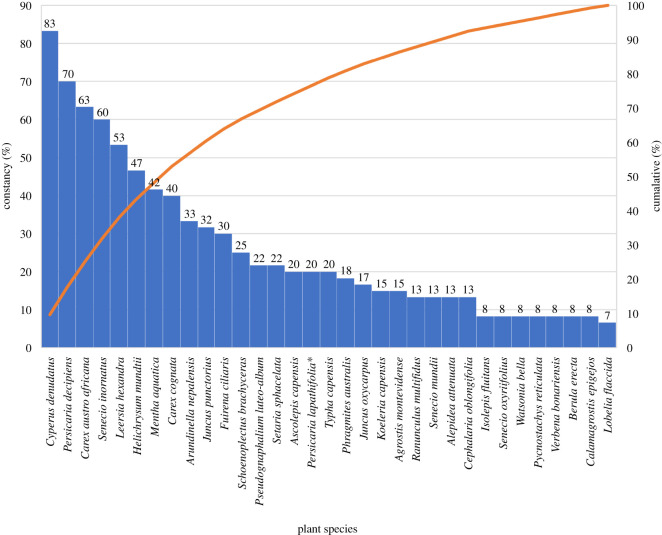
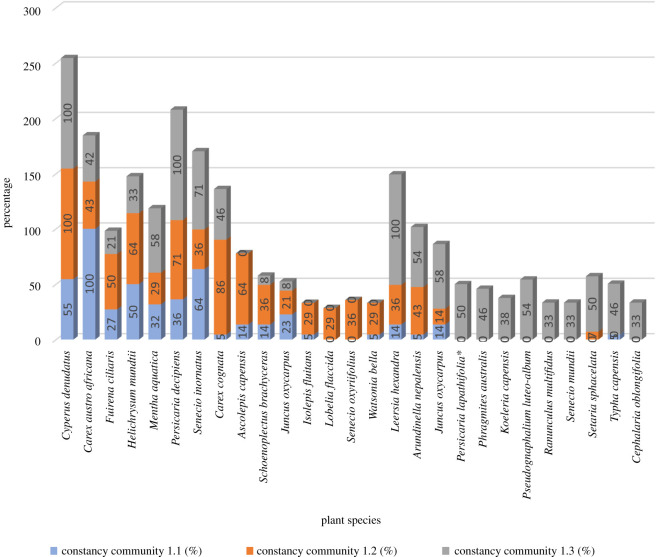
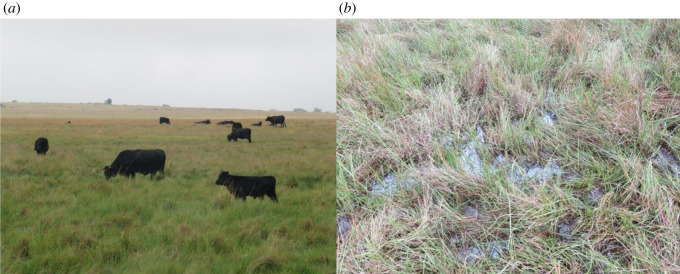
The white-winged flufftail is listed as critically endangered, and limited knowledge about the species' ecology has been identified as a limiting factor to effectively conserving the bird. Little is known about the vegetation inhabited by the white-winged flufftail, which hampers the identification and management of its habitat. This study presents a fine-scale classification and description of the vegetation of wetland sites where the bird is known to be present. A plant phytosociological study was conducted to describe the plant communities and vegetation structure of the habitat. Three sites were selected at Verloren Valei Nature Reserve and two at Middelpunt Wetland, Mpumalanga, South Africa, shortly after the white-winged flufftail breeding season. A total of 60 sample plots were placed within the study sites, where all plant species present were recorded and identified. Other aspects such as plant height, water depth and anthropogenic influences were also documented. A modified TWINSPAN analysis resulted in the identification of three sub-communities that can be grouped into one major community. The Cyperaceae, Asteraceae and Poaceae families dominate the vegetation, with the sedges and being dominant, and the grasses and co-dominant. The broad habitat structure consisted of medium to tall herbaceous plants (0.5-0.7 m) with shallow slow-flowing water.
白翅秧鸡被列为极度濒危物种,对该物种生态的了解有限已被确定为有效保护这种鸟类的一个限制因素。人们对白翅秧鸡栖息的植被知之甚少,这妨碍了对其栖息地的识别和管理。本研究对白翅秧鸡已知出现的湿地植被进行了精细分类和描述。开展了一项植物群落学研究,以描述该栖息地的植物群落和植被结构。在白翅秧鸡繁殖季节过后不久,在南非姆普马兰加省的韦洛伦瓦莱自然保护区选择了三个地点,在米德尔蓬特湿地选择了两个地点。在研究地点内共设置了60个样地,记录并识别了所有出现的植物物种。还记录了植物高度、水深和人为影响等其他方面的情况。经改进的双向指示种分析识别出三个亚群落,可归为一个主要群落。莎草科、菊科和禾本科在植被中占主导地位,其中莎草属和 为优势种,禾本科的 和 为共优势种。广阔的栖息地结构由中高草本植物(0.5 - 0.7米)和浅缓流水组成。