Venkatesaramani Rajagopal, Malin Bradley A, Vorobeychik Yevgeniy
Department of Computer Science and Engineering, Washington University in St. Louis, 1 Brookings Dr., St. Louis, MO 63108, USA.
Department of Biomedical Informatics, Vanderbilt University Medical Center, Suite 1475, 2525 West End Avenue, Nashville, TN 37203, USA.
Sci Adv. 2021 Nov 19;7(47):eabg3296. doi: 10.1126/sciadv.abg3296. Epub 2021 Nov 17.
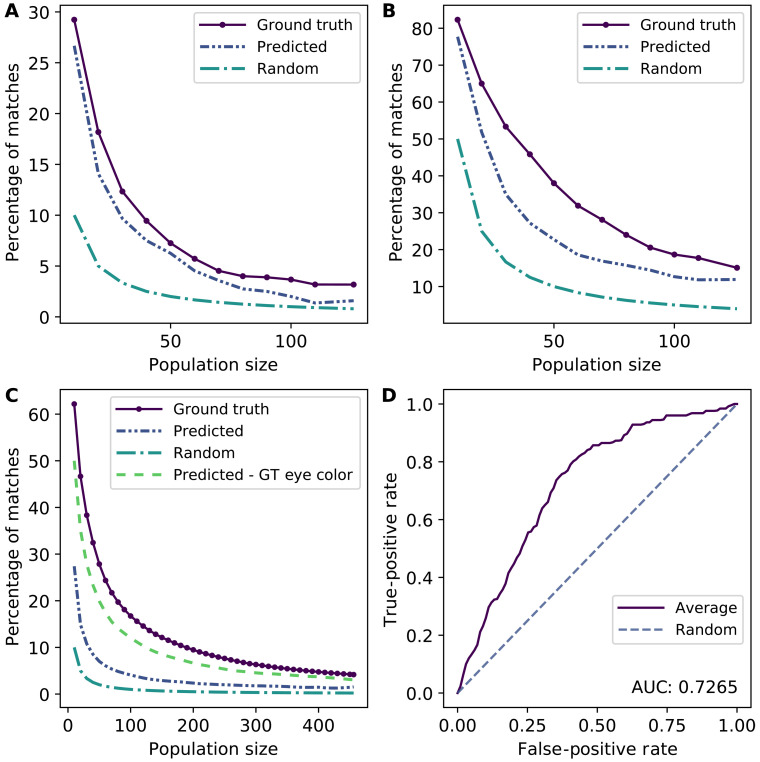
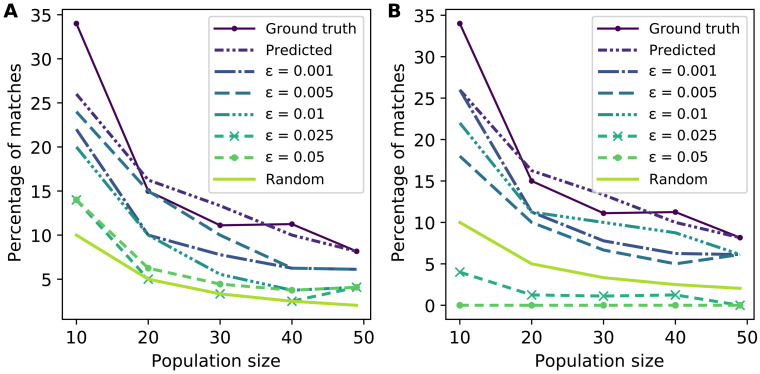
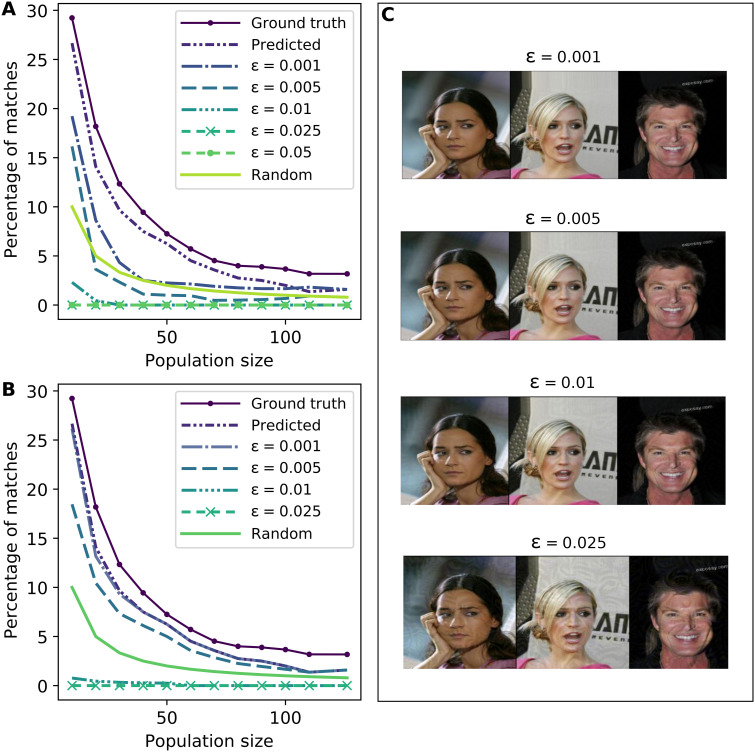
Recent studies suggest that genomic data can be matched to images of human faces, raising the concern that genomic data can be re-identified with relative ease. However, such investigations assume access to well-curated images, which are rarely available in practice and challenging to derive from photos not generated in a controlled laboratory setting. In this study, we reconsider re-identification risk and find that, for most individuals, the actual risk posed by linkage attacks to typical face images is substantially smaller than claimed in prior investigations. Moreover, we show that only a small amount of well-calibrated noise, imperceptible to humans, can be added to images to markedly reduce such risk. The results of this investigation create an opportunity to create image filters that enable individuals to have better control over re-identification risk based on linkage.
近期研究表明,基因组数据能够与人类面部图像相匹配,这引发了人们对基因组数据能够相对轻松地被重新识别的担忧。然而,此类调查假定能够获取精心整理的图像,而在实际中这些图像很少能获取到,并且从非在受控实验室环境中生成的照片中获取此类图像颇具挑战性。在本研究中,我们重新审视了重新识别风险,发现对于大多数个体而言,关联攻击对典型面部图像造成的实际风险远小于先前调查中所声称的风险。此外,我们表明,只需添加少量人类无法察觉的经过良好校准的噪声,就能显著降低此类风险。这项调查结果为创建图像过滤器创造了机会,这些过滤器能让个人更好地控制基于关联的重新识别风险。