Laboratory of Molecular and Cellular Nephrology, Mossakowski Medical Research Institute, Polish Academy of Sciences, Gdańsk, Poland.
Department of Molecular Biotechnology, Faculty of Chemistry, University of Gdańsk, Gdańsk, Poland.
Endocrinology. 2022 Jan 1;163(1). doi: 10.1210/endocr/bqab234.
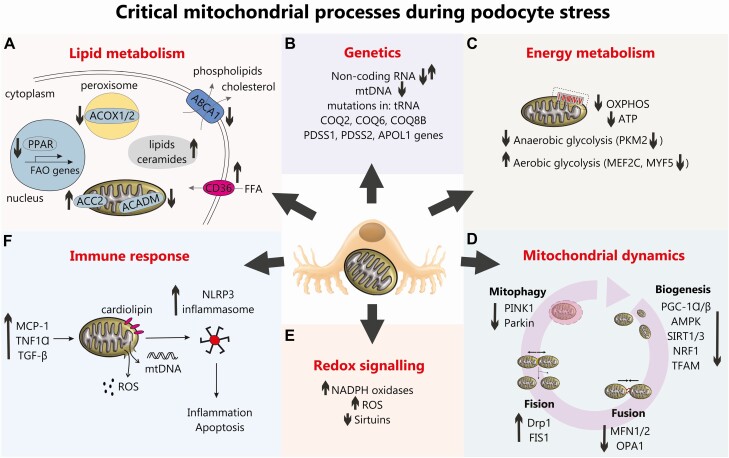
Diabetic nephropathy (DN) is the leading cause of kidney failure, with an increasing incidence worldwide. Mitochondrial dysfunction is known to occur in DN and has been implicated in the underlying pathogenesis of disease. These complex organelles have an array of important cellular functions and involvement in signaling pathways, and understanding the intricacies of these responses in health, as well as how they are damaged in disease, is likely to highlight novel therapeutic avenues. A key cell type damaged early in DN is the podocyte, and increasing studies have focused on investigating the role of mitochondria in podocyte injury. This review will summarize what is known about podocyte mitochondrial dynamics in DN, with a particular focus on bioenergetic pathways, highlighting key studies in this field and potential opportunities to target, enhance or protect podocyte mitochondrial function in the treatment of DN.
糖尿病肾病(DN)是导致肾衰竭的主要原因,其发病率在全球范围内呈上升趋势。已知线粒体功能障碍发生在 DN 中,并与疾病的潜在发病机制有关。这些复杂的细胞器具有一系列重要的细胞功能,并参与信号通路,了解这些反应在健康状态下的复杂性,以及它们在疾病中是如何受损的,很可能会突出新的治疗途径。在 DN 中早期受损的关键细胞类型是足细胞,越来越多的研究集中在研究线粒体在足细胞损伤中的作用。这篇综述将总结已知的 DN 中足细胞线粒体动力学,特别关注生物能量途径,强调该领域的关键研究和潜在的靶向机会,以增强或保护足细胞线粒体功能,从而治疗 DN。