Center for Protein Assemblies and Department Chemie, Technische Universität München, 85748, Garching, Germany.
Institute of Virology, Technical University of Munich / Helmholtz Zentrum Munich, Munich, Germany.
Nat Commun. 2021 Nov 18;12(1):6737. doi: 10.1038/s41467-021-27103-z.
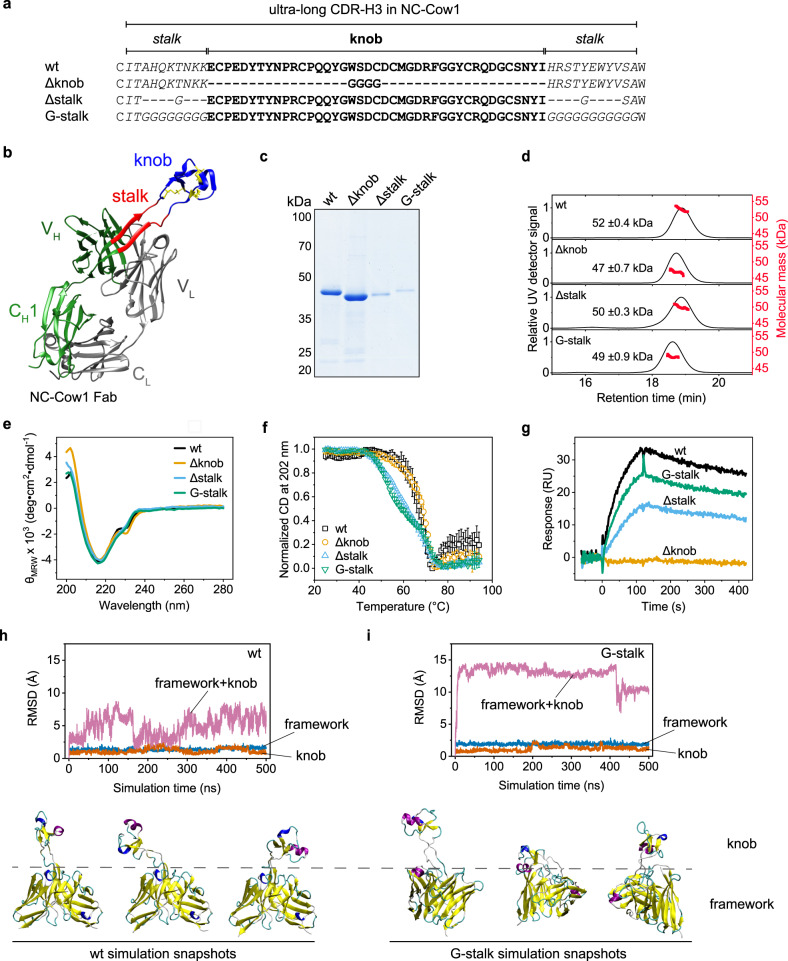
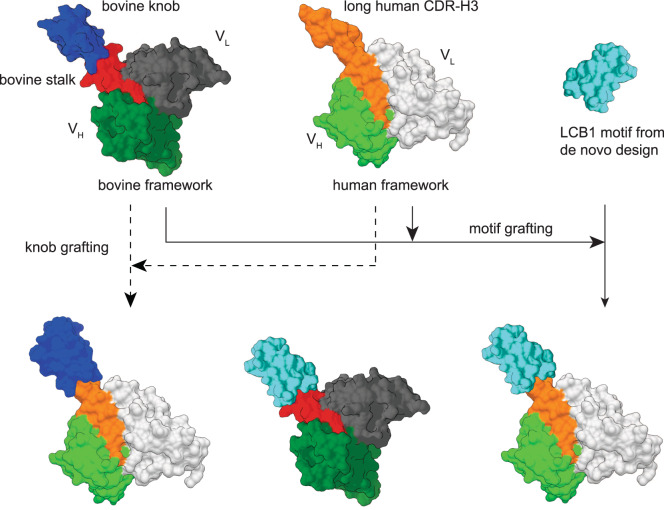
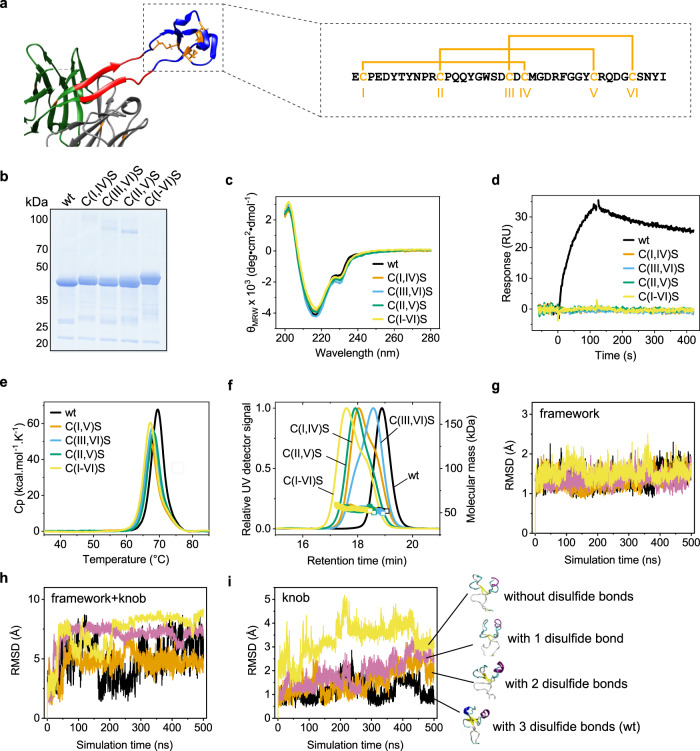
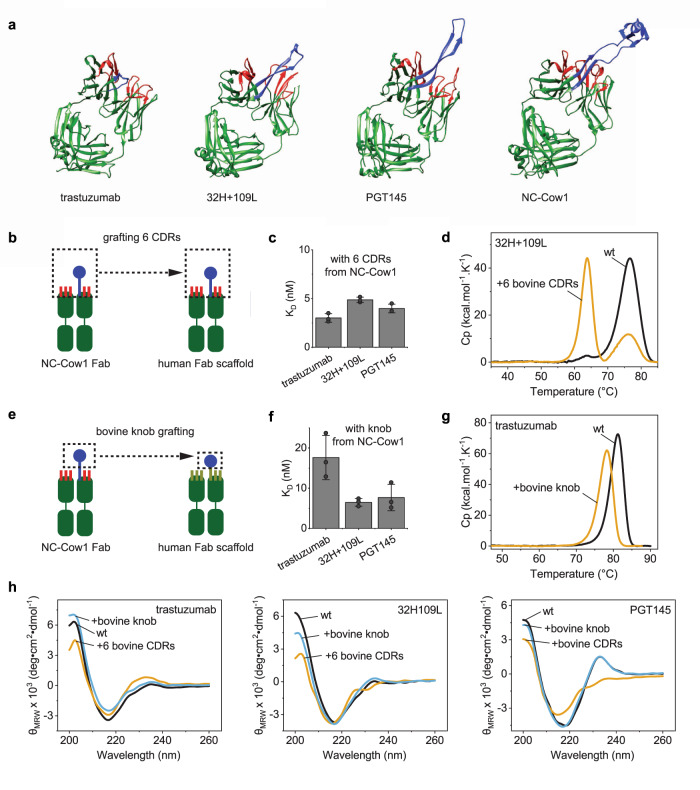
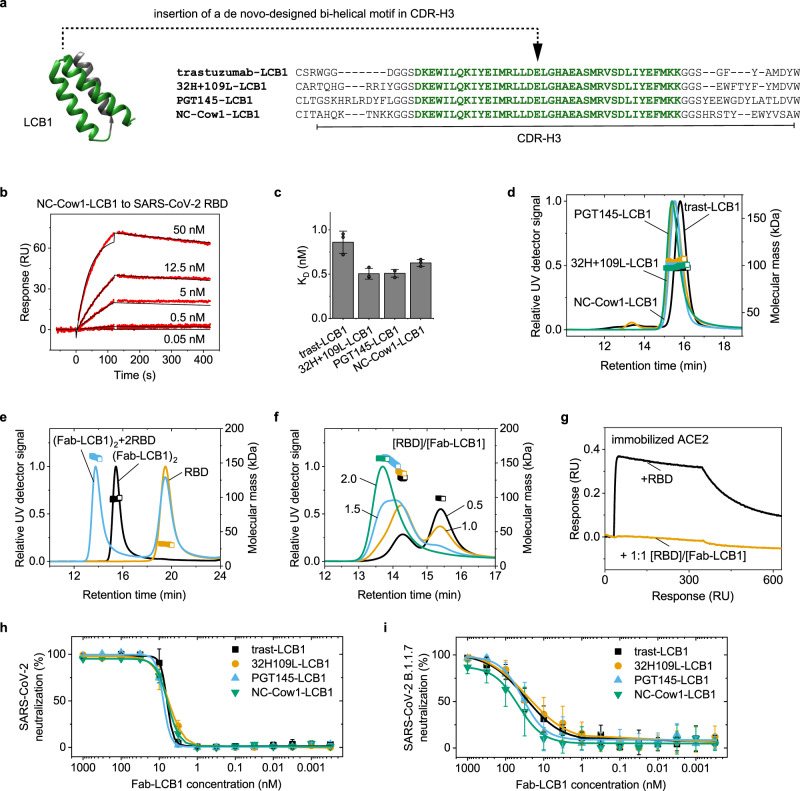
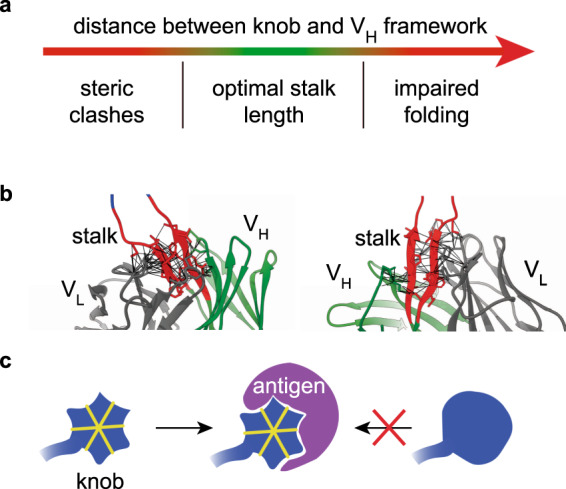
Antibodies bind antigens via flexible loops called complementarity-determining regions (CDRs). These are usually 6-20 residues long. However, some bovine antibodies have ultra-long CDRs comprising more than 50 residues organized in a stalk and a disulfide-rich knob. The design features of this structural unit and its influence on antibody stability remained enigmatic. Here, we show that the stalk length is critical for the folding and stability of antibodies with an ultra-long CDR and that the disulfide bonds in the knob do not contribute to stability; they are important for organizing the antigen-binding knob structure. The bovine ultra-long CDR can be integrated into human antibody scaffolds. Furthermore, mini-domains from de novo design can be reformatted as ultra-long CDRs to create unique antibody-based proteins neutralizing SARS-CoV-2 and the Alpha variant of concern with high efficiency. Our findings reveal basic design principles of antibody structure and open new avenues for protein engineering.
抗体通过称为互补决定区 (CDR) 的柔性环结合抗原。这些通常长 6-20 个残基。然而,一些牛抗体具有超长的 CDR,由超过 50 个残基组成,组织在一个柄和一个富含二硫键的旋钮中。这个结构单元的设计特点及其对抗体稳定性的影响仍然是个谜。在这里,我们表明,柄的长度对于具有超长 CDR 的抗体的折叠和稳定性至关重要,并且旋钮中的二硫键对稳定性没有贡献;它们对于组织抗原结合旋钮结构很重要。牛超长 CDR 可整合到人抗体支架中。此外,从头设计的迷你结构域可以重新格式化为超长 CDR,以创建高效中和 SARS-CoV-2 和关注的 Alpha 变体的独特基于抗体的蛋白质。我们的发现揭示了抗体结构的基本设计原则,并为蛋白质工程开辟了新途径。