Schonger Martin, Sele Daniela
Lucerne University of Applied Sciences and Arts, Lucerne, Switzerland.
Swiss Federal Institute of Technology Zurich, Zurich, Switzerland.
Math Semesterber. 2021;68(2):221-235. doi: 10.1007/s00591-021-00306-7. Epub 2021 Aug 25.
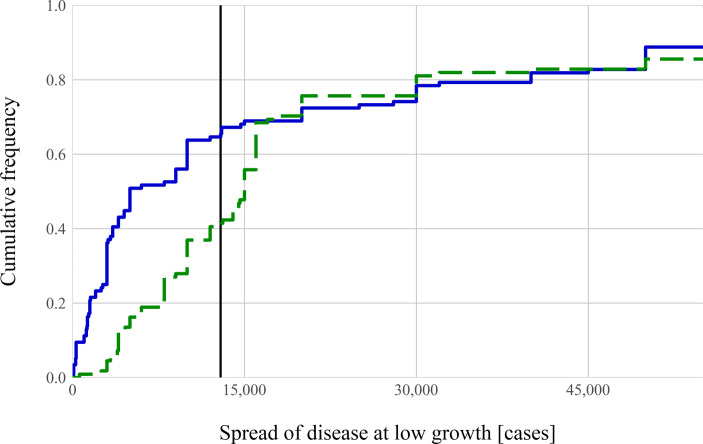
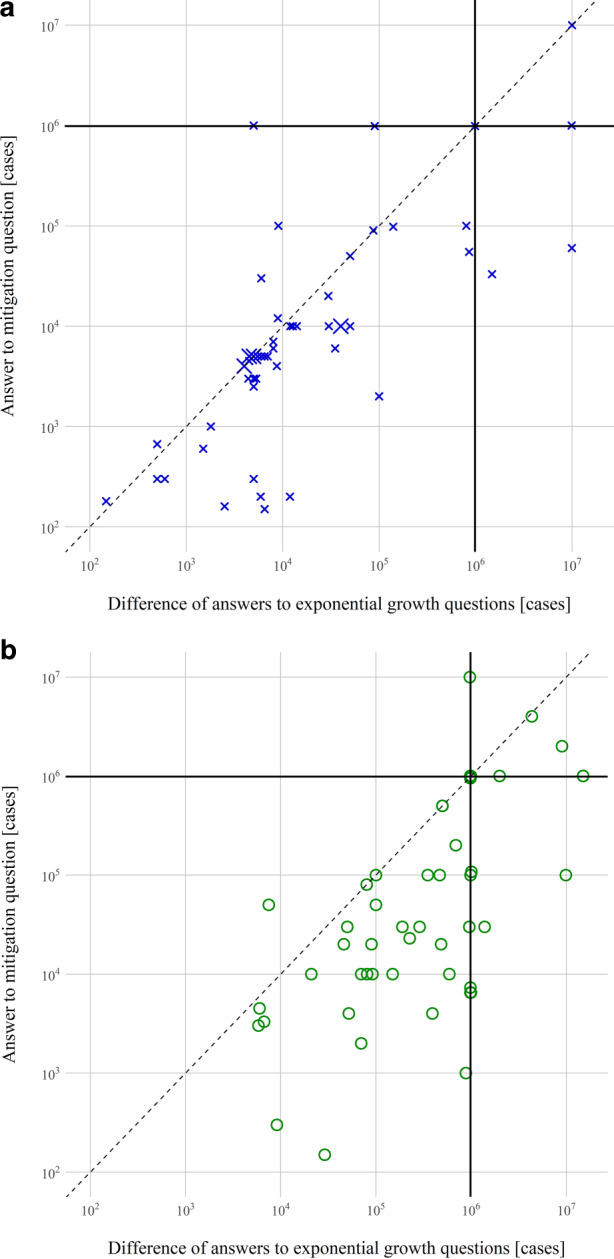
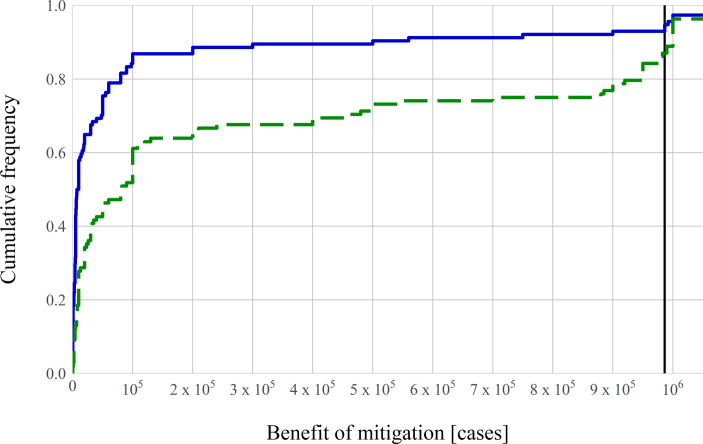
Exponential growth bias is the phenomenon that humans intuitively underestimate exponential growth. This article reports on an experiment where treatments differ in the parameterization of growth: Exponential growth is communicated to one group in terms of growth rates, and in terms of doubling times to the other. Exponential growth bias is much smaller when doubling times are employed. Considering that in many applications, individuals face a choice between different growth rates, rather than between exponential growth and zero growth, we ask a question where growth is reduced from high to low. Subjects vastly underestimate the effect of this reduction, though less so in the parameterization using doubling times. The answers to this question are more severely biased than one would expect from the answers to the exponential growth questions. These biases emerge despite the sample being highly educated and exhibiting awareness of exponential growth bias. Implications for teaching, the usefulness of heuristics, and policy are discussed.
指数增长偏差是指人类直观地低估指数增长的现象。本文报告了一项实验,其中不同处理方式的增长参数化有所不同:指数增长以增长率的形式传达给一组,以翻倍时间的形式传达给另一组。当使用翻倍时间时,指数增长偏差要小得多。考虑到在许多应用中,个体面临的是不同增长率之间的选择,而不是指数增长和零增长之间的选择,我们提出了一个问题,即增长从高到低下降的情况。受试者极大地低估了这种下降的影响,不过在使用翻倍时间的参数化中低估程度较小。这个问题的答案比指数增长问题的答案所预期的偏差更大。尽管样本中的人受过高等教育且表现出对指数增长偏差的认识,但这些偏差仍然出现。本文还讨论了对教学、启发式方法的有用性以及政策的影响。