Xu Xuan, Min Doohong, McDonald Iryna
Department of Agronomy, Kansas State University, Manhattan, KS 66506, USA.
J Anim Sci Technol. 2021 Sep;63(5):1098-1113. doi: 10.5187/jast.2021.e97. Epub 2021 Sep 30.
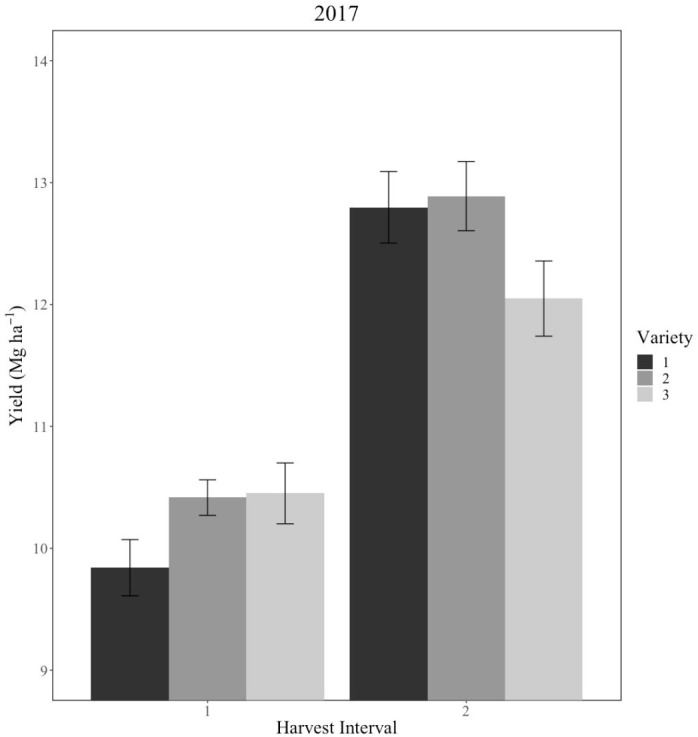
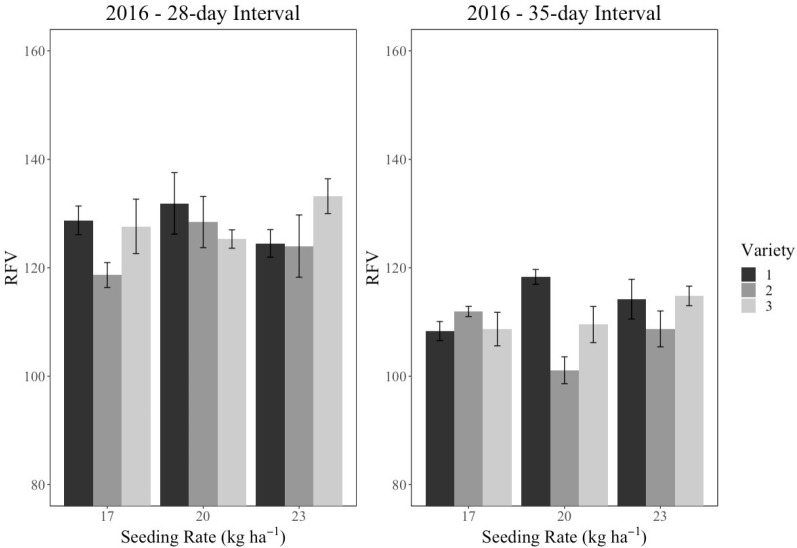
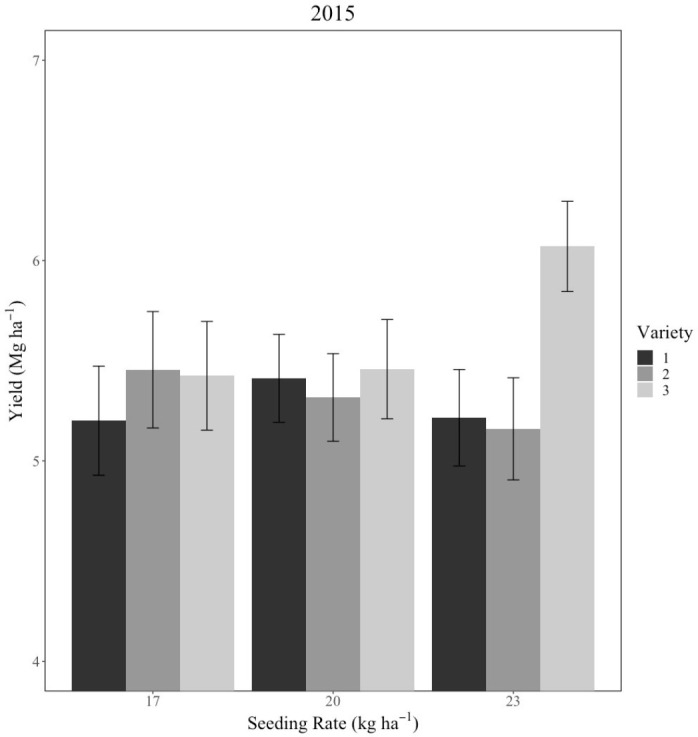
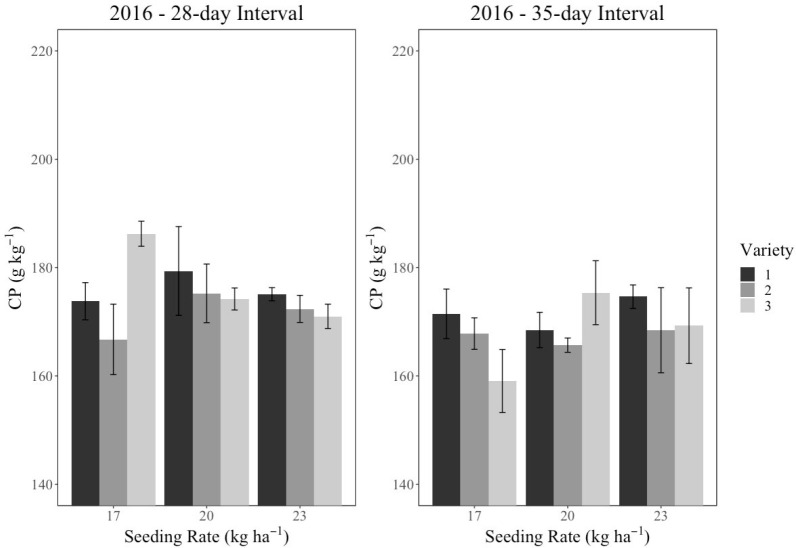
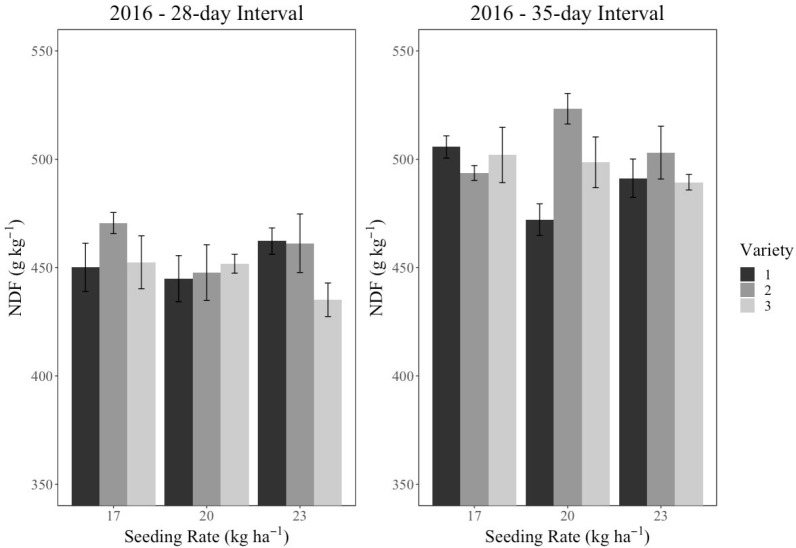
Maturation process of alfalfa ( L.) could be prevented by the reduction of lignin content in terms of conventional breeding or transgenic technology. Alfalfa could exhibit higher leaf/stem ratio, with a concern of yield loss. The objective of this study was to compare forage yield and nutritive value of low lignin alfalfa and two reference varieties subjecting to two harvest intervals and three seeding rates. The experimental design was a randomized complete block in a split-split plot arrangement with four replicates, where harvest intervals (28-day and 35-day) were assigned to whole plots, seeding rates were subplots, and varieties were sub-subplots. The weighted mean nutritive value was applied to two production years of 2016 and 2017. Hi-Gest 360 (low lignin alfalfa) provided similar yield potential and increased nutritive value compared to two reference varieties. Over a two-year production period, alfalfa harvested at every 28-day interval provided more economic returns than those at 35-day interval. For the seeding year and first production year, five cuts made by the 28-day interval produced more yield than four cuts by the 35-day interval. Due to limited rainfall in May 2017, a sharp drop of the first cutting overturned the advantage of the five-cut system. Shorter intervals between harvests generally increased crude protein (CP) concentrations. The differences of relative feed value (RFV) between two harvest intervals tended to be great during the first and second cuttings. Overall, harvest interval had a large effect on nutritive value and a more significant effect on alfalfa dry matter yield than variety selection. Seeding rate did not affect alfalfa yield and nutritive value.
通过传统育种或转基因技术降低木质素含量,可以阻止紫花苜蓿的成熟过程。紫花苜蓿可能会表现出较高的叶/茎比,但存在产量损失的问题。本研究的目的是比较低木质素紫花苜蓿和两个对照品种在两种刈割间隔和三种播种量下的牧草产量和营养价值。试验设计采用随机完全区组裂区设计,重复四次,其中刈割间隔(28天和35天)分配到主区,播种量为副区,品种为副副区。对2016年和2017年两个生产年份应用加权平均营养价值。与两个对照品种相比,Hi-Gest 360(低木质素紫花苜蓿)具有相似的产量潜力且营养价值有所提高。在两年的生产期内,每隔28天刈割一次的紫花苜蓿比每隔35天刈割一次的紫花苜蓿提供了更多的经济回报。在播种年和第一个生产年,28天间隔的五次刈割比35天间隔的四次刈割产量更高。由于2017年5月降雨有限,第一次刈割量急剧下降,颠覆了五割制的优势。较短的刈割间隔通常会提高粗蛋白(CP)浓度。两个刈割间隔之间的相对饲用价值(RFV)差异在第一次和第二次刈割期间往往较大。总体而言,刈割间隔对营养价值影响较大,对紫花苜蓿干物质产量的影响比对品种选择的影响更显著。播种量对紫花苜蓿产量和营养价值没有影响。