Graduate School of Life Science and Technology, Tokyo Institute of Technology, 4259-R1-18 Nagatsuta-cho, Midori-ku, Yokohama, Kanagawa, 226-8503, Japan.
Laboratory for Chemistry and Life Science, Institute of Innovative Research, Tokyo Institute of Technology, Nagatsuta-cho, Yokohama, Kanagawa, 226-8503, Japan.
Sci Rep. 2021 Nov 19;11(1):22590. doi: 10.1038/s41598-021-02022-7.
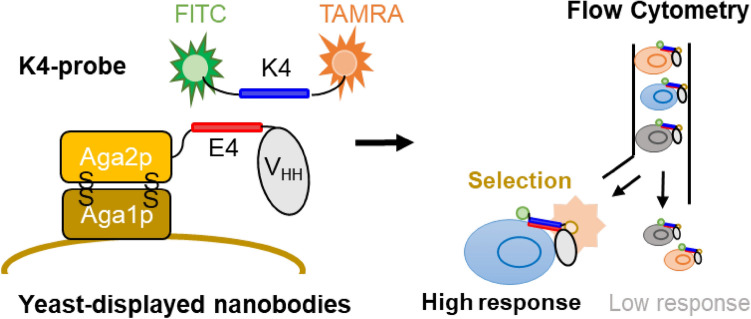
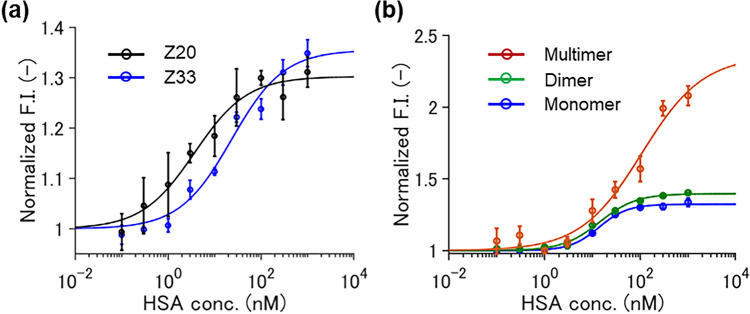
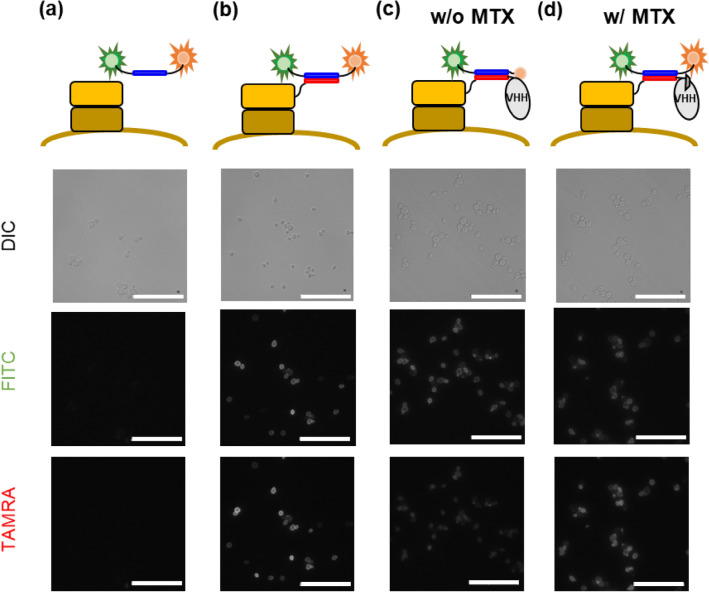
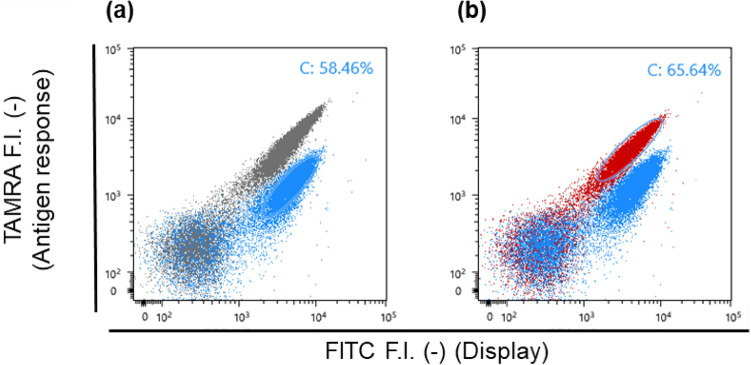
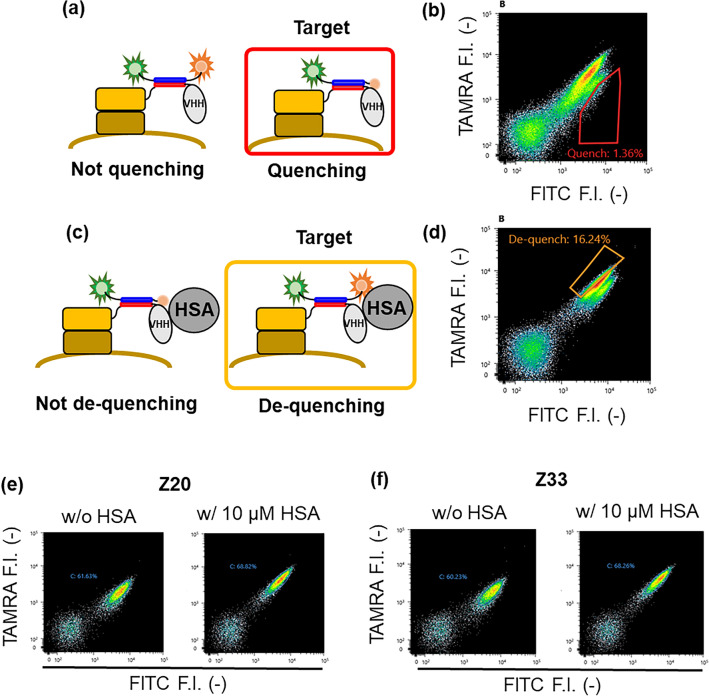
Quenchbody (Q-body) is a quench-based fluorescent immunosensor labeled with fluorescent dye(s) near the antigen-binding site of an antibody. Q-bodies can detect a range of target molecules rapidly and directly. However, because Q-bodies show different antigen responses depending on the antibody used, time-consuming optimization of the Q-body structure is often necessary, and a high-throughput screening method for discriminating and selecting good Q-bodies is required. Here, we aimed to develop a molecular display method of nanobody-based "mini Q-bodies" by combining yeast surface display and coiled-coil forming E4/K4 peptide-based fluorescence labeling. As a result, the yeast-displayed mini Q-body recognizing the anti-cancer agent methotrexate (MTX) showed significant quenching and MTX-dependent dequenching on cells. To demonstrate the applicability of the developed method to select highly responsive mini Q-bodies, a small nanobody library consisting of 30 variants that recognize human serum albumin was used as a model. The best variant, showing a 2.4-fold signal increase, was obtained through selection by flow cytometry. Furthermore, the same nanobody prepared from Escherichia coli also worked as a mini Q-body after dye labeling. The described approach will be applied to quickly obtain well-behaved Q-bodies and other fluorescent biosensors for various targets through directed evolutionary approaches.
Q-body(Q-体)是一种基于淬灭的荧光免疫传感器,在抗体的抗原结合部位附近标记有荧光染料。Q-体可以快速直接地检测一系列靶分子。然而,由于 Q-体的抗原反应因所使用的抗体而异,因此通常需要对 Q-体结构进行耗时的优化,并且需要一种用于区分和选择良好 Q-体的高通量筛选方法。在这里,我们旨在通过结合酵母表面展示和基于卷曲螺旋形成的 E4/K4 肽的荧光标记来开发基于纳米体的“迷你 Q-体”的分子展示方法。结果,识别抗癌剂甲氨蝶呤 (MTX) 的酵母展示的迷你 Q-体在细胞上显示出显著的猝灭和 MTX 依赖性去猝灭。为了证明所开发的方法在选择高反应性迷你 Q-体方面的适用性,使用由 30 个变体组成的小纳米体文库作为模型来识别人血清白蛋白。通过流式细胞术选择获得了最佳变体,其信号增加了 2.4 倍。此外,从大肠杆菌制备的相同纳米体在经过染料标记后也可以用作迷你 Q-体。所描述的方法将通过定向进化方法应用于快速获得性能良好的 Q-体和其他用于各种靶标的荧光生物传感器。