Osuna-Marco Marta Pilar, López-Barahona Mónica, López-Ibor Blanca, Tejera Águeda Mercedes
Biology of Ageing Group, Faculty of Experimental Sciences, Universidad Francisco de Vitoria, Madrid, Spain.
Pediatric Oncology and Hematology Unit, HM Hospitals, Madrid, Spain.
Front Genet. 2021 Nov 5;12:749480. doi: 10.3389/fgene.2021.749480. eCollection 2021.
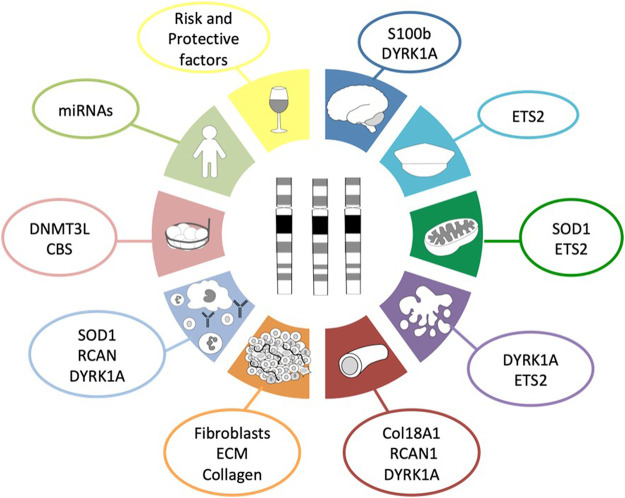
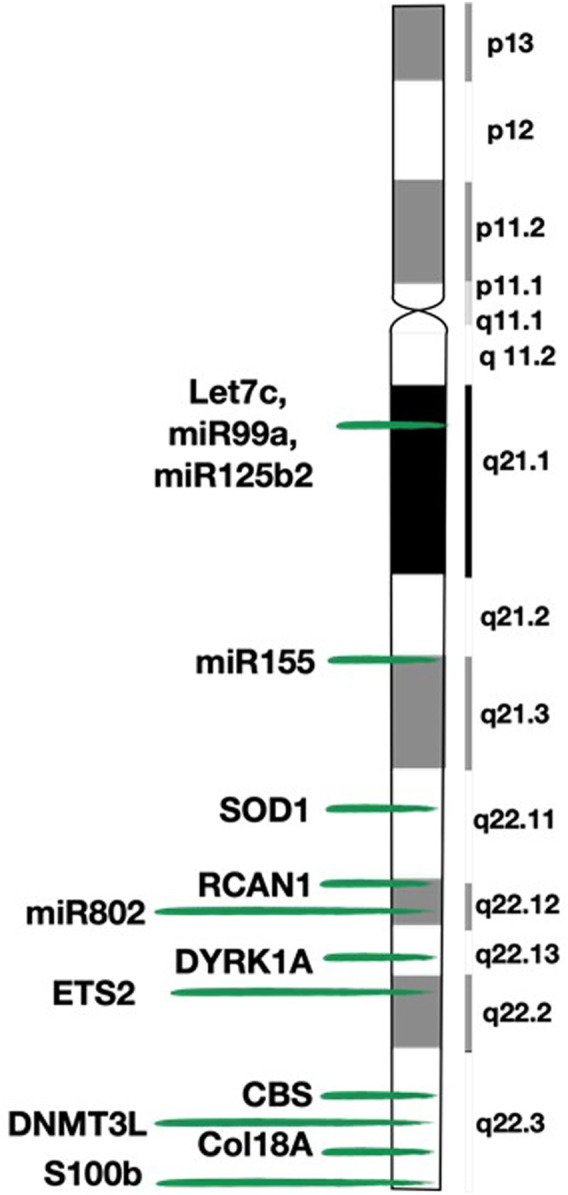
People with Down syndrome have unique characteristics as a result of the presence of an extra chromosome 21. Regarding cancer, they present a unique pattern of tumors, which has not been fully explained to date. Globally, people with Down syndrome have a similar lifetime risk of developing cancer compared to the general population. However, they have a very increased risk of developing certain tumors (e.g., acute leukemia, germ cell tumors, testicular tumors and retinoblastoma) and, on the contrary, there are some other tumors which appear only exceptionally in this syndrome (e.g., breast cancer, prostate cancer, medulloblastoma, neuroblastoma and Wilms tumor). Various hypotheses have been developed to explain this situation. The genetic imbalance secondary to the presence of an extra chromosome 21 has molecular consequences at several levels, not only in chromosome 21 but also throughout the genome. In this review, we discuss the different proposed mechanisms that protect individuals with trisomy 21 from developing solid tumors: genetic dosage effect, tumor suppressor genes overexpression, disturbed metabolism, impaired neurogenesis and angiogenesis, increased apoptosis, immune system dysregulation, epigenetic aberrations and the effect of different microRNAs, among others. More research into the molecular pathways involved in this unique pattern of malignancies is still needed.
由于存在一条额外的21号染色体,唐氏综合征患者具有独特的特征。在癌症方面,他们呈现出一种独特的肿瘤模式,迄今为止尚未得到充分解释。在全球范围内,唐氏综合征患者患癌的终生风险与普通人群相似。然而,他们患某些肿瘤(如急性白血病、生殖细胞肿瘤、睾丸肿瘤和成视网膜细胞瘤)的风险大幅增加,相反,还有一些其他肿瘤仅在该综合征中罕见出现(如乳腺癌、前列腺癌、髓母细胞瘤、神经母细胞瘤和肾母细胞瘤)。已经提出了各种假说来解释这种情况。额外的21号染色体导致的基因失衡在多个层面产生分子后果,不仅在21号染色体上,而且在整个基因组中。在本综述中,我们讨论了不同的提出机制,这些机制保护21三体个体不发生实体瘤:基因剂量效应、肿瘤抑制基因过表达、代谢紊乱、神经发生和血管生成受损、细胞凋亡增加、免疫系统失调、表观遗传畸变以及不同微小RNA的作用等。仍需要对参与这种独特恶性肿瘤模式的分子途径进行更多研究。