Department of Bioengineering, Northeastern University, Boston, Massachusetts, USA; Barnett Institute, Northeastern University, Boston, Massachusetts, USA.
Mol Cell Proteomics. 2022 Jan;21(1):100179. doi: 10.1016/j.mcpro.2021.100179. Epub 2021 Nov 20.
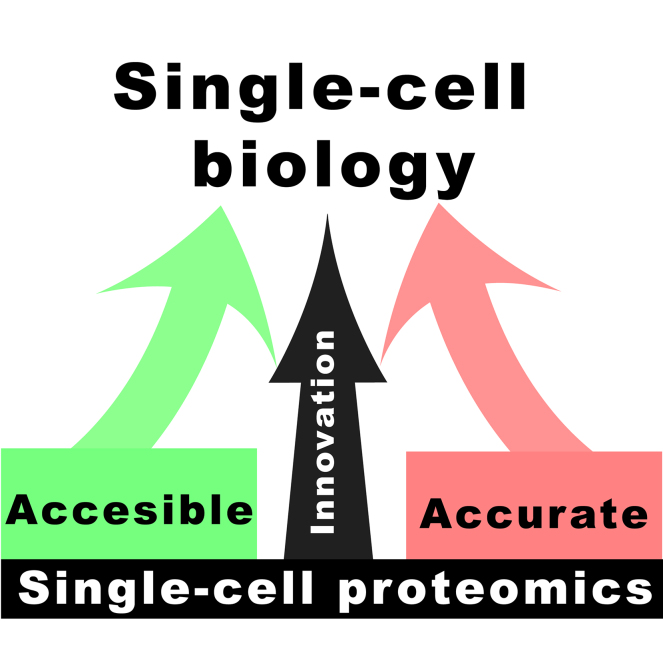
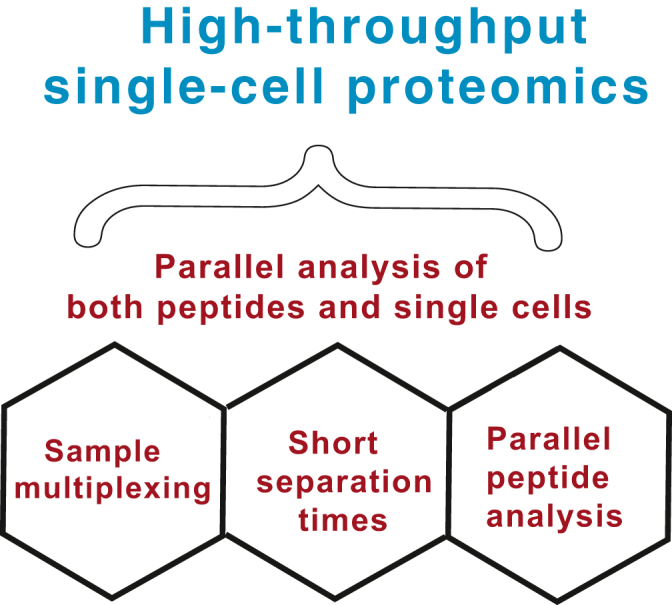
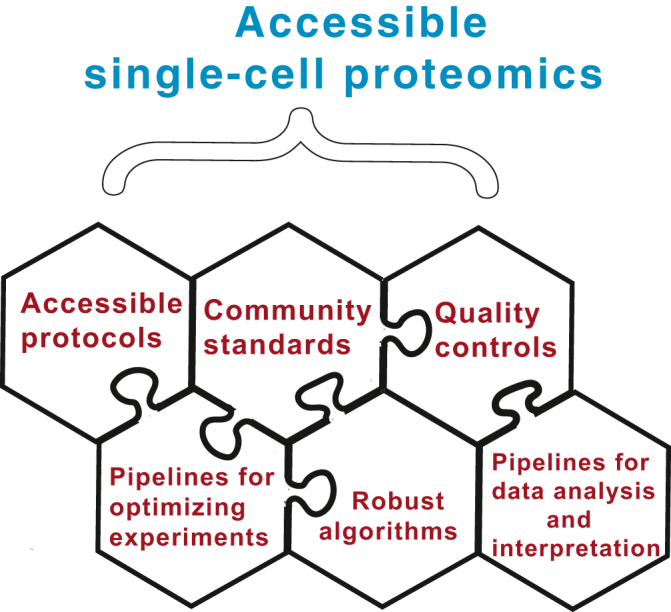
Single-cell tandem MS has enabled analyzing hundreds of single cells per day and quantifying thousands of proteins across the cells. The broad dissemination of these capabilities can empower the dissection of pathophysiological mechanisms in heterogeneous tissues. Key requirements for achieving this goal include robust protocols performed on widely accessible hardware, robust quality controls, community standards, and automated data analysis pipelines that can pinpoint analytical problems and facilitate their timely resolution. Toward meeting these requirements, this perspective outlines both existing resources and outstanding opportunities, such as parallelization, for catalyzing the wide dissemination of quantitative single-cell proteomics analysis that can be scaled up to tens of thousands of single cells. Indeed, simultaneous parallelization of the analysis of peptides and single cells is a promising approach for multiplicative increase in the speed of performing deep and quantitative single-cell proteomics. The community is ready to begin a virtuous cycle of increased adoption fueling the development of more technology and resources for single-cell proteomics that in turn drive broader adoption, scientific discoveries, and clinical applications.
单细胞串联质谱技术使我们能够每天分析数百个单细胞,并对细胞中的数千种蛋白质进行定量分析。这些功能的广泛传播可以帮助我们深入研究异质组织中的病理生理机制。实现这一目标的关键要求包括在广泛使用的硬件上执行稳健的方案、稳健的质量控制、社区标准以及自动化数据分析管道,这些都可以查明分析问题,并促进及时解决这些问题。为了满足这些要求,本观点概述了现有的资源和尚未解决的机会,例如并行化,以促进可扩展到数万单个细胞的定量单细胞蛋白质组学分析的广泛传播。事实上,肽和单细胞分析的同时并行化是一种很有前途的方法,可以实现深度和定量单细胞蛋白质组学的速度呈倍数增长。该领域已经准备好开始一个良性循环,即采用率的提高推动单细胞蛋白质组学技术和资源的发展,从而进一步推动更广泛的应用、科学发现和临床应用。