O'Meara Lydia, Turner Christopher, Coitinho Denise Costa, Oenema Stineke
Natural Resources Institute, University of Greenwich, UK.
United Nations Nutrition, Italy.
Glob Food Sec. 2022 Mar;32:100594. doi: 10.1016/j.gfs.2021.100594. Epub 2021 Nov 18.
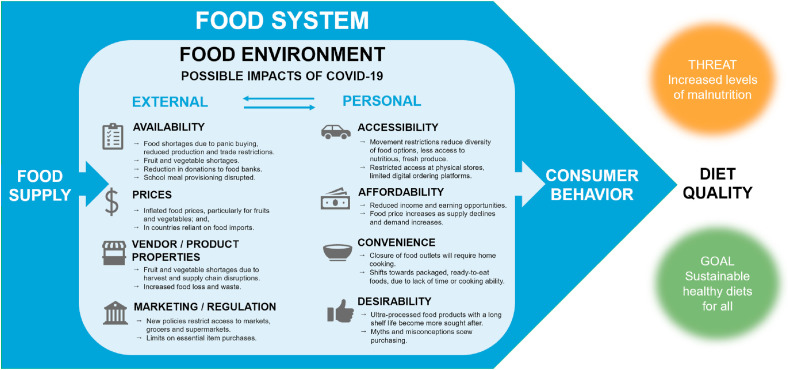
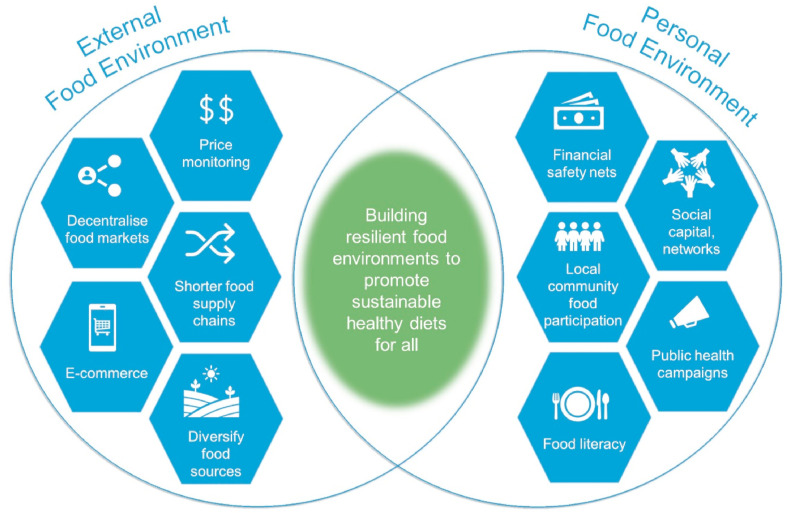
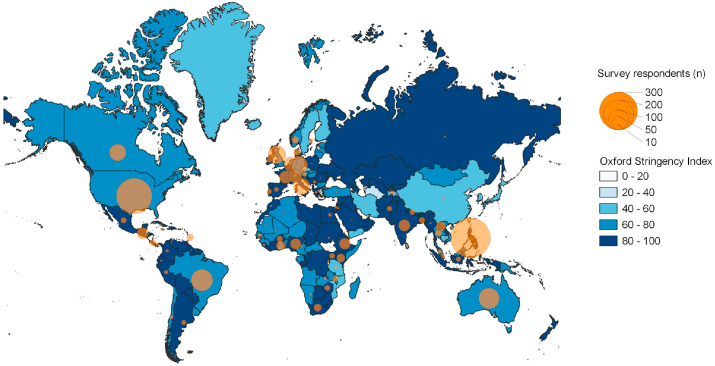
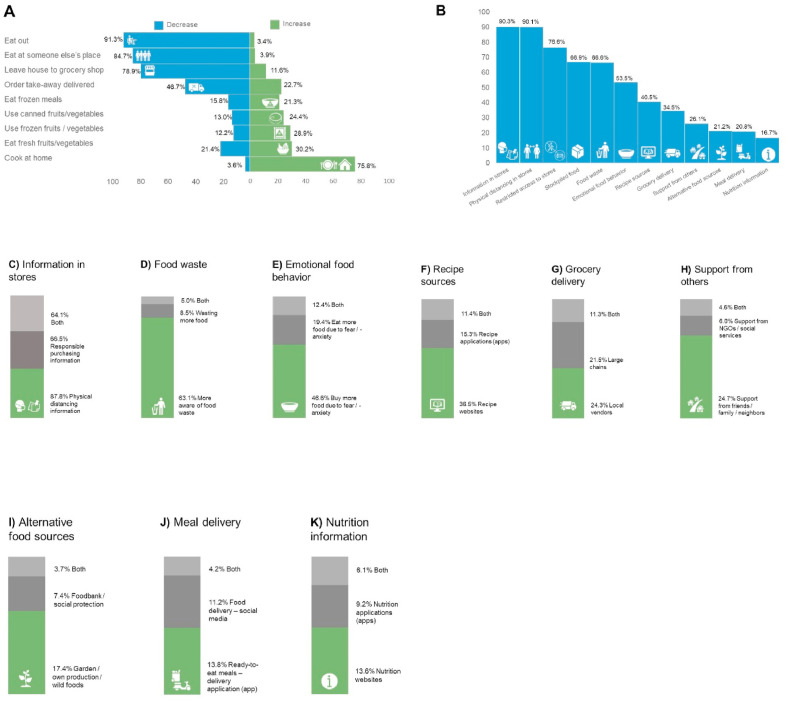
This study investigates consumer experiences of food environments and food acquisition practices during the Covid-19 pandemic. Our rapid assessment online survey featured a convenience sample of 2015 individuals from 119 countries, spanning Western Europe, North America, Latin America, Asia-Pacific, and Africa. Data collection took place in April 2020 during the second month of the pandemic. Participants were recruited via existing networks of the United Nations System Standing Committee on Nutrition, through social media, and by snowballing. The majority of participants were female (71.9%), from low- and middle-income countries (51.0%), and working in nutrition or healthcare (39.3%). Qualitative thematic analysis and descriptive statistics reveal a series of common global experiences related to food availability and accessibility, food prices and affordability, food acquisition practices, and food preparation and consumption. The importance of community food participation, food sharing, and resource allocation are highlighted, along with increasing awareness of healthy diets and food waste. We identify ten synergistic policy entry points to: 1) build resilient and equitable food environments resistant to stresses and shocks; 2) harness positive dietary-related behaviors manifested during the pandemic; and, 3) mitigate the projected nutrition crisis and promote sustainable healthy diets for all.
本研究调查了新冠疫情期间消费者在食品环境和食品获取方面的经历。我们的快速评估在线调查采用了便利抽样,样本包括来自119个国家的2015个人,涵盖西欧、北美、拉丁美洲、亚太地区和非洲。数据收集于2020年4月疫情爆发的第二个月进行。参与者通过联合国系统营养问题常设委员会的现有网络、社交媒体和滚雪球抽样的方式招募。大多数参与者为女性(71.9%),来自低收入和中等收入国家(51.0%),从事营养或医疗保健工作(39.3%)。定性主题分析和描述性统计揭示了一系列与食品供应和可及性、食品价格和可负担性、食品获取方式以及食品制备和消费相关的全球共同经历。强调了社区食品参与、食品共享和资源分配的重要性,以及对健康饮食和食物浪费的认识不断提高。我们确定了十个协同政策切入点,以:1)建立有韧性和公平的食品环境,抵御压力和冲击;2)利用疫情期间出现的与饮食相关的积极行为;3)缓解预计的营养危机,促进所有人的可持续健康饮食。