Department of Pharmaceutical Sciences, University of Basel, Basel, Switzerland.
PEDeus Ltd., Zurich, Switzerland.
PLoS One. 2021 Nov 23;16(11):e0259864. doi: 10.1371/journal.pone.0259864. eCollection 2021.
Readmission prediction models have been developed and validated for targeted in-hospital preventive interventions. We aimed to externally validate the Potentially Avoidable Readmission-Risk Score (PAR-Risk Score), a 12-items prediction model for internal medicine patients with a convenient scoring system, for our local patient cohort.
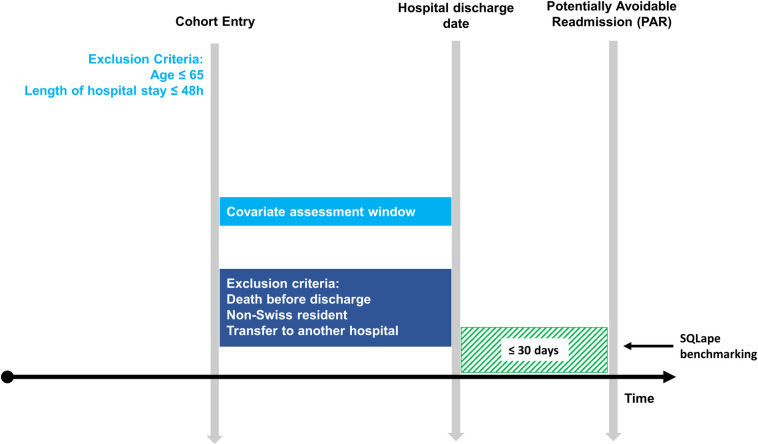
A cohort study using electronic health record data from the internal medicine ward of a Swiss tertiary teaching hospital was conducted. The individual PAR-Risk Score values were calculated for each patient. Univariable logistic regression was used to predict potentially avoidable readmissions (PARs), as identified by the SQLape algorithm. For additional analyses, patients were stratified into low, medium, and high risk according to tertiles based on the PAR-Risk Score. Statistical associations between predictor variables and PAR as outcome were assessed using both univariable and multivariable logistic regression.
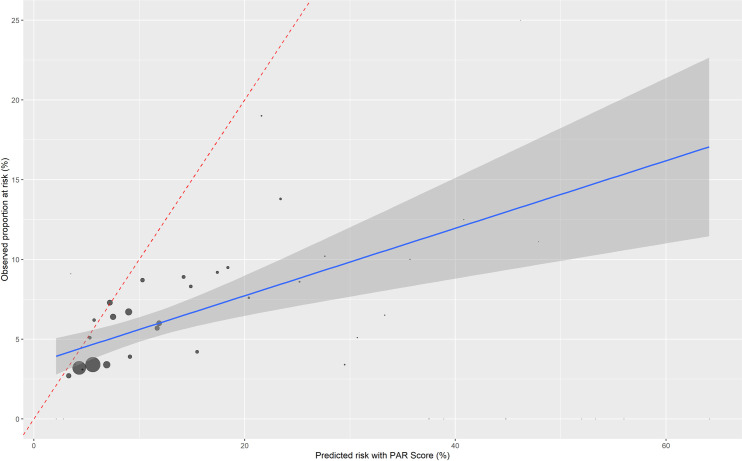
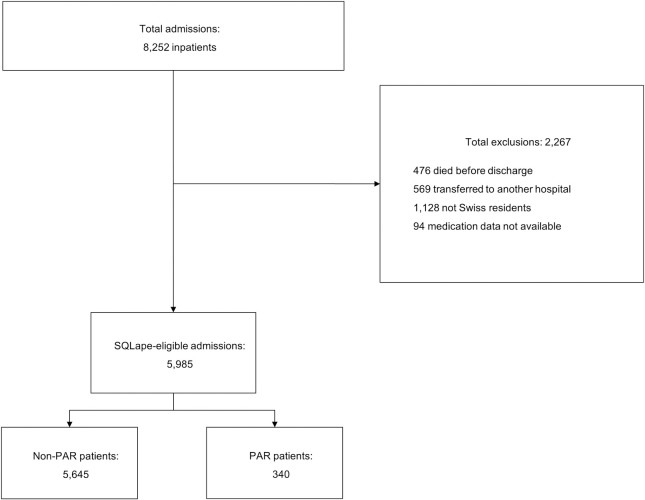
The final dataset consisted of 5,985 patients. Of these, 340 patients (5.7%) experienced a PAR. The overall PAR-Risk Score showed rather poor discriminatory power (C statistic 0.605, 95%-CI 0.575-0.635). When using stratified groups (low, medium, high), patients in the high-risk group were at statistically significant higher odds (OR 2.63, 95%-CI 1.33-5.18) of being readmitted within 30 days compared to low risk patients. Multivariable logistic regression identified previous admission within six months, anaemia, heart failure, and opioids to be significantly associated with PAR in this patient cohort.
This external validation showed a limited overall performance of the PAR-Risk Score, although higher scores were associated with an increased risk for PAR and patients in the high-risk group were at significantly higher odds of being readmitted within 30 days. This study highlights the importance of externally validating prediction models.
已经开发和验证了再入院预测模型,以便针对住院期间的预防性干预措施。我们旨在为当地患者队列外部验证潜在可避免再入院风险评分(PAR-Risk Score),这是一种针对内科患者的 12 项预测模型,具有方便的评分系统。
使用瑞士一家三级教学医院内科病房的电子健康记录数据进行队列研究。为每位患者计算个体 PAR-Risk Score 值。使用单变量逻辑回归预测潜在可避免的再入院(PAR),如 SQLape 算法确定的。对于额外的分析,根据 PAR-Risk Score 的三分位数将患者分为低、中、高危。使用单变量和多变量逻辑回归评估预测变量与 PAR 作为结局之间的统计关联。
最终数据集包括 5985 名患者。其中 340 名患者(5.7%)发生 PAR。整体 PAR-Risk Score 的区分能力相当差(C 统计量 0.605,95%-CI 0.575-0.635)。当使用分层组(低、中、高)时,高风险组的患者在 30 天内再次入院的可能性显著更高(OR 2.63,95%-CI 1.33-5.18)与低风险患者相比。多变量逻辑回归确定了在 6 个月内的既往住院、贫血、心力衰竭和阿片类药物与该患者队列的 PAR 显著相关。
这项外部验证表明 PAR-Risk Score 的整体表现有限,尽管较高的分数与 PAR 的风险增加相关,而且高风险组的患者在 30 天内再次入院的可能性显著更高。本研究强调了外部验证预测模型的重要性。