Department of Nephrology, Rigshospitalet, University of Copenhagen, Copenhagen, Denmark.
Department of Cardiology, Rigshospitalet, University of Copenhagen, Copenhagen, Denmark.
PLoS One. 2021 Nov 23;16(11):e0260417. doi: 10.1371/journal.pone.0260417. eCollection 2021.
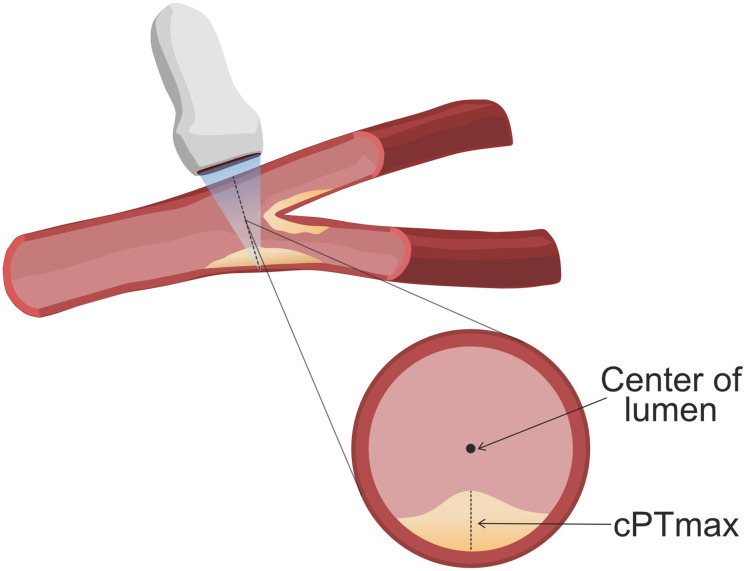
Chronic kidney disease accelerates both atherosclerosis and arterial calcification. The aim of the present study was to explore whether maximal carotid plaque thickness (cPTmax) was increased in patients with chronic kidney disease compared to controls and associated with cardiovascular disease and severity of calcification in the carotid and coronary arteries.
The study group consisted of 200 patients with chronic kidney disease stage 3 from the Copenhagen Chronic Kidney Disease Cohort and 121 age- and sex-matched controls. cPTmax was assessed by ultrasound and arterial calcification by computed tomography scanning.
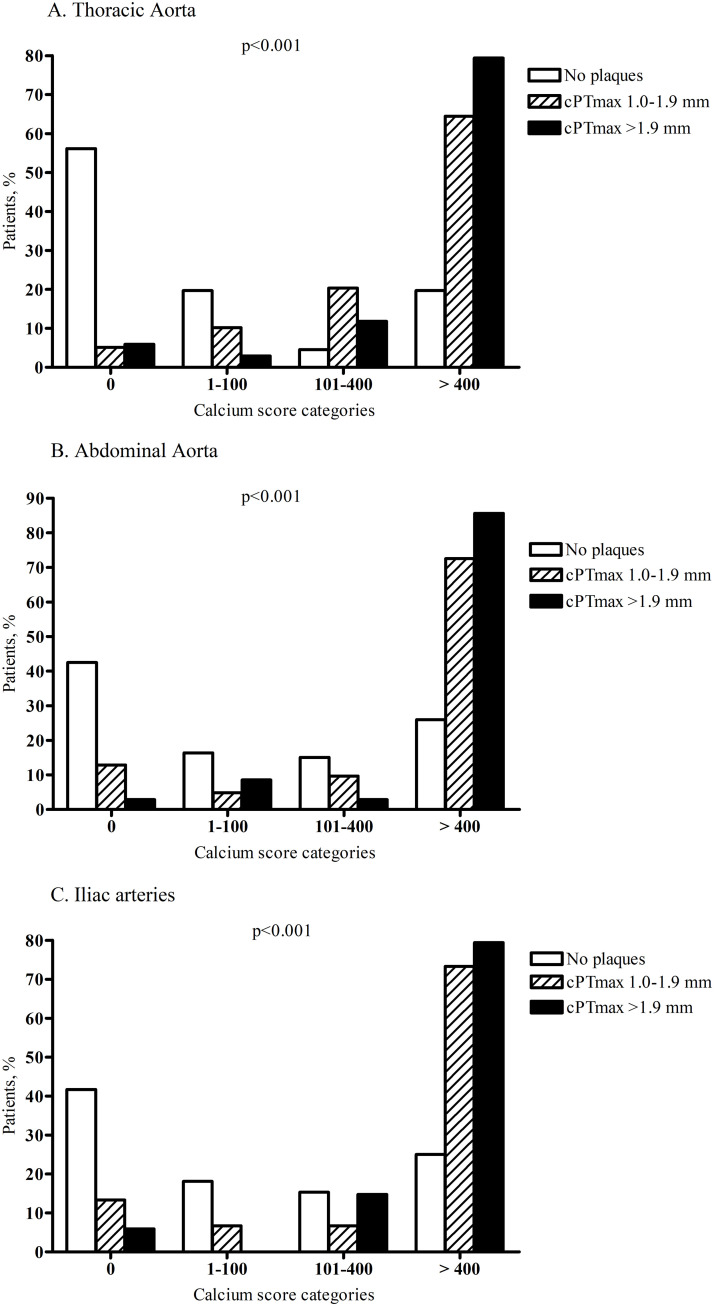
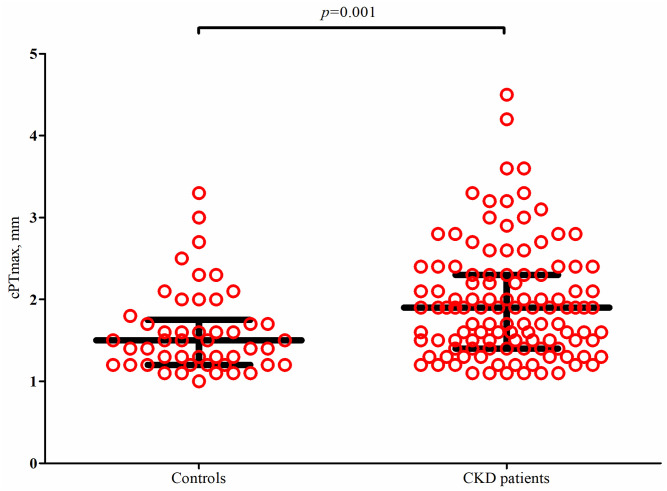
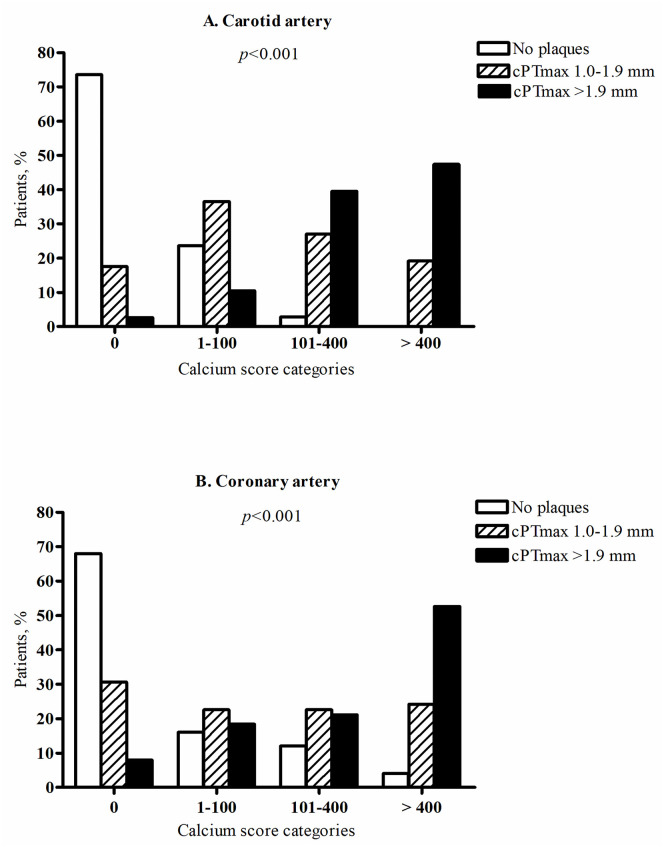
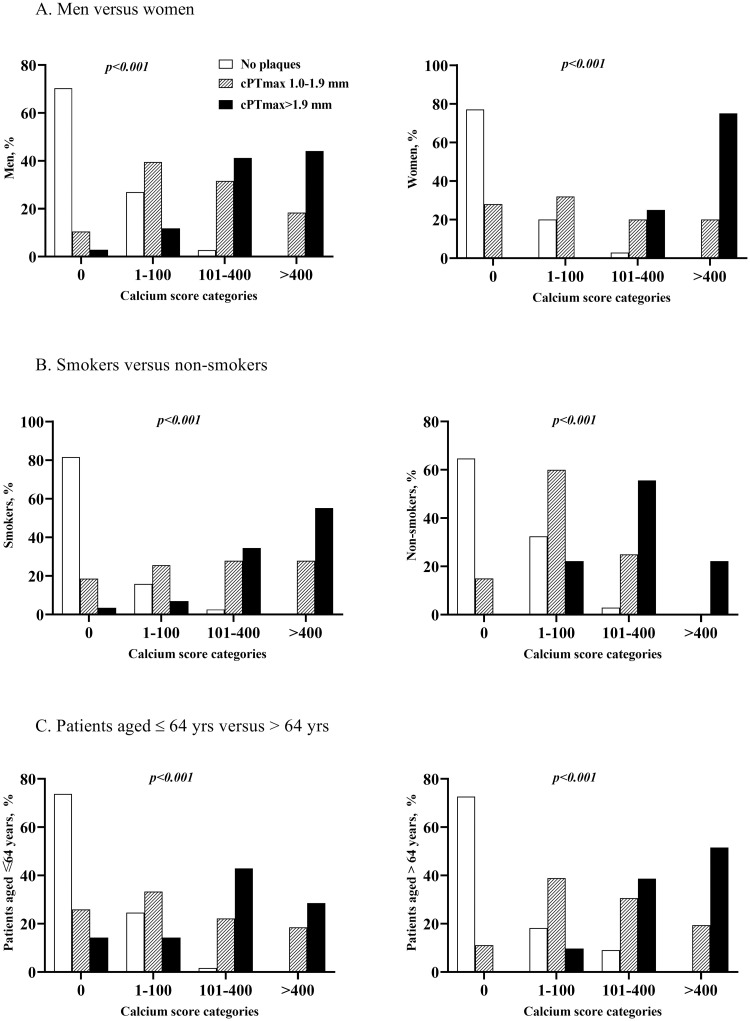
Carotid plaques were present in 58% of patients (n = 115) compared with 40% of controls (n = 48), p = 0.002. Among participants with plaques, cPTmax (median, interquartile range) was significantly higher in patients compared with controls (1.9 (1.4-2.3) versus 1.5 (1.2-1.8) mm), p = 0.001. Cardiovascular disease was present in 9% of patients without plaques (n = 85), 23% of patients with cPTmax 1.0-1.9 mm (n = 69) and 35% of patients with cPTmax >1.9 mm (n = 46), p = 0.001. Carotid and coronary calcium scores >400 were present in 0% and 4%, respectively, of patients with no carotid plaques, in 19% and 24% of patients with cPTmax 1.0-1.9 mm, and in 48% and 53% of patients with cPTmax >1.9 mm, p<0.001.
This is the first study showing that cPTmax is increased in patients with chronic kidney disease stage 3 compared to controls and closely associated with prevalent cardiovascular disease and severity of calcification in both the carotid and coronary arteries.
慢性肾脏病会加速动脉粥样硬化和动脉钙化。本研究旨在探讨慢性肾脏病患者的颈动脉斑块最大厚度(cPTmax)是否高于对照组,并与心血管疾病及颈动脉和冠状动脉钙化程度相关。
本研究纳入了 200 名来自哥本哈根慢性肾脏病队列的慢性肾脏病 3 期患者和 121 名年龄、性别匹配的对照组。通过超声评估 cPTmax,通过计算机断层扫描评估动脉钙化。
与对照组(n=48,40%)相比,患者中存在颈动脉斑块的比例为 58%(n=115),p=0.002。在有斑块的参与者中,与对照组相比,患者的 cPTmax 更高(中位数,四分位间距)[1.9(1.4-2.3)mm 比 1.5(1.2-1.8)mm],p=0.001。无斑块的患者中存在心血管疾病的比例为 9%(n=85),cPTmax 为 1.0-1.9mm 的患者为 23%(n=69),cPTmax>1.9mm 的患者为 35%(n=46),p=0.001。无颈动脉斑块的患者中颈动脉和冠状动脉钙评分>400 的比例分别为 0%和 4%,cPTmax 为 1.0-1.9mm 的患者为 19%和 24%,cPTmax>1.9mm 的患者为 48%和 53%,p<0.001。
本研究首次表明,与对照组相比,慢性肾脏病 3 期患者的 cPTmax 增加,与心血管疾病的发生及颈动脉和冠状动脉钙化程度密切相关。