Complex Systems and Translational Bioinformatics (CSTB), ICube Laboratory, UMR7357, University of Strasbourg, 1 rue Eugène Boeckel, 67000, Strasbourg, France.
BiGEst-ICube Platform, ICube Laboratory, UMR7357, 1 rue Eugène Boeckel, 67000, Strasbourg, France.
BMC Bioinformatics. 2021 Nov 23;22(1):561. doi: 10.1186/s12859-021-04471-3.
Ab initio prediction of splice sites is an essential step in eukaryotic genome annotation. Recent predictors have exploited Deep Learning algorithms and reliable gene structures from model organisms. However, Deep Learning methods for non-model organisms are lacking.
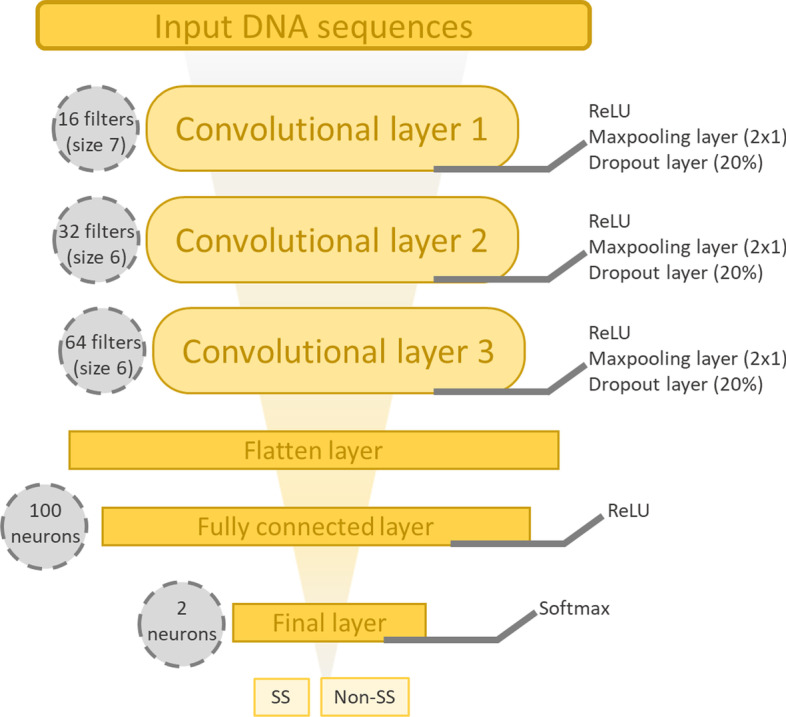
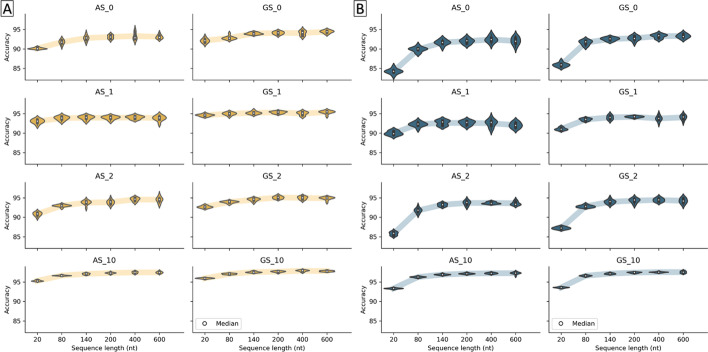
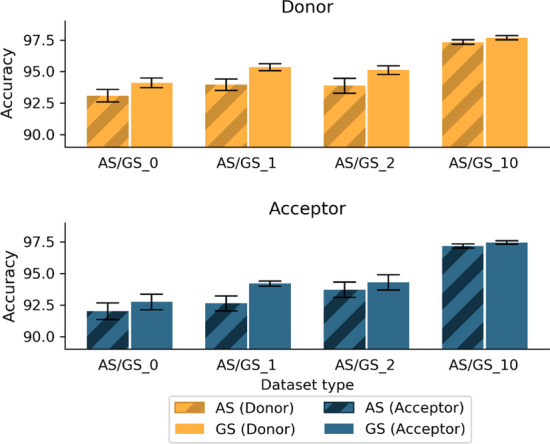
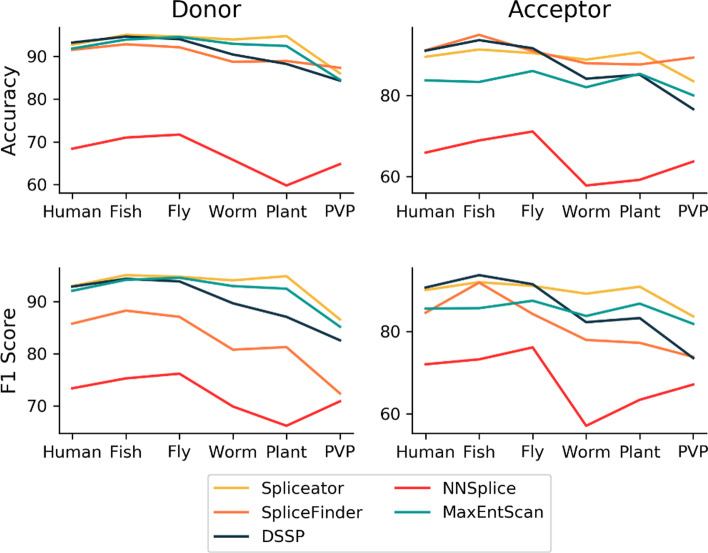
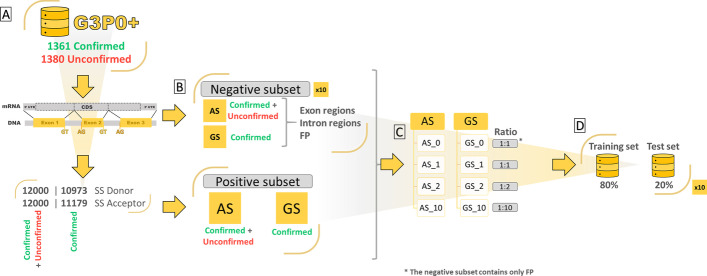
We developed Spliceator to predict splice sites in a wide range of species, including model and non-model organisms. Spliceator uses a convolutional neural network and is trained on carefully validated data from over 100 organisms. We show that Spliceator achieves consistently high accuracy (89-92%) compared to existing methods on independent benchmarks from human, fish, fly, worm, plant and protist organisms.
Spliceator is a new Deep Learning method trained on high-quality data, which can be used to predict splice sites in diverse organisms, ranging from human to protists, with consistently high accuracy.
从头预测剪接位点是真核基因组注释的一个重要步骤。最近的预测器利用了深度学习算法和来自模式生物的可靠基因结构。然而,缺乏针对非模式生物的深度学习方法。
我们开发了 Spliceator,以预测包括模型和非模型生物在内的广泛物种中的剪接位点。Spliceator 使用卷积神经网络,并在来自 100 多种生物的经过精心验证的数据上进行训练。我们表明,与来自人类、鱼类、苍蝇、蠕虫、植物和原生生物的独立基准相比,Spliceator 在剪接位点的预测上始终具有很高的准确性(89-92%)。
Spliceator 是一种基于高质量数据的新的深度学习方法,可以用于预测从人类到原生生物等各种生物中的剪接位点,具有始终如一的高准确性。