Koumakis Lefteris
Foundation for Research and Technology - Hellas (FORTH), Institute of Computer Science, Heraklion, Crete, Greece.
Comput Struct Biotechnol J. 2020 Jun 17;18:1466-1473. doi: 10.1016/j.csbj.2020.06.017. eCollection 2020.
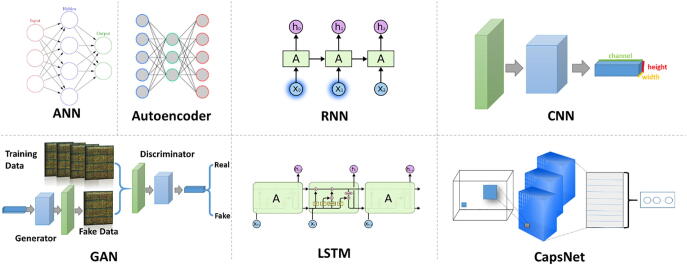
With the evolution of biotechnology and the introduction of the high throughput sequencing, researchers have the ability to produce and analyze vast amounts of genomics data. Since genomics produce big data, most of the bioinformatics algorithms are based on machine learning methodologies, and lately deep learning, to identify patterns, make predictions and model the progression or treatment of a disease. Advances in deep learning created an unprecedented momentum in biomedical informatics and have given rise to new bioinformatics and computational biology research areas. It is evident that deep learning models can provide higher accuracies in specific tasks of genomics than the state of the art methodologies. Given the growing trend on the application of deep learning architectures in genomics research, in this mini review we outline the most prominent models, we highlight possible pitfalls and discuss future directions. We foresee deep learning accelerating changes in the area of genomics, especially for multi-scale and multimodal data analysis for precision medicine.
随着生物技术的发展以及高通量测序技术的引入,研究人员有能力生成和分析大量的基因组数据。由于基因组学产生大数据,大多数生物信息学算法基于机器学习方法,近来又基于深度学习,以识别模式、进行预测并对疾病的进展或治疗进行建模。深度学习的进展在生物医学信息学领域创造了前所未有的势头,并催生了新的生物信息学和计算生物学研究领域。显然,深度学习模型在基因组学的特定任务中能够提供比现有方法更高的准确性。鉴于深度学习架构在基因组学研究中的应用呈增长趋势,在本综述中,我们概述了最突出的模型,强调了可能存在的陷阱并讨论了未来方向。我们预计深度学习将加速基因组学领域的变革,特别是在用于精准医学的多尺度和多模态数据分析方面。