Rare Disease Research Center, Korea Research Institute of Bioscience and Biotechnology, 125 Gwahak-ro, Yuseong-gu, Daejeon, 34141, Korea.
BioNanotechnology Research Center, Korea Research Institute of Bioscience and Biotechnology, 125 Gwahak-ro, Yuseong-gu, Daejeon, 34141, Korea.
Sci Rep. 2021 Nov 23;11(1):22764. doi: 10.1038/s41598-021-02262-7.
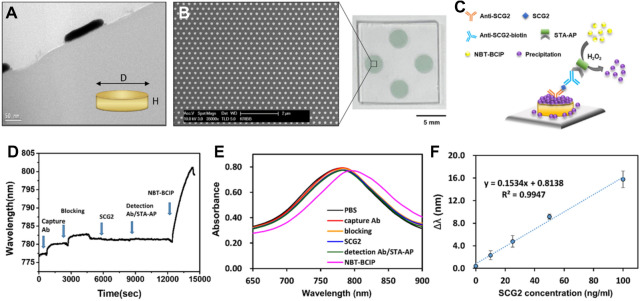
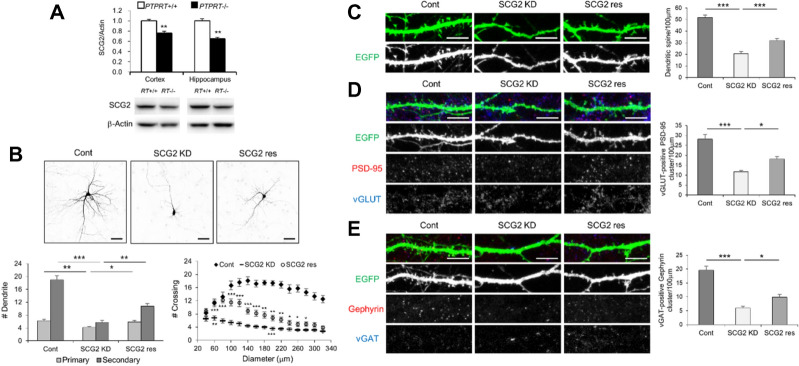
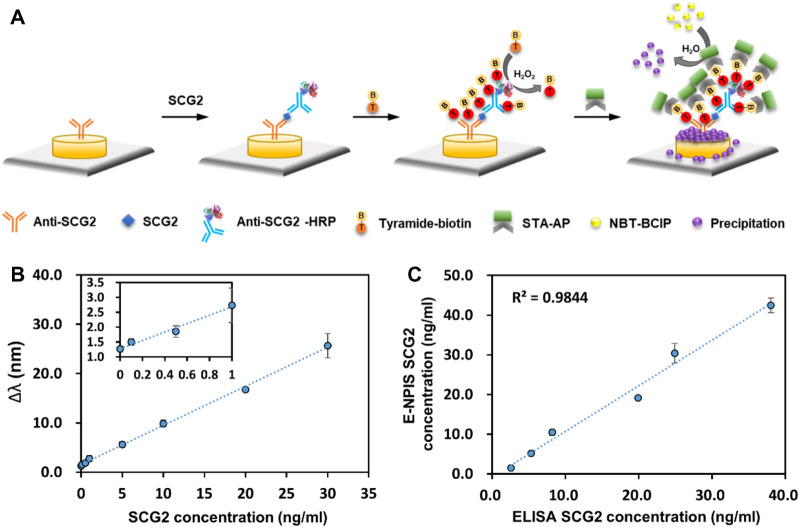
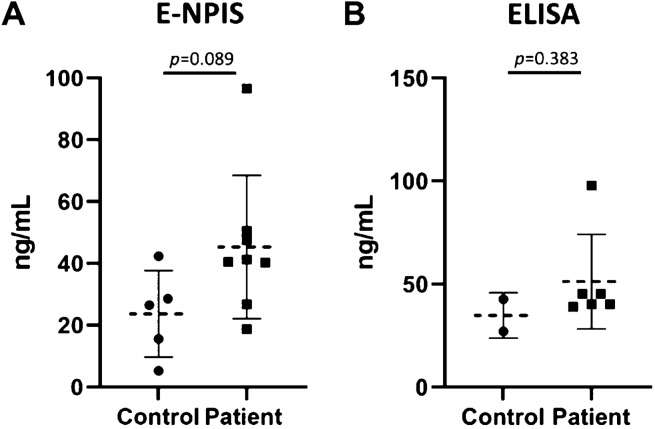
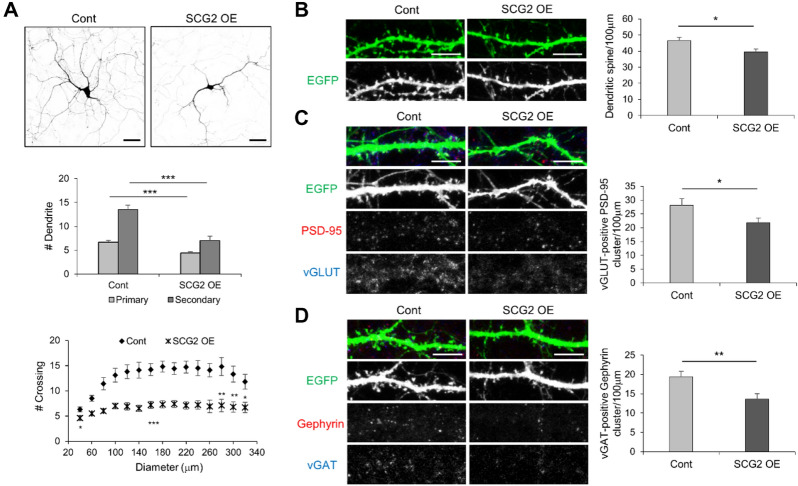
The neural circuits of the infant brain are rapidly established near 6 months of age, but neurodevelopmental disorders can be diagnosed only at the age of 2-3 years using existing diagnostic methods. Early diagnosis is very important to alleviate life-long disability in patients through appropriate early intervention, and it is imperative to develop new diagnostic methods for early detection of neurodevelopmental disorders. We examined the serum level of secretogranin II (SCG2) in pediatric patients to evaluate its potential role as a biomarker for neurodevelopmental disorders. A plasmonic immunosensor performing an enzyme-linked immunosorbent assay (ELISA) on a gold nanodot array was developed to detect SCG2 in small volumes of serum. This nanoplasmonic immunosensor combined with tyramide signal amplification was highly sensitive to detect SCG2 in only 5 μL serum samples. The analysis using the nanoplasmonic immunosensor revealed higher serum SCG2 levels in pediatric patients with developmental delay than in the control group. Overexpression or knockdown of SCG2 in hippocampal neurons significantly attenuated dendritic arborization and synaptic formation. These results suggest that dysregulated SCG2 expression impairs neural development. In conclusion, we developed a highly sensitive nanoplasmonic immunosensor to detect serum SCG2, a candidate biomarker for the early diagnosis of neurodevelopmental disorders.
婴儿大脑的神经回路在接近 6 个月大时迅速建立,但神经发育障碍只能通过现有的诊断方法在 2-3 岁时诊断。早期诊断对于通过适当的早期干预减轻患者终身残疾非常重要,因此迫切需要开发新的诊断方法来早期发现神经发育障碍。我们检测了儿科患者的脑啡肽原 II (SCG2) 血清水平,以评估其作为神经发育障碍生物标志物的潜在作用。我们开发了一种在金纳米点阵列上进行酶联免疫吸附测定 (ELISA) 的等离子体免疫传感器,以检测小体积血清中的 SCG2。这种纳米等离子体免疫传感器与酪胺信号放大相结合,可高度灵敏地仅检测 5 μL 血清样本中的 SCG2。使用纳米等离子体免疫传感器的分析表明,发育迟缓的儿科患者的血清 SCG2 水平高于对照组。海马神经元中 SCG2 的过表达或敲低显著减弱了树突分支和突触形成。这些结果表明,SCG2 表达失调会损害神经发育。总之,我们开发了一种高灵敏度的纳米等离子体免疫传感器来检测血清 SCG2,这是神经发育障碍早期诊断的候选生物标志物。