Sun Hong, Wang Guo, Cai Jiaqin, Wei Xiaoxia, Zeng Ying, Peng Yan, Zhuang Jie
Department of Pharmacy, Shengli Clinical Medical College of Fujian Medical University, Fujian Provincial Hospital, Fuzhou, Fujian 350001, P.R. China.
Department of Clinical Pharmacology, Xiangya Hospital, Central South University, Changsha, Hunan 410078, P.R. China.
Exp Ther Med. 2022 Jan;23(1):12. doi: 10.3892/etm.2021.10934. Epub 2021 Oct 28.
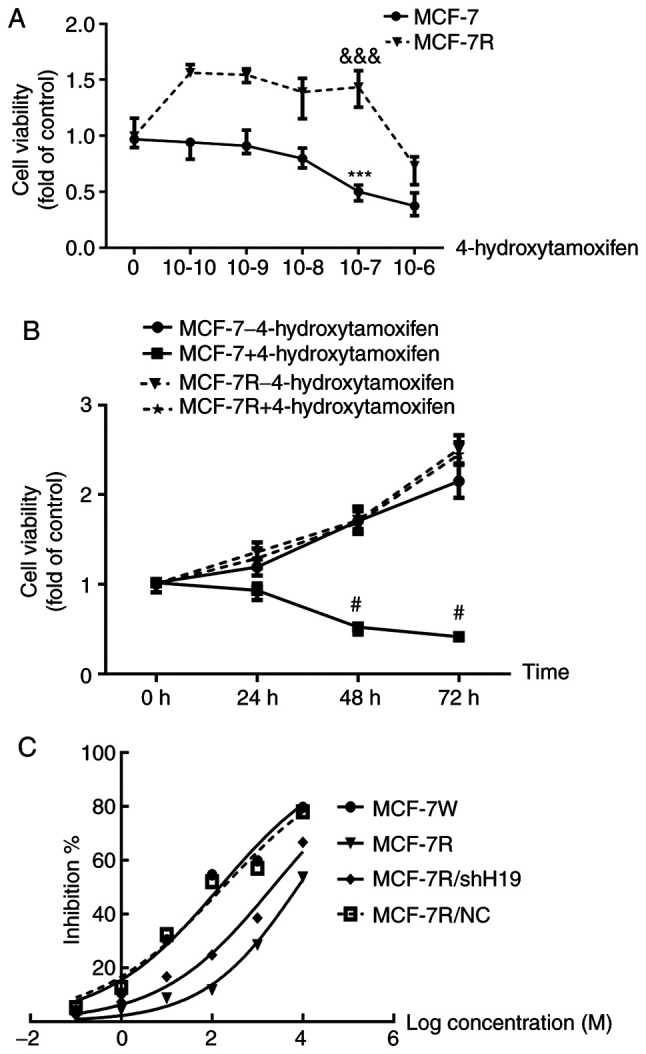
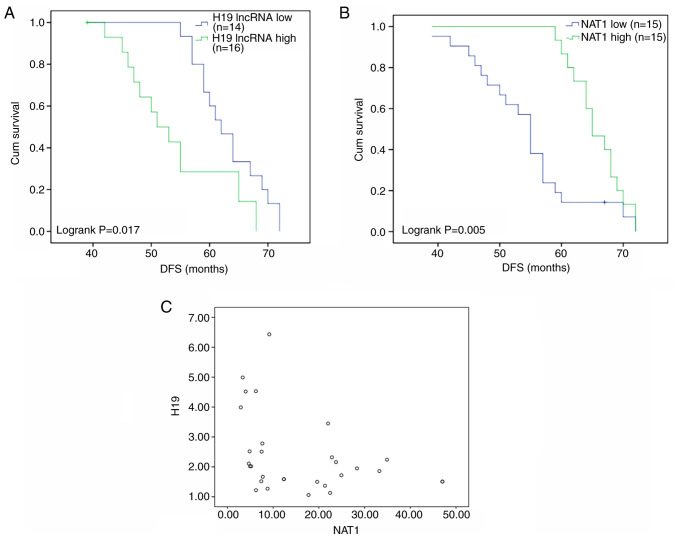
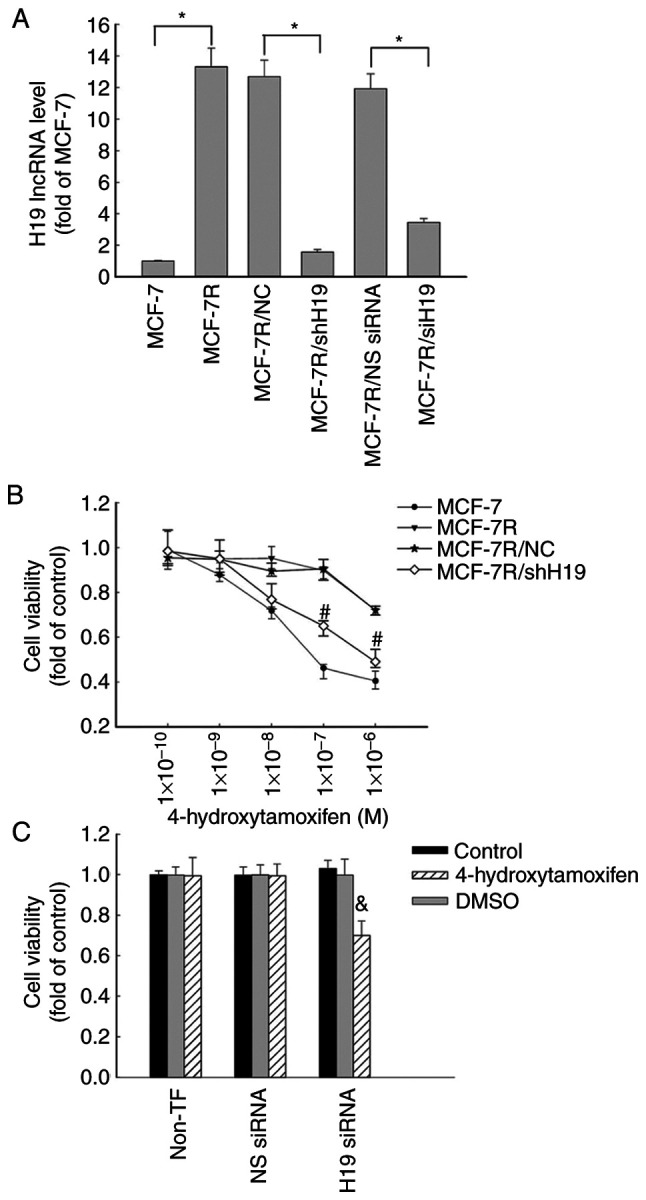
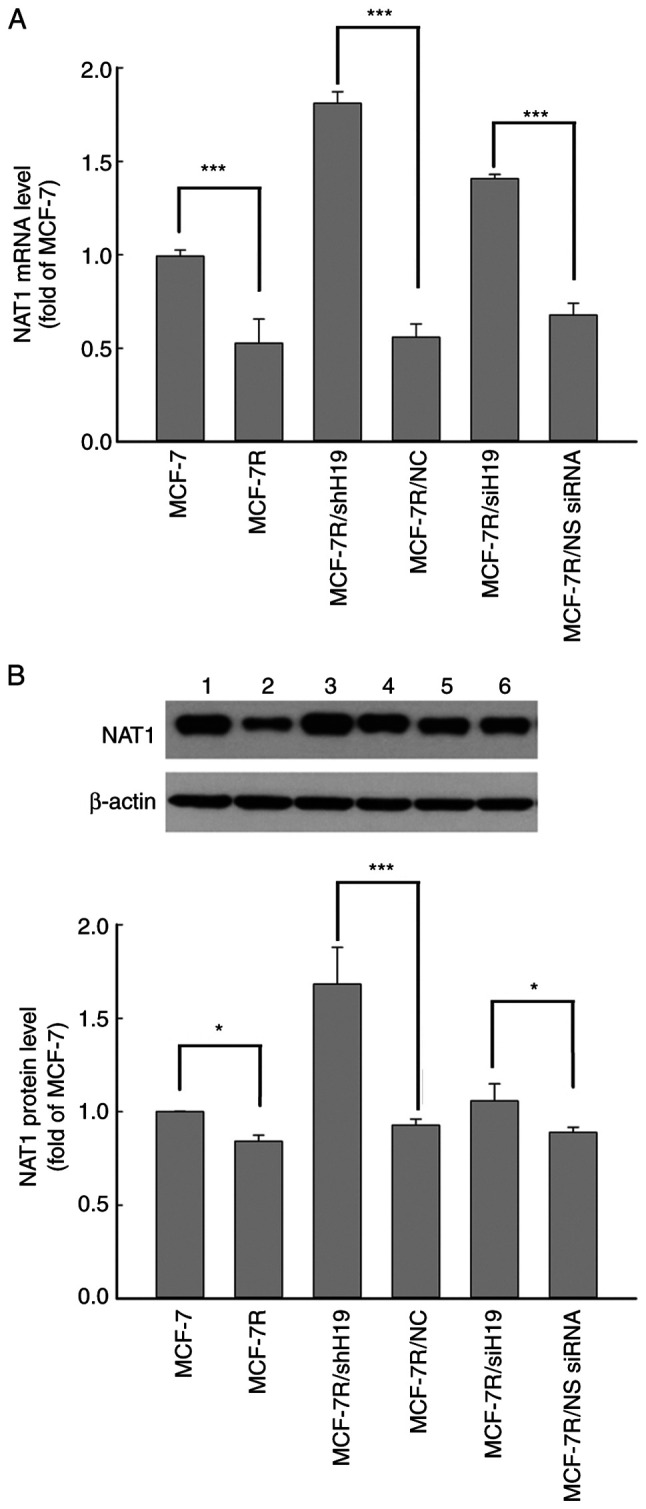
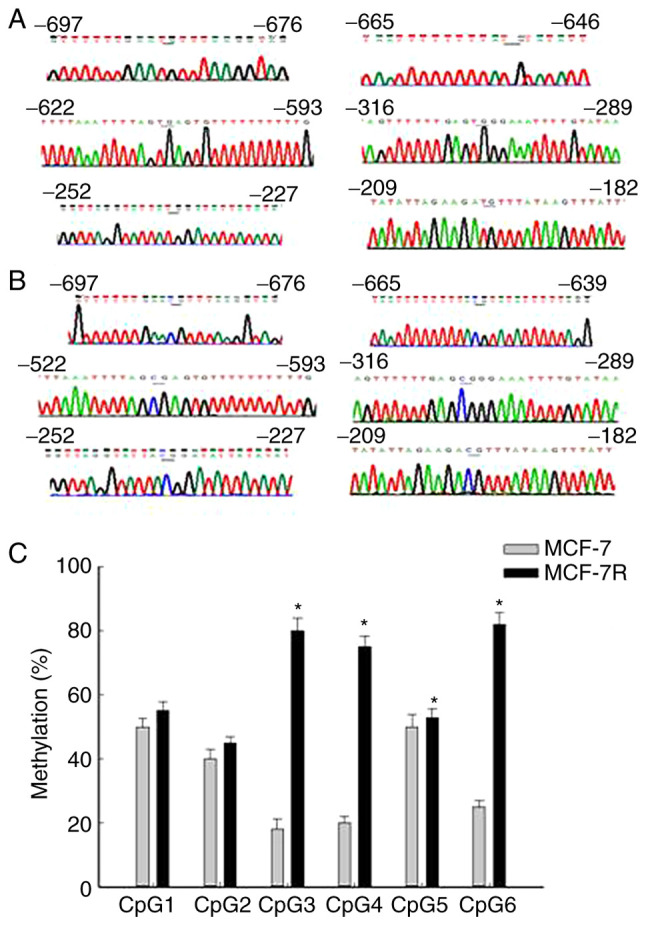
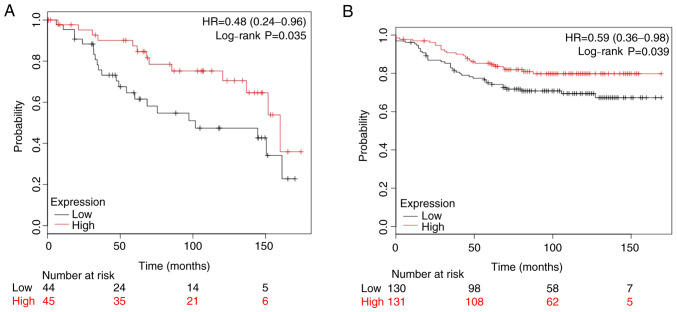
Long non-coding RNA (lncRNA) H19 is associated with proliferation, invasion and metastasis in numerous types of cancer. H19 lncRNA has been demonstrated to be an estrogen-inducible gene, the expression of which is significantly increased in tamoxifen (TAM)-resistant MCF-7 breast cancer cells. The aim of the present study was to investigate the role and molecular mechanism of lncRNA H19 in the development of TAM resistance. TAM-resistant MCF-7 (MCF-7R) cells were developed by the treatment of wild-type MCF-7 cells with 4-hydroxytamoxifen. Analysis of H19 expression in the cells indicated that upregulation of H19 contributed to the resistance of the MCF-7R cell line. Furthermore, when H19 was knocked down in the MCF-7R cells, the sensitivity to 4-hydroxytamoxifen was markedly restored. The results further demonstrated that N-acetyltransferase 1 (NAT1) may serve an important role in TAM-resistant cells, as NAT1 expression was notably downregulated in the MCF-7R cells but significantly elevated following the knockdown of H19. In addition, lower expression of NAT1 and higher expression of H19 were indicated to be associated with poor prognosis in patients with breast cancer treated with TAM. The results of bisulfite genomic sequencing PCR analysis indicated that the methylation rate of NAT1 in MCF-7R cells was significantly higher compared with that in MCF-7 cells, while the methylation rate of NAT1 in TAM-resistant cells transfected with small interfering RNA against H19 was significantly lower than that in the corresponding untransfected cells. Therefore, the present study suggests that the H19 gene regulates NAT1 expression in TAM-resistant cells via the mediation of NAT1 promoter methylation.
长链非编码RNA(lncRNA)H19与多种类型癌症的增殖、侵袭和转移相关。H19 lncRNA已被证明是一种雌激素诱导基因,其表达在他莫昔芬(TAM)耐药的MCF-7乳腺癌细胞中显著增加。本研究的目的是探讨lncRNA H19在TAM耐药发生发展中的作用及分子机制。通过用4-羟基他莫昔芬处理野生型MCF-7细胞,构建了TAM耐药的MCF-7(MCF-7R)细胞。对细胞中H19表达的分析表明,H19的上调有助于MCF-7R细胞系的耐药性。此外,当在MCF-7R细胞中敲低H19时,对4-羟基他莫昔芬的敏感性明显恢复。结果进一步表明,N-乙酰转移酶1(NAT1)可能在TAM耐药细胞中起重要作用,因为NAT1在MCF-7R细胞中的表达明显下调,但在H19敲低后显著升高。此外,NAT1低表达和H19高表达与接受TAM治疗的乳腺癌患者预后不良相关。亚硫酸氢盐基因组测序PCR分析结果表明,MCF-7R细胞中NAT1的甲基化率明显高于MCF-7细胞,而用针对H19的小干扰RNA转染的TAM耐药细胞中NAT1的甲基化率明显低于相应的未转染细胞。因此,本研究表明,H19基因通过介导NAT1启动子甲基化来调节TAM耐药细胞中NAT1的表达。