Zhu Qiong-Ni, Wang Guo, Guo Ying, Peng Yan, Zhang Rui, Deng Jun-Li, Li Zhi-Xing, Zhu Yuan-Shan
Department of Clinical Pharmacology, Xiangya Hospital, Institute of Clinical Pharmacology, Central South University, Changsha, P. R. China.
Department of Medicine, Weill Cornell Medical College, New York, NY, USA.
Oncotarget. 2017 Sep 21;8(54):91990-92003. doi: 10.18632/oncotarget.21121. eCollection 2017 Nov 3.
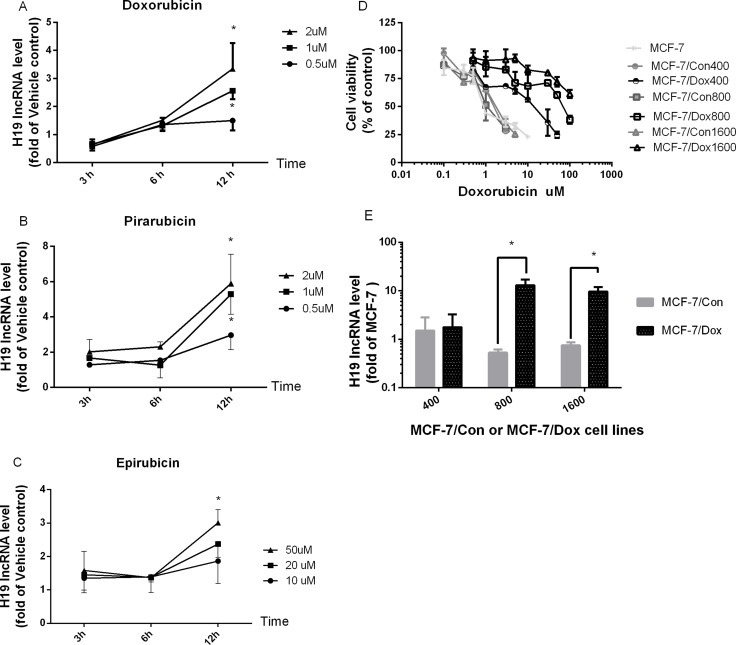
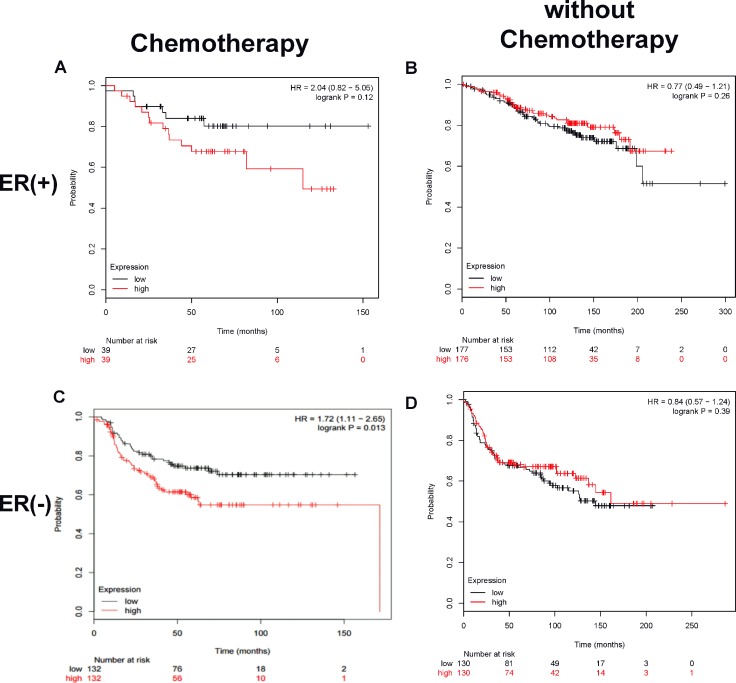
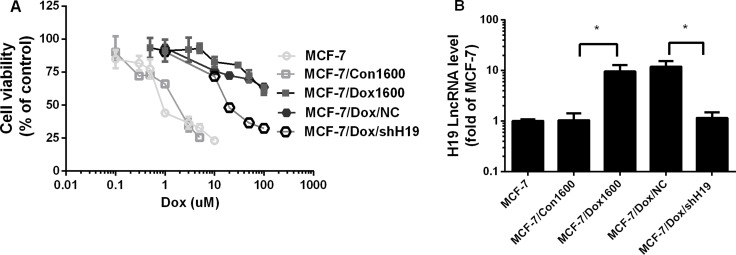
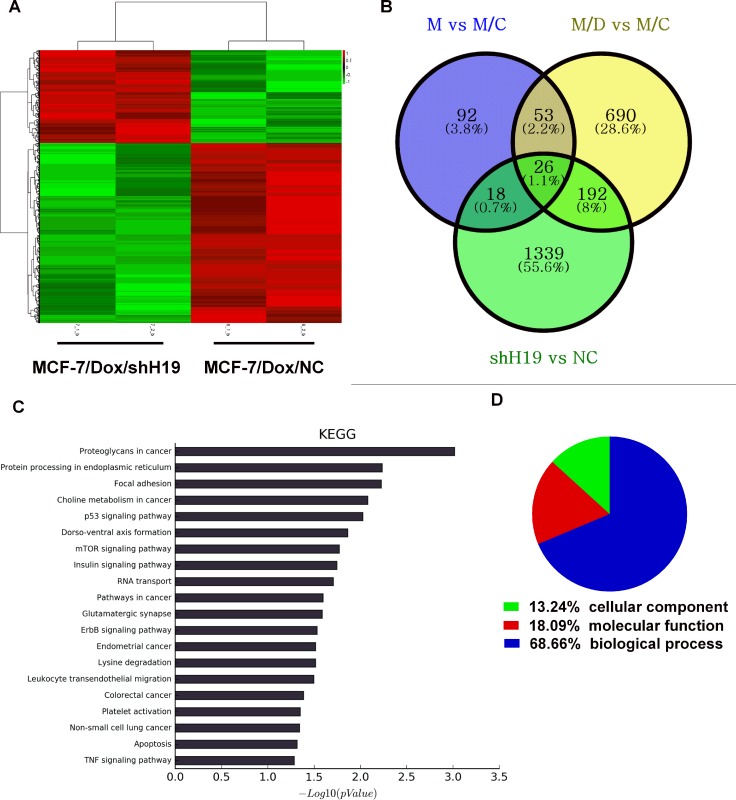
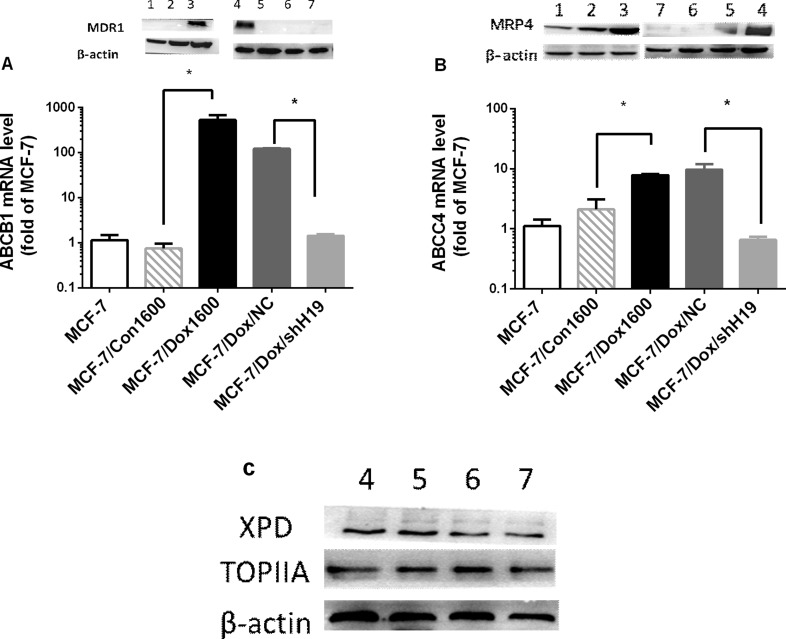
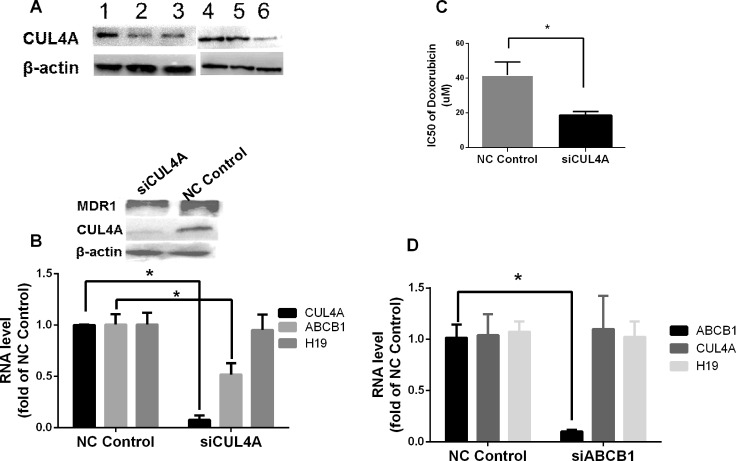
Development of chemoresistance is a persistent problem during cancer treatment. Long non-coding RNAs (LncRNAs) are currently emerging as an integral functional component of the human genome and as critical regulators of cancer development and progression. In the present study, we investigated the role and molecular mechanism of H19 lncRNA in chemoresistance development by using doxorubicin (Dox) resistance in breast cancer cells as a model system. lncRNA expression was significantly increased in anthracycline-treated and Dox-resistant MCF-7 breast cancer cells. This H19 overexpression was contributed to cancer cell resistance to anthracyclines and paclitaxel as knockdown of lncRNA by a specific shRNA in Dox-resistant cells significantly improved the cell sensitivity to anthracyclines and paclitaxel. Furthermore, gene expression profiling analysis revealed that a total of 192 genes were associated with H19-mediated Dox resistance. These genes were enriched in multiple KEGG pathways that are related to chemoresistance. Using genetic and pharmacological approaches, we demonstrated that MDR1 and MRP4 were major effectors of H19-regulated Dox resistance in breast cancer cells as MDR1 and MRP4 expression was markedly elevated in Dox-resistant cells while dramatically reduced when H19 was knocked down. Moreover, we found that CUL4A, an ubiquitin ligase component, was a critical factor bridging H19 lncRNA to MDR1 expression, and a high tumor CUL4A expression was associated with low survival in breast cancer patients treated with chemotherapy. These data suggest that H19 lncRNA plays a leading role in breast cancer chemoresistance, mediated mainly through a --/ pathway.
化疗耐药性的产生是癌症治疗过程中一个长期存在的问题。长链非编码RNA(LncRNAs)目前正作为人类基因组不可或缺的功能组成部分以及癌症发生和发展的关键调节因子而崭露头角。在本研究中,我们以乳腺癌细胞对阿霉素(Dox)的耐药性为模型系统,研究了H19 lncRNA在化疗耐药性产生中的作用及分子机制。在经蒽环类药物处理及对Dox耐药的MCF-7乳腺癌细胞中,lncRNA表达显著增加。这种H19的过表达导致癌细胞对蒽环类药物和紫杉醇产生耐药性,因为在耐药细胞中通过特异性短发夹RNA(shRNA)敲低lncRNA可显著提高细胞对蒽环类药物和紫杉醇的敏感性。此外,基因表达谱分析显示共有192个基因与H19介导的Dox耐药性相关。这些基因富集于多个与化疗耐药性相关的KEGG通路中。通过遗传学和药理学方法,我们证明多药耐药蛋白1(MDR1)和多药耐药相关蛋白4(MRP4)是H19调节的乳腺癌细胞Dox耐药性的主要效应因子,因为MDR1和MRP4的表达在耐药细胞中显著升高,而当H19被敲低时则显著降低。此外,我们发现泛素连接酶组分CUL4A是连接H19 lncRNA与MDR1表达的关键因子,且在接受化疗的乳腺癌患者中,肿瘤组织中CUL4A的高表达与低生存率相关。这些数据表明,H19 lncRNA在乳腺癌化疗耐药性中起主导作用,主要通过一条/通路介导。