Department of Pathology and Laboratory Medicine, Institute on Aging and Center for Neurodegenerative Disease Research, University of Pennsylvania School of Medicine, Philadelphia, PA, 19104, USA.
Department of Chemistry, University of Pennsylvania School of Arts and Sciences, Philadelphia, PA, 19104, USA.
Acta Neuropathol Commun. 2021 Nov 24;9(1):188. doi: 10.1186/s40478-021-01288-2.
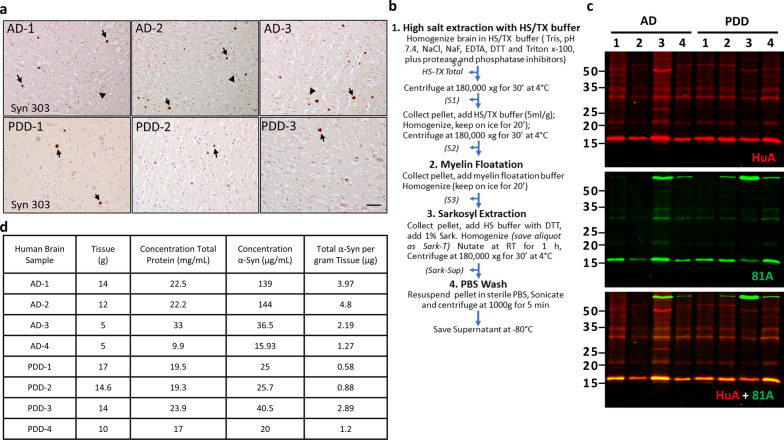
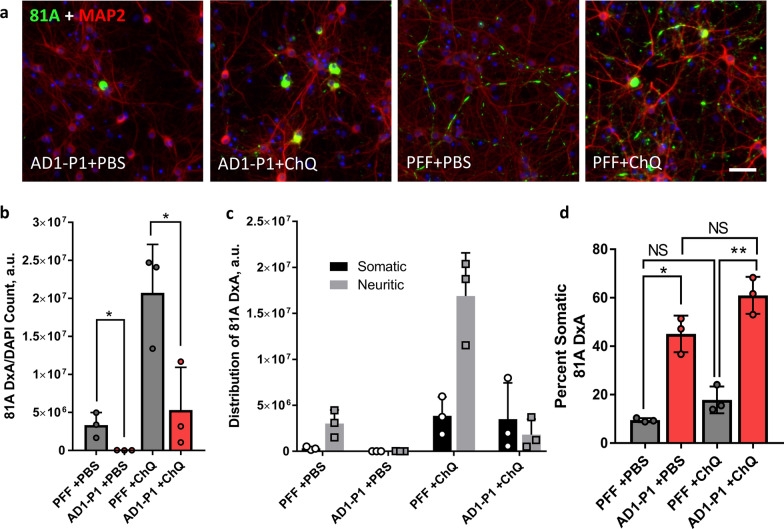
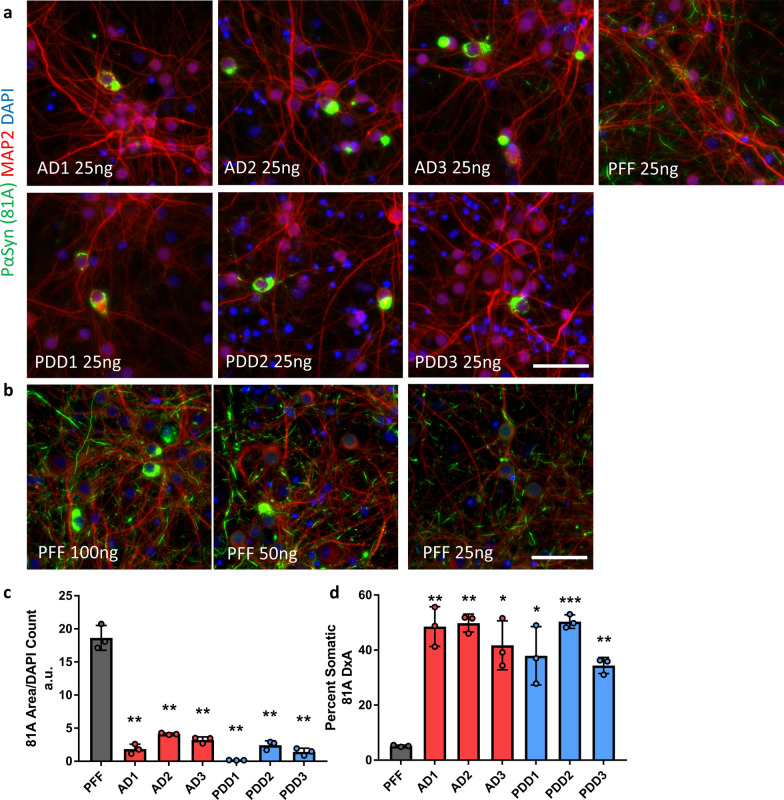
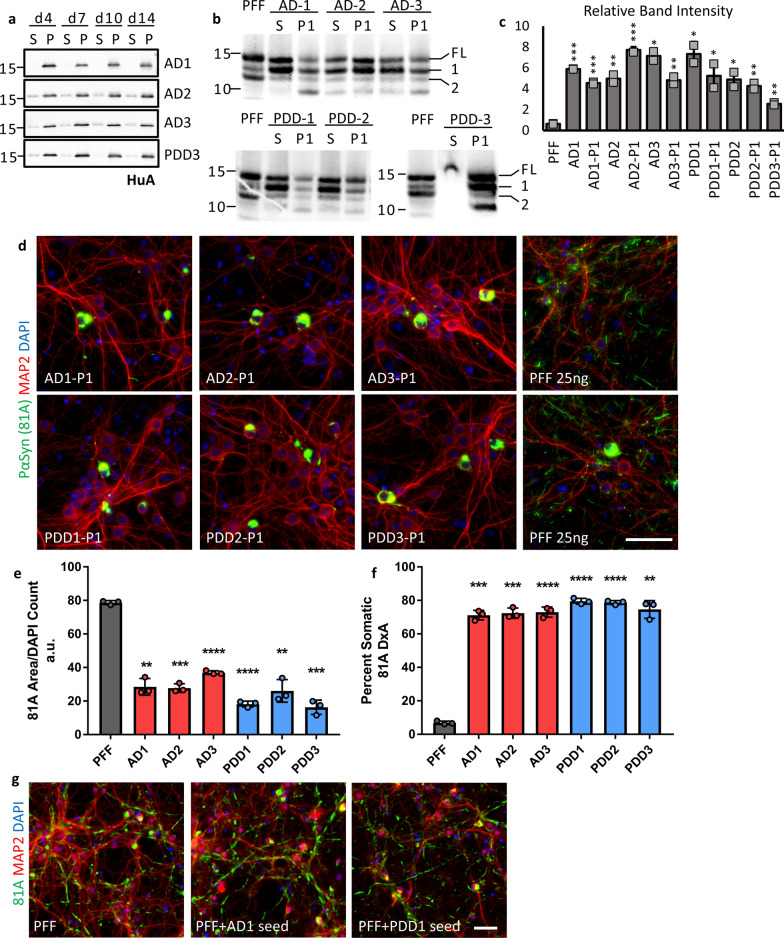
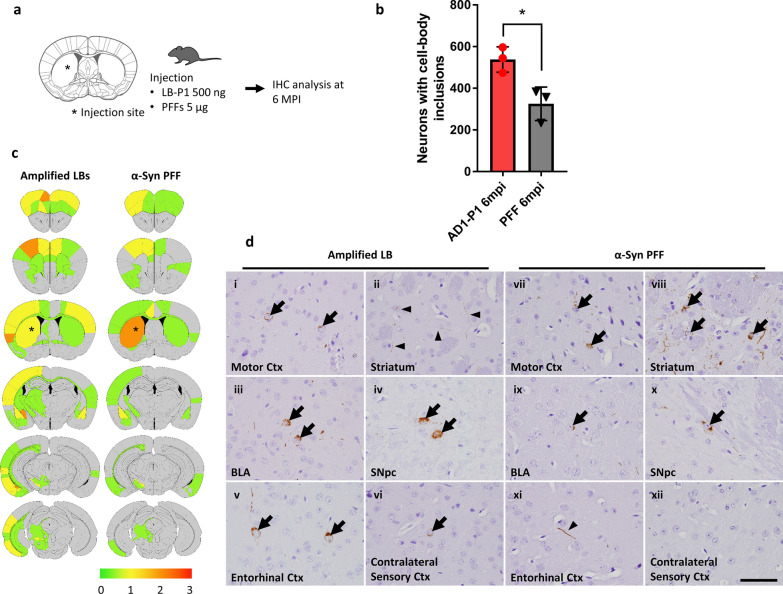
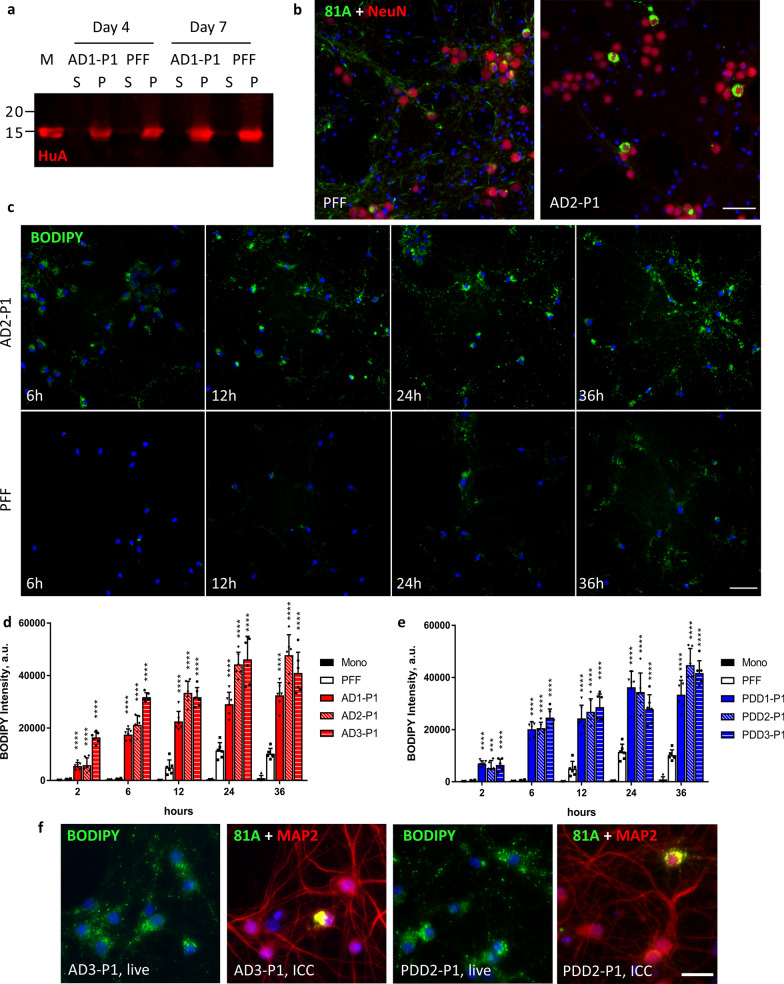
Lewy bodies (LBs) are complex, intracellular inclusions that are common pathological features of many neurodegenerative diseases. They consist largely of aggregated forms of the protein alpha-Synuclein (α-Syn), which misfolds to give rise to beta-sheet rich amyloid fibrils. The aggregation of monomers into fibrils occurs readily in vitro and pre-formed fibrils (PFFs) generated from recombinant α-Syn monomers are the basis of many models of LB diseases. These α-Syn PFFs recapitulate many pathological phenotypes in both cultured cells and animal models including the formation of α-Syn rich, insoluble aggregates, neuron loss, and motor deficits. However, it is not clear how closely α-Syn PFFs recapitulate the biological behavior of LB aggregates isolated directly from patients. Direct interrogation of the cellular response to LB-derived α-Syn has thus far been limited. Here we demonstrate that α-Syn aggregates derived from LB disease patients induce pathology characterized by a prevalence of large somatic inclusions that is distinct from the primarily neuritic pathology induced by α-Syn PFFs in our cultured neuron model. Moreover, these LB-derived aggregates can be amplified in vitro using recombinant α-Syn to generate aggregates that maintain the unique, somatic pathological phenotype of the original material. Amplified LB aggregates also showed greater uptake in cultured neurons and greater pathological burden and more rapid pathological spread in injected mouse brains, compared to α-Syn PFFs. Our work indicates that LB-derived α-Syn from diseased brains represents a distinct conformation species with unique biological activities that has not been previously observed in fully recombinant α-Syn aggregates and demonstrate a new strategy for improving upon α-Syn PFF models of synucleinopathies using amplified LBs.
路易体(Lewy bodies,LB)是复杂的细胞内包涵体,是许多神经退行性疾病的常见病理特征。它们主要由聚集形式的α-突触核蛋白(α-Synuclein,α-Syn)组成,这种蛋白错误折叠形成富含β-折叠的淀粉样纤维。单体在体外很容易聚集形成纤维,而从重组α-Syn 单体产生的预形成纤维(pre-formed fibrils,PFFs)是许多 LB 疾病模型的基础。这些α-Syn PFFs在培养细胞和动物模型中再现了许多病理表型,包括形成富含α-Syn 的不溶性聚集体、神经元丢失和运动缺陷。然而,目前尚不清楚α-Syn PFFs 与直接从患者中分离出的 LB 聚集体的生物学行为有多接近。直接研究 LB 衍生的α-Syn 对细胞的反应受到限制。在这里,我们证明了直接从 LB 疾病患者中分离得到的α-Syn 聚集体诱导的病理学特征是大的体细胞包涵体的普遍性,这与我们的培养神经元模型中由α-Syn PFF 诱导的主要神经突病理学明显不同。此外,这些 LB 衍生的聚集体可以使用重组α-Syn 在体外放大,以产生保持原始材料独特的体细胞病理表型的聚集体。与α-Syn PFF 相比,放大的 LB 聚集体在培养的神经元中的摄取量更大,在注射的小鼠脑中的病理负担更大,病理传播速度也更快。我们的工作表明,来自患病大脑的 LB 衍生的α-Syn 代表了一种独特的构象物种,具有以前在完全重组的α-Syn 聚集体中未观察到的独特生物学活性,并证明了一种使用放大的 LB 来改进 α-Syn PFF 模型的新策略。