Gu Yuting, Zhou Hong, Yu Hongshuang, Yang Wanlin, Wang Bei, Qian Fengtao, Cheng Yiji, He Shan, Zhao Xiaonan, Zhu Linqiao, Zhang Yanyun, Jin Min, Lu Eryi
Department of Stomatology, Renji Hospital, Shanghai Jiao Tong University School of Medicine, Shanghai 200127, China.
Key Laboratory of Tissue Microenvironment and Tumor, Shanghai Institute of Nutrition and Health, Shanghai Institutes for Biological Sciences, University of Chinese Academy of Sciences, Chinese Academy of Sciences, Shanghai 200032, China.
Mol Ther Nucleic Acids. 2021 Jul 21;26:1173-1185. doi: 10.1016/j.omtn.2021.07.010. eCollection 2021 Dec 3.
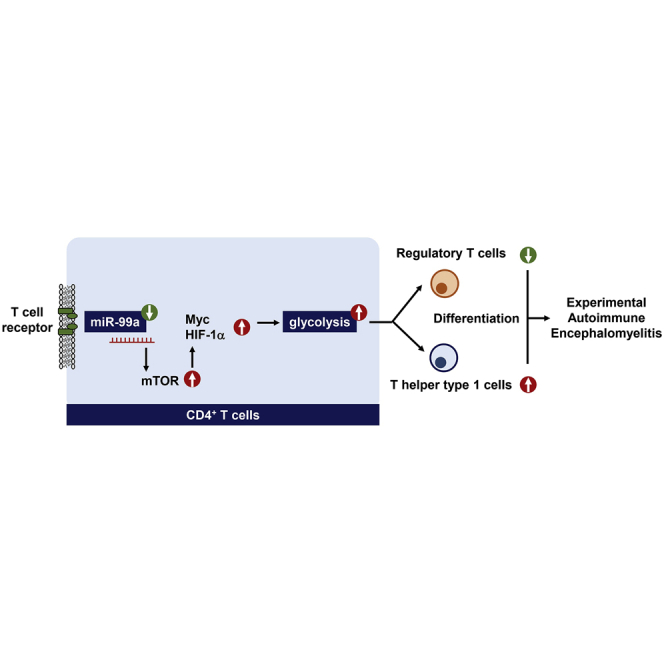
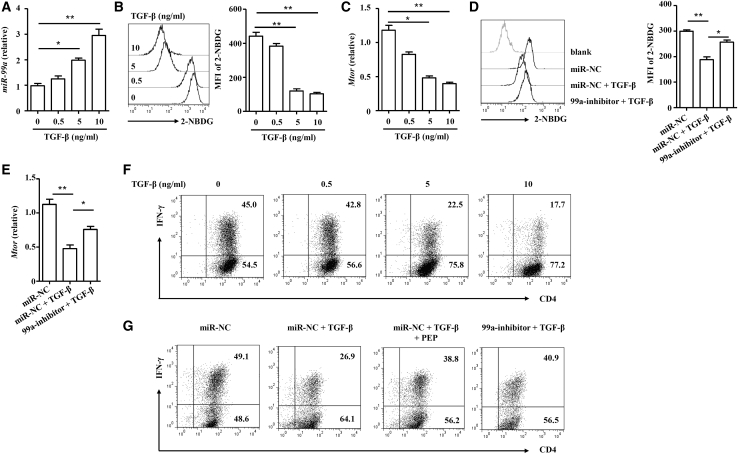
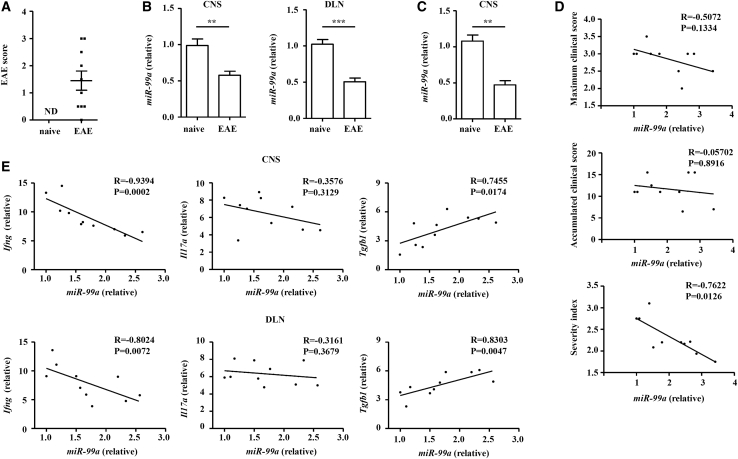
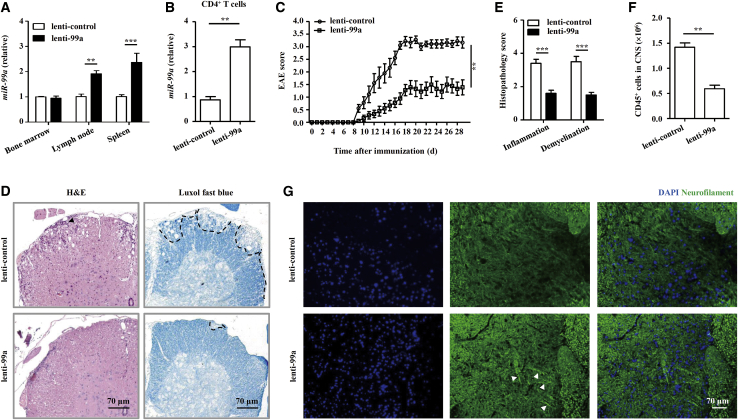
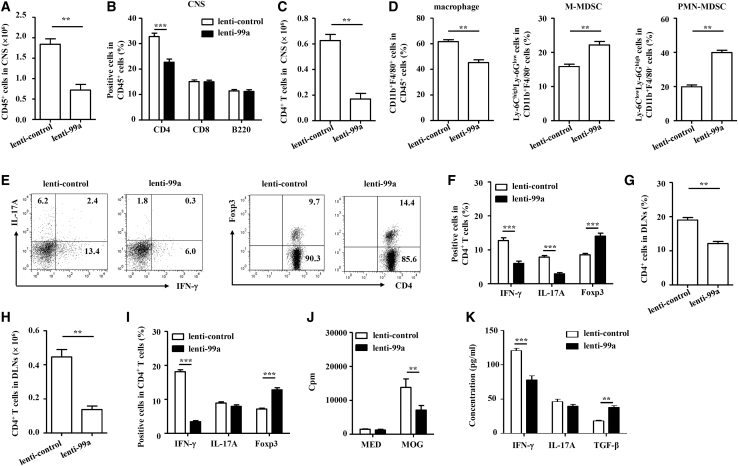
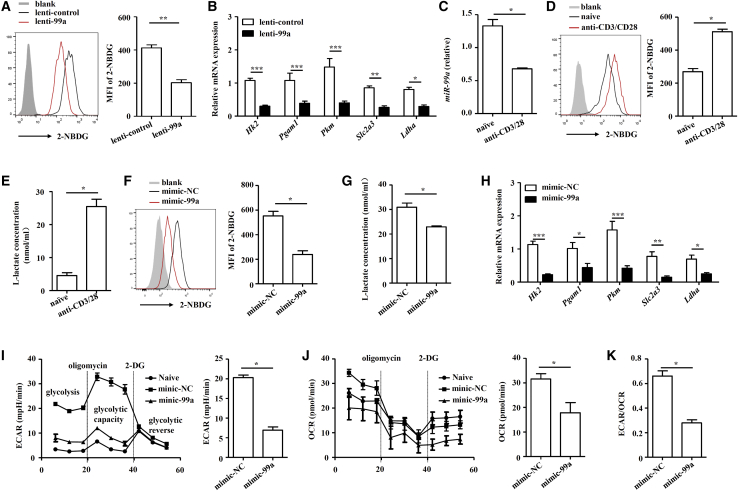
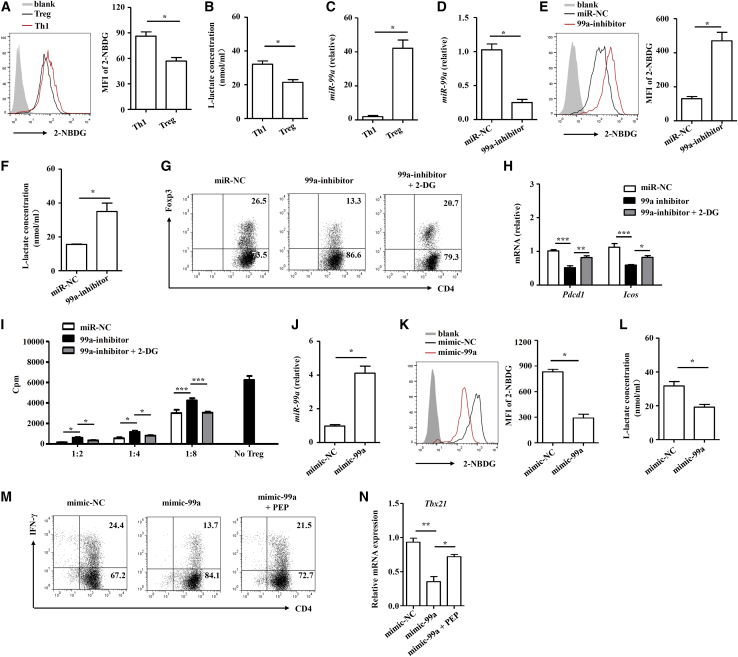
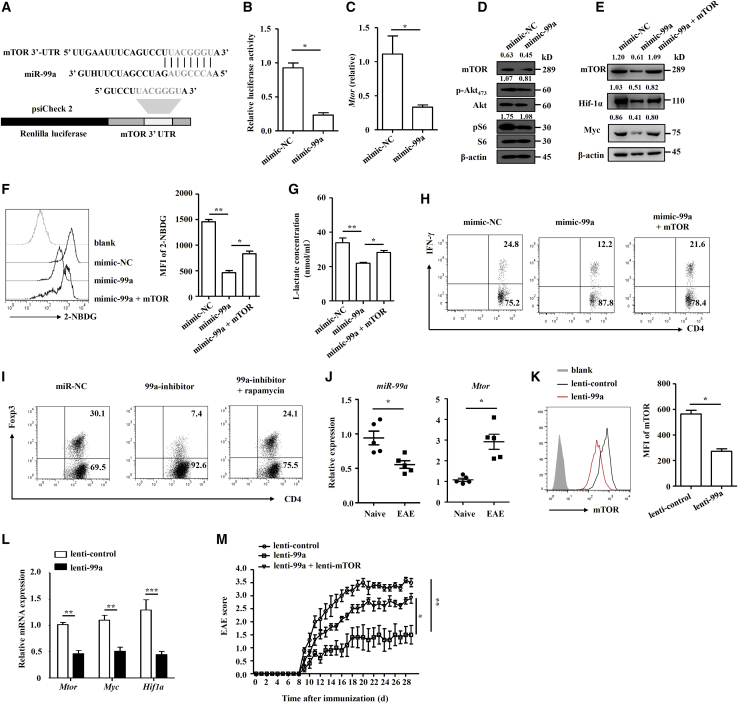
Multiple microRNAs exhibit diverse functions to regulate inflammatory and autoimmune diseases. MicroRNA-99a (miR-99a) has been shown to be involved in adipose tissue inflammation and to be downregulated in the inflammatory lesions of autoimmune diseases rheumatoid arthritis and systemic lupus erythematosus. In this study, we found that miR-99a was downregulated in CD4 T cells from experimental autoimmune encephalomyelitis (EAE) mice, an animal model of multiple sclerosis. Overexpression of miR-99a alleviated EAE development by promoting regulator T cells and inhibiting T helper type 1 (Th1) cell differentiation. Bioinformatics and functional analyses further revealed that the anti-inflammatory effects of miR-99a was attributable to its role in negatively regulating glycolysis reprogramming of CD4 T cells by targeting the mTOR pathway. Additionally, miR-99a expression was induced by transforming growth factor β (TGF-β) to regulate CD4 T cell glycolysis and differentiation. Taken together, our results characterize a pivotal role of miR-99a in regulating CD4 T cell differentiation and glycolysis reprogramming during EAE development, which may indicate that miR-99a is a promising therapeutic target for the amelioration of multiple sclerosis and possibly other autoimmune diseases.
多种微小RNA发挥多种功能来调节炎症和自身免疫性疾病。微小RNA-99a(miR-99a)已被证明参与脂肪组织炎症,且在自身免疫性疾病类风湿性关节炎和系统性红斑狼疮的炎症病灶中表达下调。在本研究中,我们发现miR-99a在实验性自身免疫性脑脊髓炎(EAE)小鼠(一种多发性硬化症的动物模型)的CD4 T细胞中表达下调。miR-99a的过表达通过促进调节性T细胞和抑制1型辅助性T(Th1)细胞分化来减轻EAE的发展。生物信息学和功能分析进一步揭示,miR-99a的抗炎作用归因于其通过靶向mTOR途径对CD4 T细胞糖酵解重编程的负调控作用。此外,转化生长因子β(TGF-β)可诱导miR-99a表达,从而调节CD4 T细胞的糖酵解和分化。综上所述,我们的结果表明miR-99a在EAE发展过程中调节CD4 T细胞分化和糖酵解重编程方面发挥关键作用,这可能表明miR-99a是改善多发性硬化症及可能其他自身免疫性疾病的一个有前景的治疗靶点。