Boog Hendrik, Medda Rebecca, Cavalcanti-Adam Elisabetta Ada
Department of Cellular Biophysics-Growth Factor Mechanobiology, Max-Planck-Institute for Medical Research, 69120 Heidelberg, Germany.
Institute for Pharmacy and Molecular Biotechnology (IPMB), Ruprecht-Karls-Universitaet Heidelberg, Im Neuenheimer Feld 364, 69120 Heidelberg, Germany.
J Imaging. 2021 Oct 20;7(11):219. doi: 10.3390/jimaging7110219.
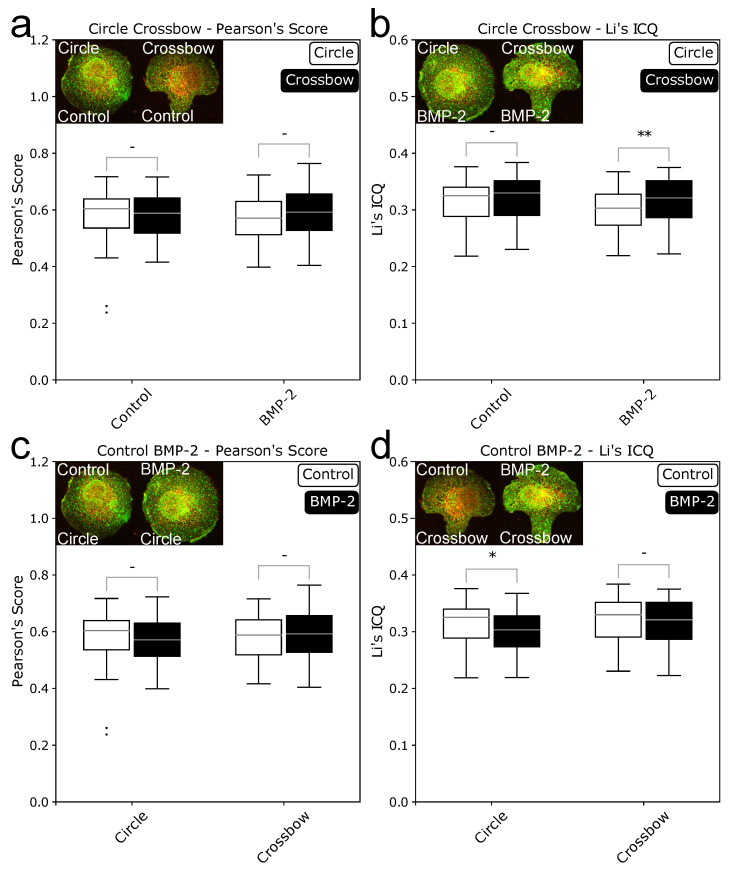
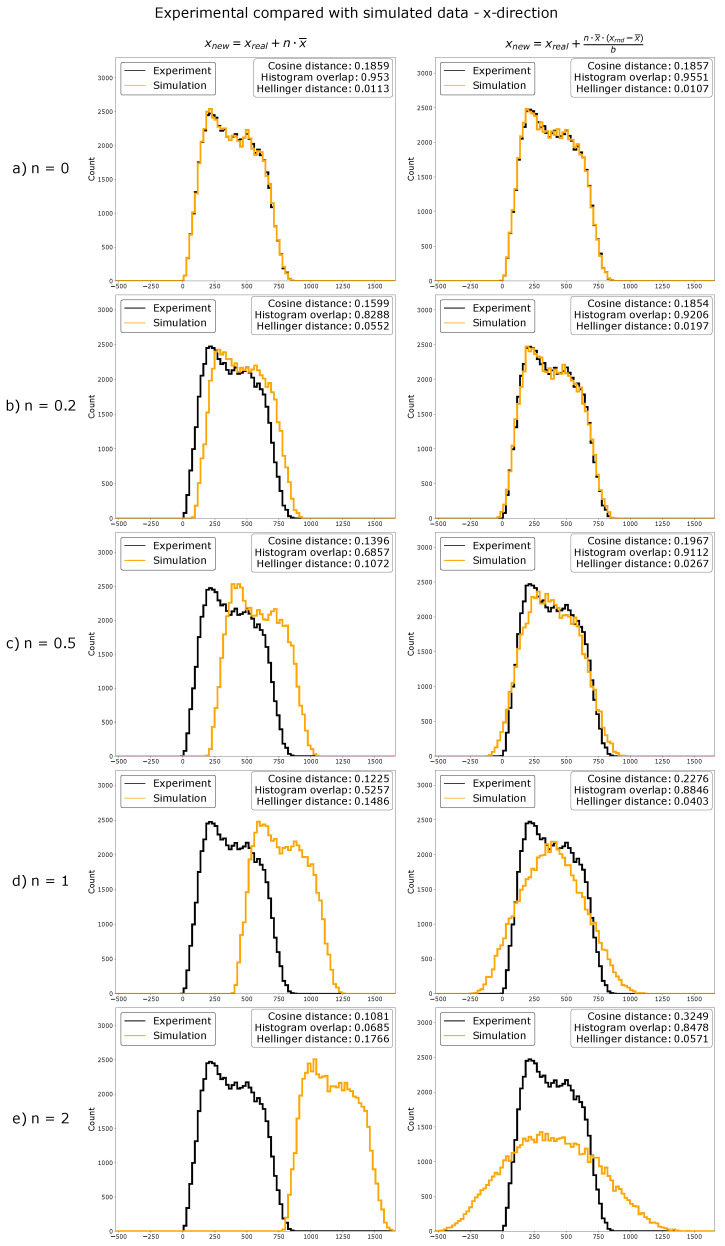
At the plasma membrane, transmembrane receptors are at the interface between cells and their environment. They allow sensing and transduction of chemical and mechanical extracellular signals. The spatial distribution of receptors and the specific recruitment of receptor subunits to the cell membrane is crucial for the regulation of signaling and cell behavior. However, it is challenging to define what regulates such spatial patterns for receptor localization, as cell shapes are extremely diverse when cells are maintained in standard culture conditions. Bone morphogenetic protein receptors (BMPRs) are serine-threonine kinases, which build heteromeric complexes of BMPRI and II. These are especially interesting targets for receptor distribution studies, since the signaling pathways triggered by BMPR-complexes depends on their dimerization mode. They might exist as preformed complexes, or assemble upon binding of BMP, triggering cell signaling which leads to differentiation or migration. In this work we analyzed BMPR receptor distributions in single cells grown on micropatterns, which allow not only to control cell shape, but also the distribution of intracellular organelles and protein assemblies. We developed a script called ComRed (Center Of Mass Receptor Distribution), which uses center of mass calculations to analyze the shift and spread of receptor distributions according to the different cell shapes. ComRed was tested by simulating changes in experimental data showing that shift and spread of distributions can be reliably detected. Our ComRed-based analysis of BMPR-complexes indicates that receptor distribution depends on cell polarization. The absence of a coordinated internalization after addition of BMP suggests that a rapid and continual recycling of BMPRs might occur. Receptor complexes formation and localization in cells induced by BMP might yield insights into the local regulation of different signaling pathways.
在质膜上,跨膜受体处于细胞与其环境的界面。它们能够感知并转导化学和机械细胞外信号。受体的空间分布以及受体亚基向细胞膜的特异性募集对于信号传导和细胞行为的调节至关重要。然而,要确定是什么调节受体定位的这种空间模式具有挑战性,因为在标准培养条件下培养细胞时,细胞形状极其多样。骨形态发生蛋白受体(BMPRs)是丝氨酸 - 苏氨酸激酶,它们形成BMPRI和II的异源复合物。这些是受体分布研究特别有趣的靶点,因为由BMPR复合物触发的信号通路取决于它们的二聚化模式。它们可能以预先形成的复合物形式存在,或者在BMP结合后组装,触发导致分化或迁移的细胞信号传导。在这项工作中,我们分析了在微图案上生长的单细胞中的BMPR受体分布,微图案不仅可以控制细胞形状,还可以控制细胞内细胞器和蛋白质组装体的分布。我们开发了一个名为ComRed(质心受体分布)的脚本,它使用质心计算来分析根据不同细胞形状受体分布的偏移和扩散。通过模拟实验数据的变化对ComRed进行了测试,结果表明分布的偏移和扩散可以被可靠地检测到。我们基于ComRed对BMPR复合物的分析表明,受体分布取决于细胞极化状态。添加BMP后缺乏协调的内化表明可能发生BMPRs的快速持续循环利用。BMP诱导的细胞中受体复合物的形成和定位可能会为不同信号通路的局部调节提供见解。