Department of Biochemistry and Molecular Biology, Michigan State University, East Lansing, MI, USA.
Department of Biochemistry and Molecular Biology, Michigan State University, East Lansing, MI, USA; Department of Microbiology and Molecular Genetics, Michigan State University, East Lansing, MI, USA.
J Cyst Fibros. 2022 Nov;21(6):996-1005. doi: 10.1016/j.jcf.2021.11.003. Epub 2021 Nov 22.
Elexacaftor-Tezacaftor-Ivacaftor (ETI) therapy is showing promising efficacy for treatment of cystic fibrosis (CF) and is becoming more widely available since recent FDA approval. However, little is known about how these drugs will affect lung infections, which are the leading cause of morbidity and mortality among people with CF (pwCF).
We analyzed sputum microbiome and metabolome data from pwCF (n=24) before and after ETI therapy using 16S rRNA gene sequencing and untargeted metabolomics.
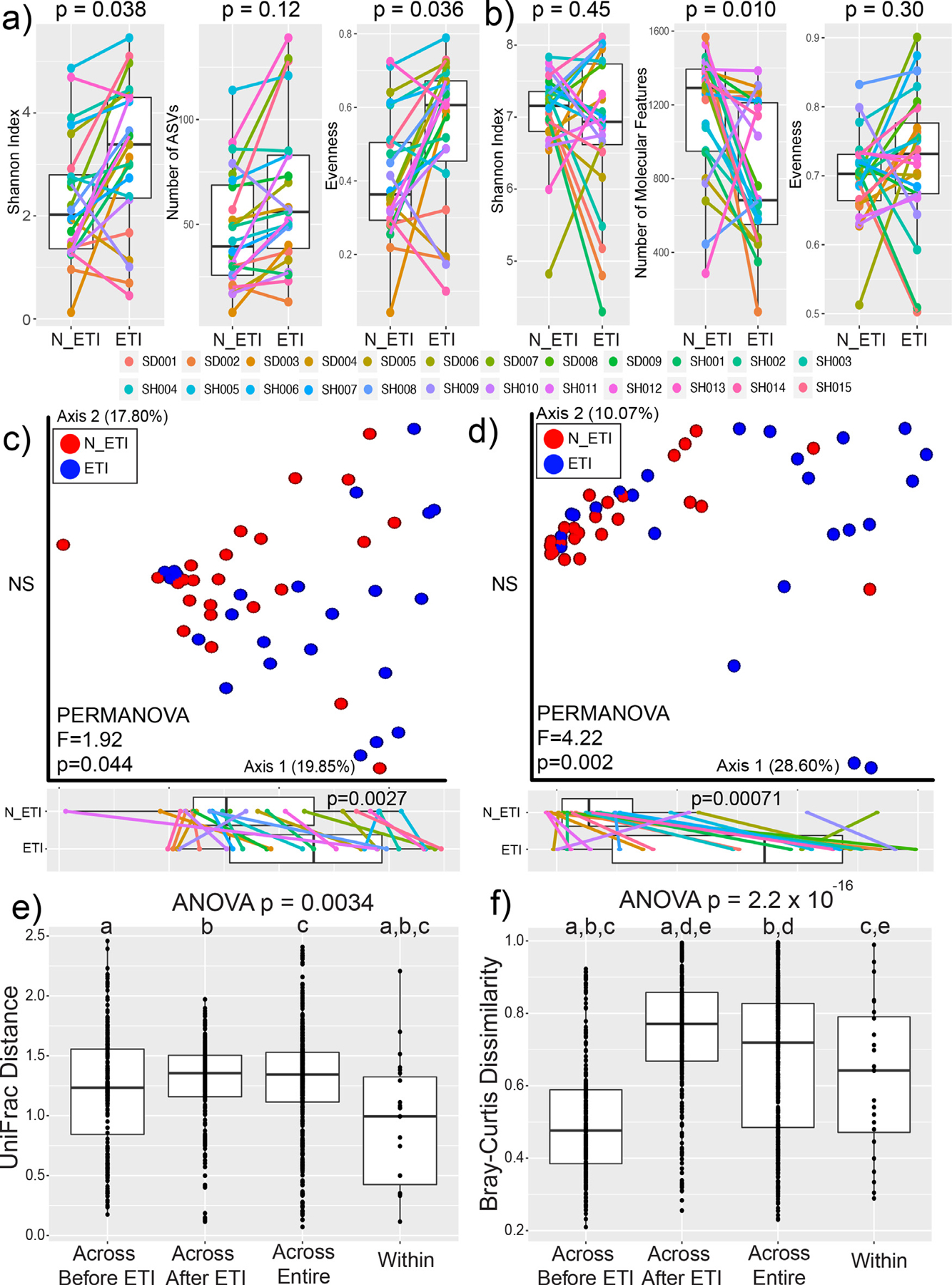
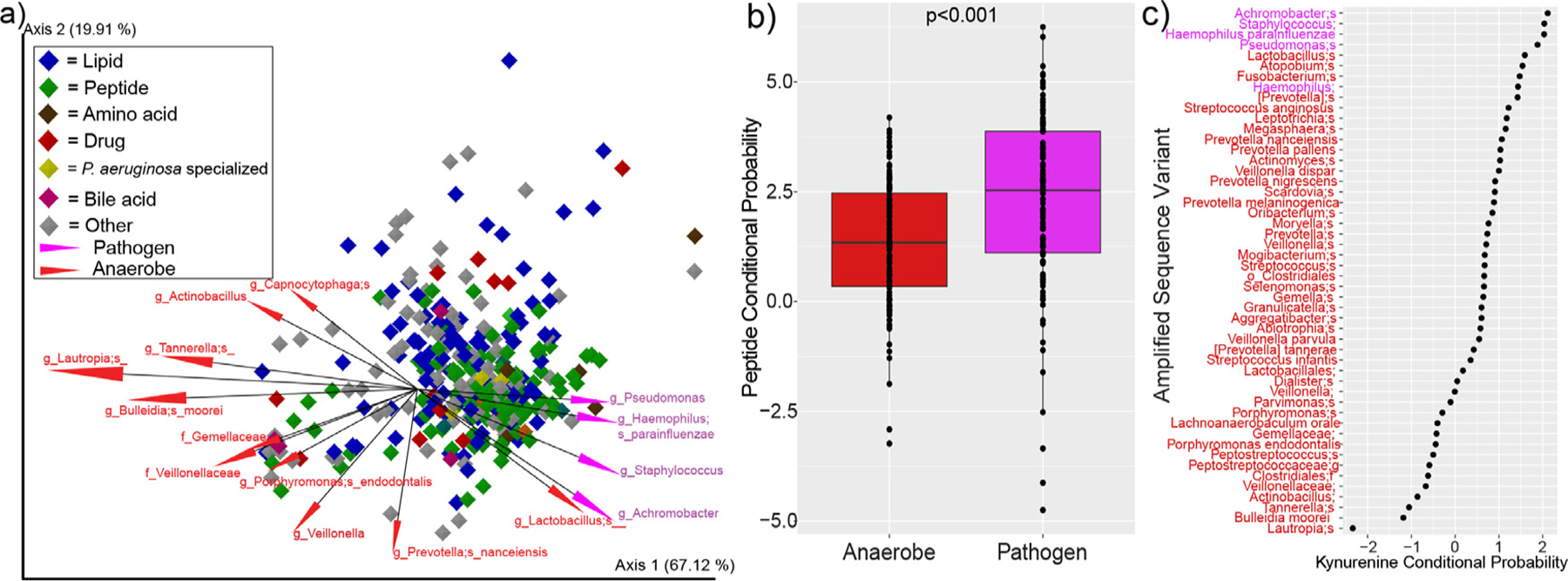
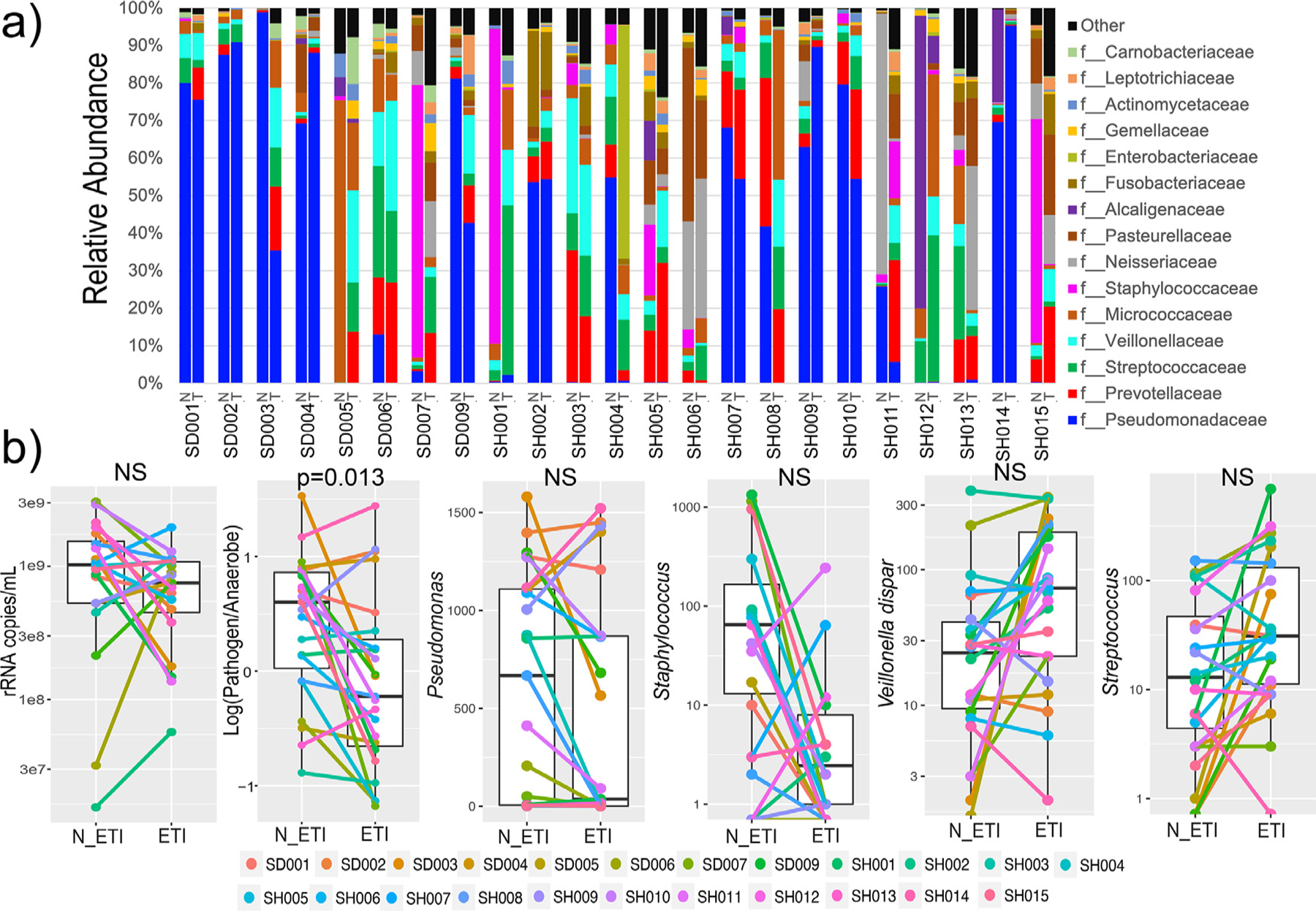
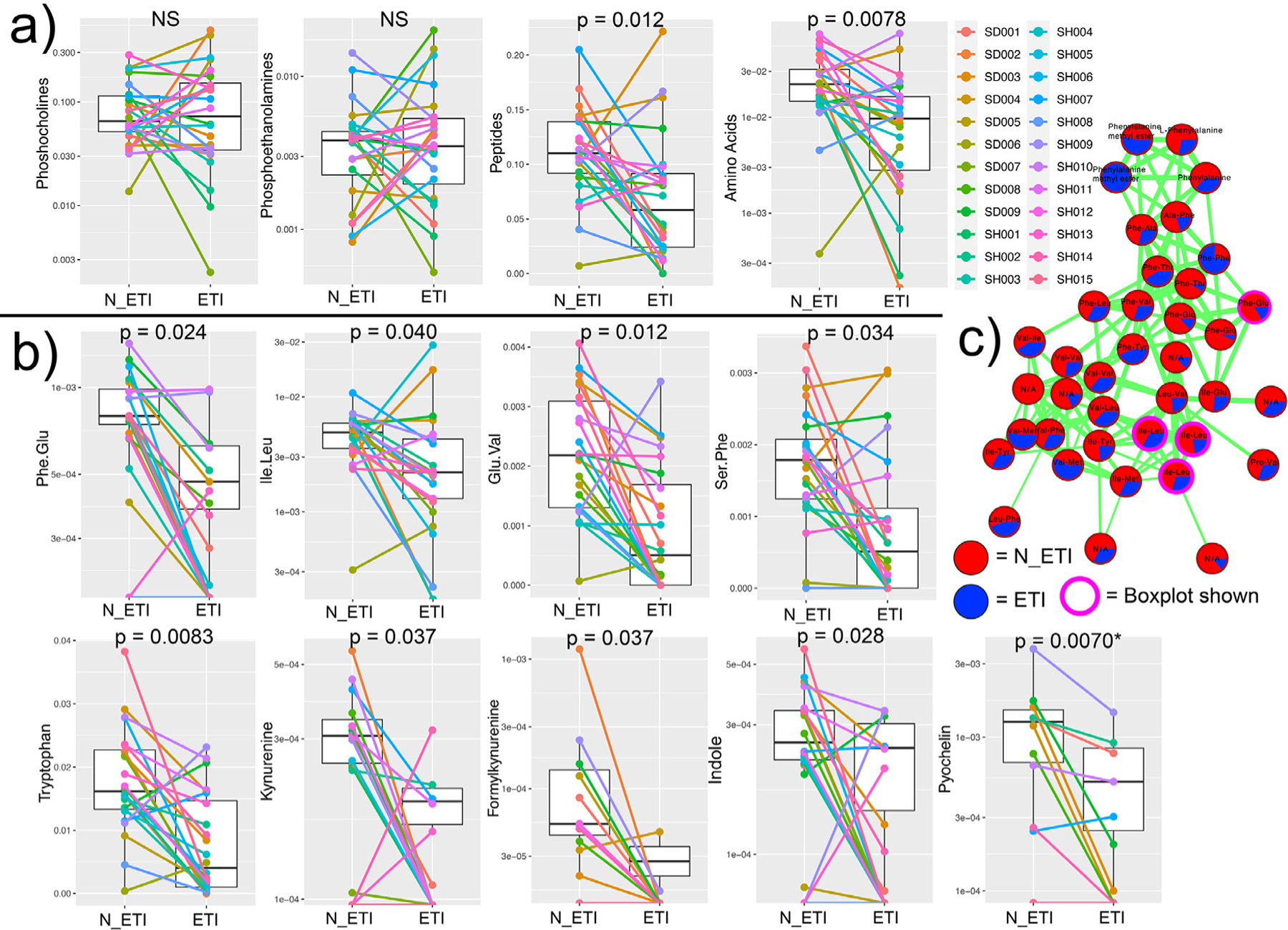
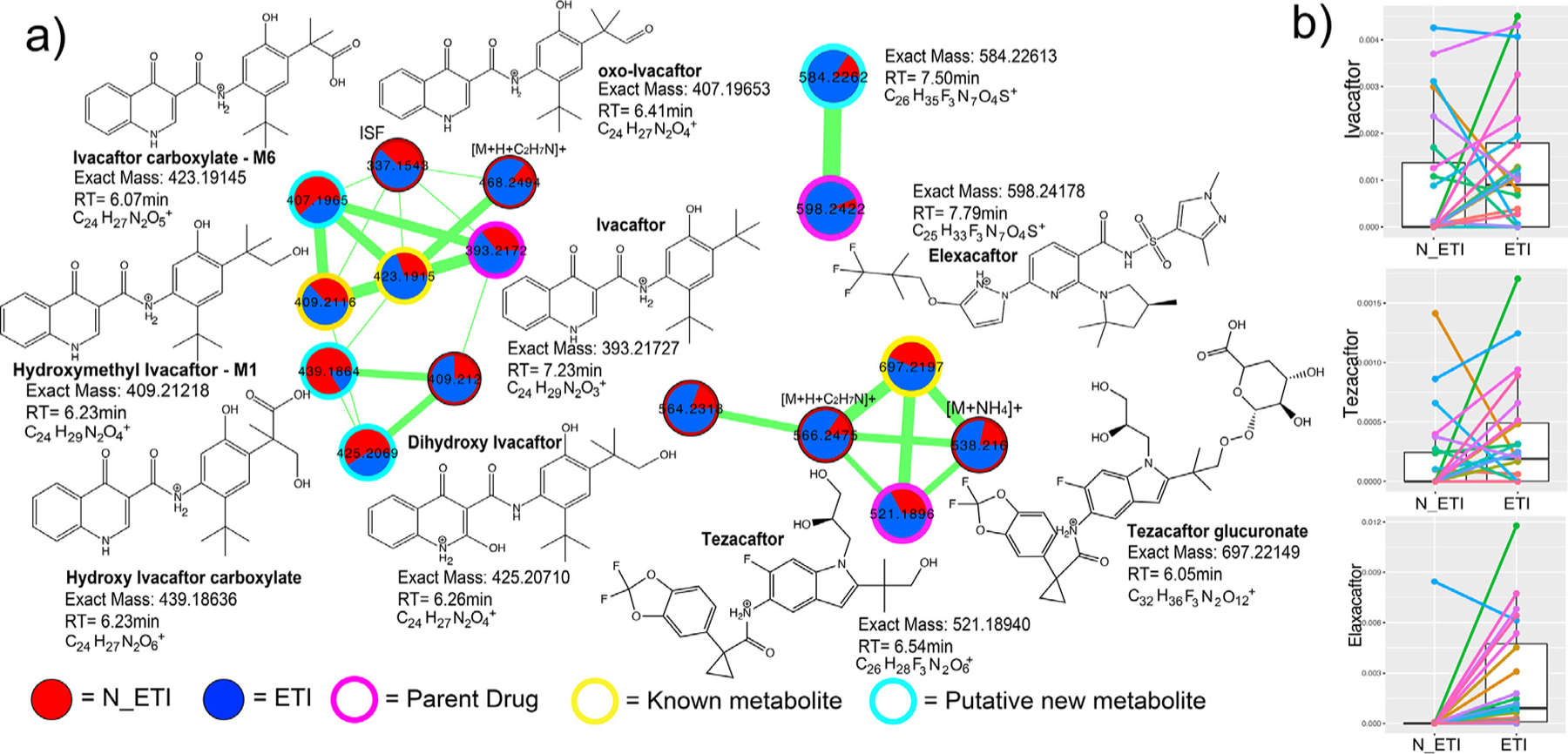
The sputum microbiome diversity, particularly its evenness, was increased (p=0.036) and the microbiome profiles were different between individuals before and after therapy (PERMANOVA F=1.92, p=0.044). Despite these changes, the microbiomes remained more similar within an individual than across the sampled population. No specific microbial taxa differed in relative abundance before and after therapy, but the collective log-ratio of classic CF pathogens to anaerobes significantly decreased (p=0.013). The sputum metabolome also showed changes associated with ETI (PERMANOVA F=4.22, p=0.002) and was characterized by greater variation across subjects while on treatment. Changes in the metabolome were driven by a decrease in peptides, amino acids, and metabolites from the kynurenine pathway, which were associated with a decrease in CF pathogens. Metabolism of the three small molecules that make up ETI was extensive, including previously uncharacterized structural modifications.
ETI therapy is associated with a changing microbiome and metabolome in airway mucus. This effect was stronger on sputum biochemistry, which may reflect changing niche space for microbial residency in lung mucus as the drug's effects take hold.
This project was funded by a National Institute of Allergy and Infectious Disease Grant R01AI145925.
依伐卡托、泰比卡托和埃他卡托(ETI)联合疗法在治疗囊性纤维化(CF)方面显示出良好的疗效,且在最近获得 FDA 批准后,该疗法的应用越来越广泛。然而,对于这些药物将如何影响肺部感染,即 CF 患者(pwCF)发病率和死亡率的主要原因,我们知之甚少。
我们使用 16S rRNA 基因测序和非靶向代谢组学分析了 24 例 pwCF 在接受 ETI 治疗前后的痰微生物组和代谢组数据。
痰微生物组的多样性,尤其是均匀度增加(p=0.036),治疗前后个体的微生物组谱不同(PERMANOVA F=1.92,p=0.044)。尽管发生了这些变化,但个体内部的微生物组仍然比整个采样人群更为相似。治疗前后,特定微生物类群的相对丰度没有差异,但经典 CF 病原体与厌氧菌的综合对数比显著降低(p=0.013)。痰代谢组也显示出与 ETI 相关的变化(PERMANOVA F=4.22,p=0.002),且在治疗过程中具有更大的受试者间变异性。代谢组的变化是由肽、氨基酸和色氨酸代谢产物的减少驱动的,这与 CF 病原体的减少有关。构成 ETI 的三种小分子的代谢广泛,包括以前未被描述的结构修饰。
ETI 治疗与气道黏液中微生物群和代谢组的变化有关。该效应在痰生化方面更强,这可能反映了随着药物作用的发挥,肺部黏液中微生物驻留的生态位空间发生变化。
本项目由美国国立过敏和传染病研究所 R01AI145925 资助。