Institute of Microbiology, Academy of Sciences of the Czech Republic, Třeboň, Czech Republic.
Faculty of Science, University of South Bohemia, České Budějovice, Czech Republic.
Nat Commun. 2021 Nov 25;12(1):6890. doi: 10.1038/s41467-021-27155-1.
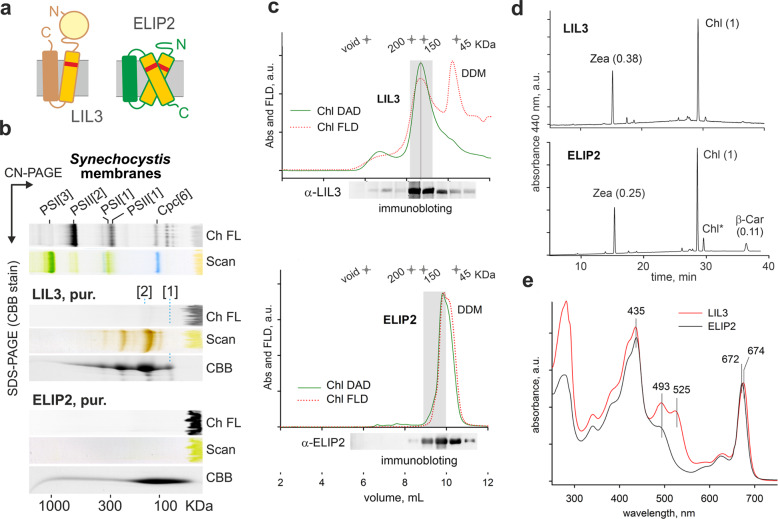
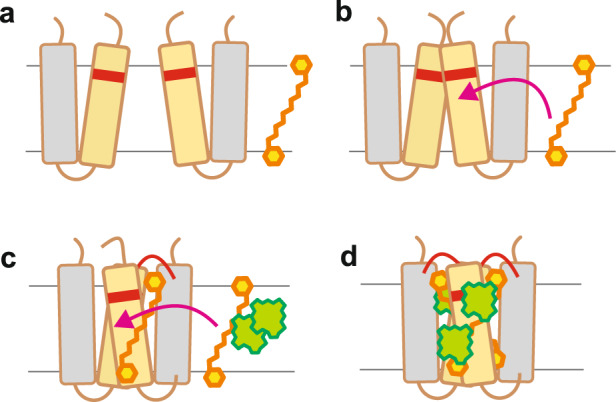
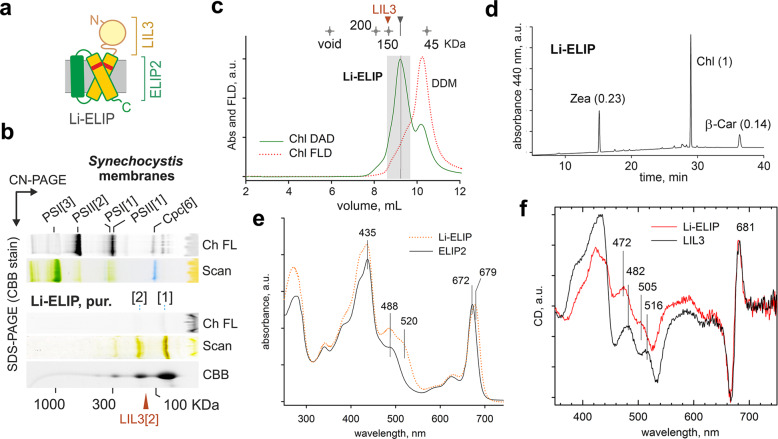
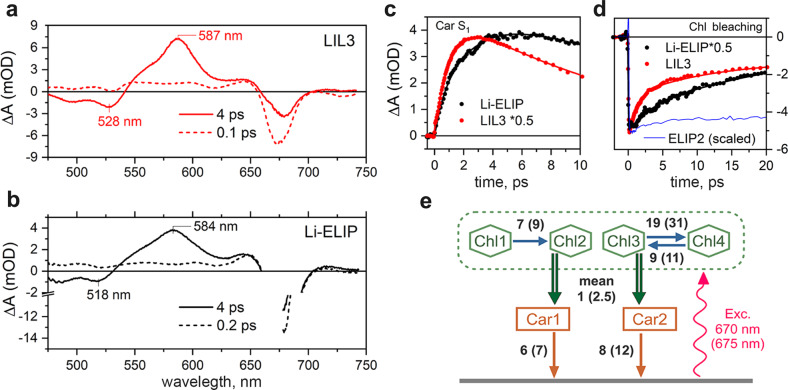
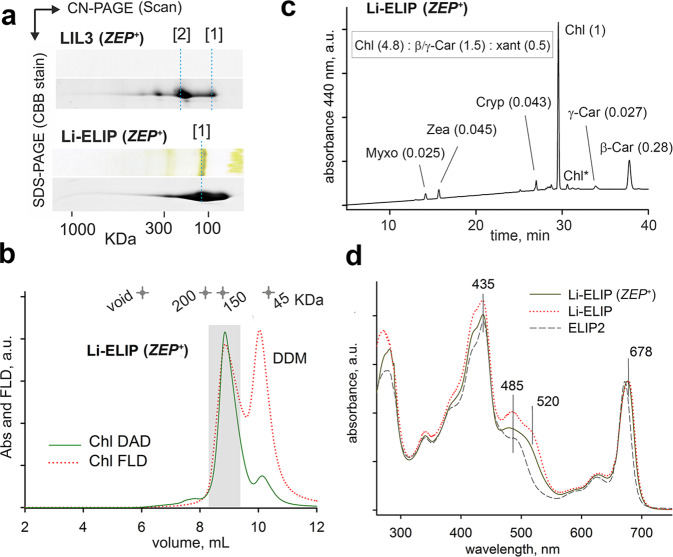
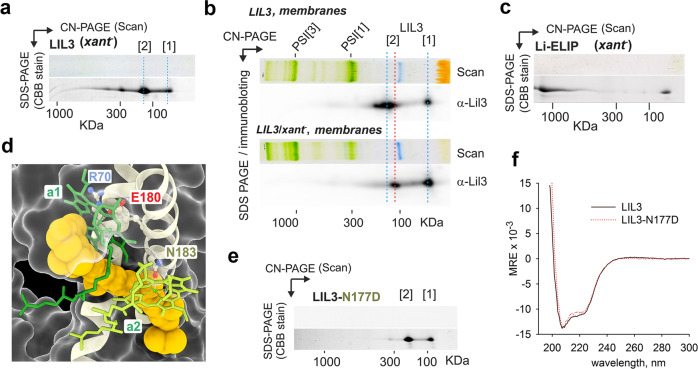
Life on Earth depends on photosynthesis, the conversion of light energy into chemical energy. Plants collect photons by light harvesting complexes (LHC)-abundant membrane proteins containing chlorophyll and xanthophyll molecules. LHC-like proteins are similar in their amino acid sequence to true LHC antennae, however, they rather serve a photoprotective function. Whether the LHC-like proteins bind pigments has remained unclear. Here, we characterize plant LHC-like proteins (LIL3 and ELIP2) produced in the cyanobacterium Synechocystis sp. PCC 6803 (hereafter Synechocystis). Both proteins were associated with chlorophyll a (Chl) and zeaxanthin and LIL3 was shown to be capable of quenching Chl fluorescence via direct energy transfer from the Chl Q state to zeaxanthin S state. Interestingly, the ability of the ELIP2 protein to quench can be acquired by modifying its N-terminal sequence. By employing Synechocystis carotenoid mutants and site-directed mutagenesis we demonstrate that, although LIL3 does not need pigments for folding, pigments stabilize the LIL3 dimer.
地球上的生命依赖于光合作用,即将光能转化为化学能。植物通过含有叶绿素和叶黄素分子的光捕获复合物(LHC)-丰富的膜蛋白来收集光子。LHC 样蛋白在其氨基酸序列上与真正的 LHC 天线相似,但它们主要起到光保护作用。LHC 样蛋白是否结合色素仍不清楚。在这里,我们对在蓝藻集胞藻 PCC 6803(以下简称集胞藻)中产生的植物 LHC 样蛋白(LIL3 和 ELIP2)进行了表征。这两种蛋白都与叶绿素 a(Chl)和玉米黄质结合,并且证明 LIL3 能够通过 Chl Q 态到玉米黄质 S 态的直接能量转移来猝灭 Chl 荧光。有趣的是,通过修饰其 N 端序列,可以获得 ELIP2 蛋白的猝灭能力。通过利用集胞藻类胡萝卜素突变体和定点突变,我们证明尽管 LIL3 不需要色素来折叠,但色素可以稳定 LIL3 二聚体。