Experton Bettina, Tetteh Hassan A, Lurie Nicole, Walker Peter, Elena Adrien, Hein Christopher S, Schwendiman Blake, Vincent Justin L, Burrow Christopher R
Humetrix Inc., Del Mar, CA 90214, USA.
Warfighter Health Mission Team, Department of Defense Joint Artificial Intelligence Center (JAIC), Arlington, VA 22202, USA.
Biology (Basel). 2021 Nov 15;10(11):1185. doi: 10.3390/biology10111185.
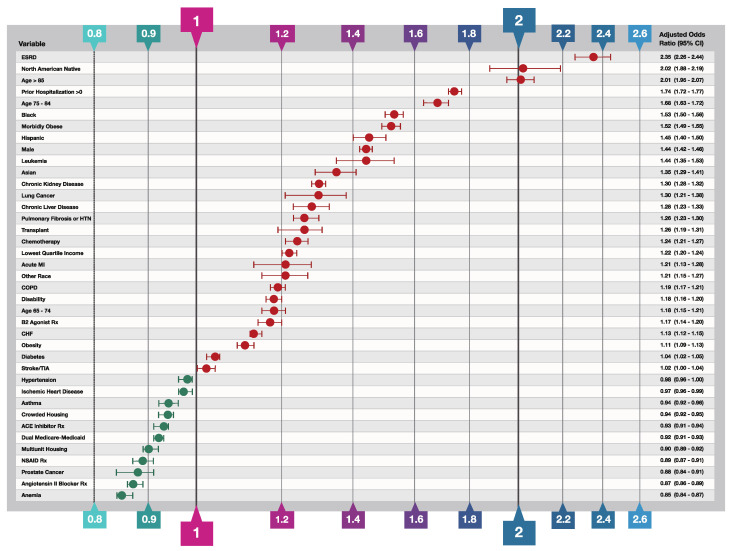
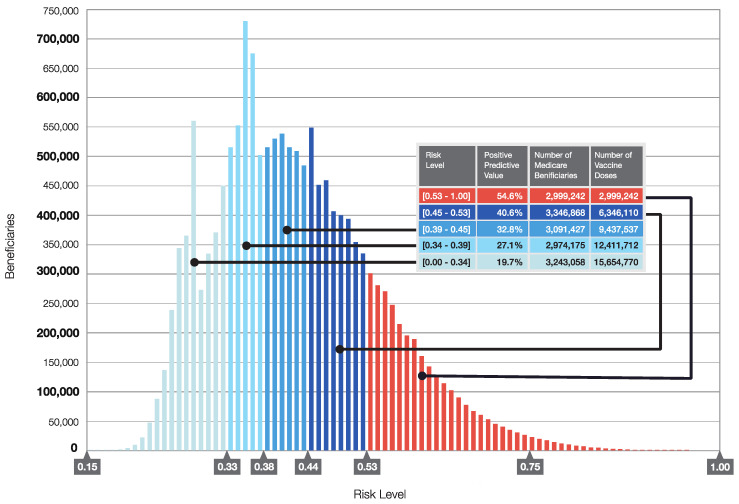
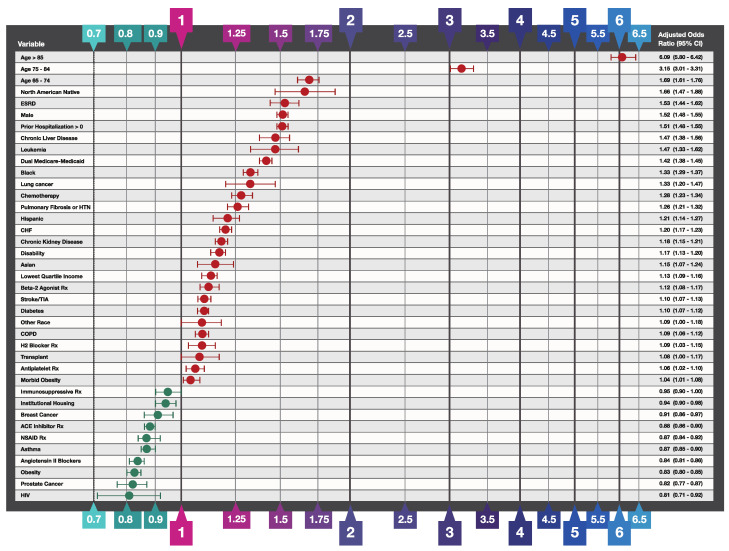
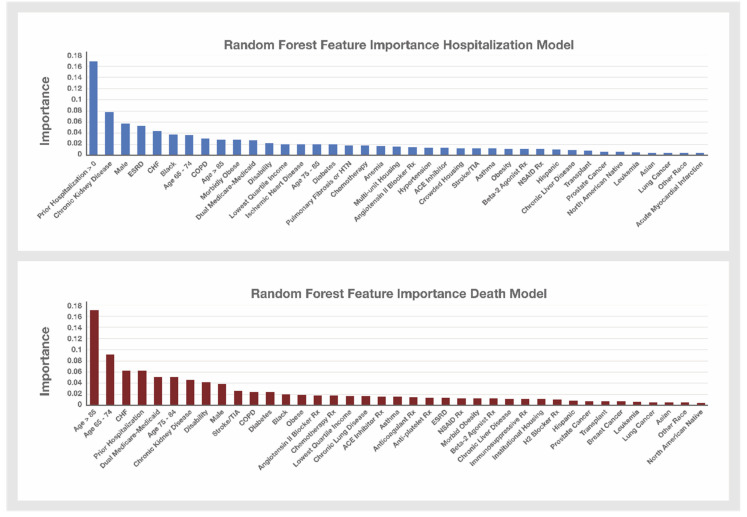
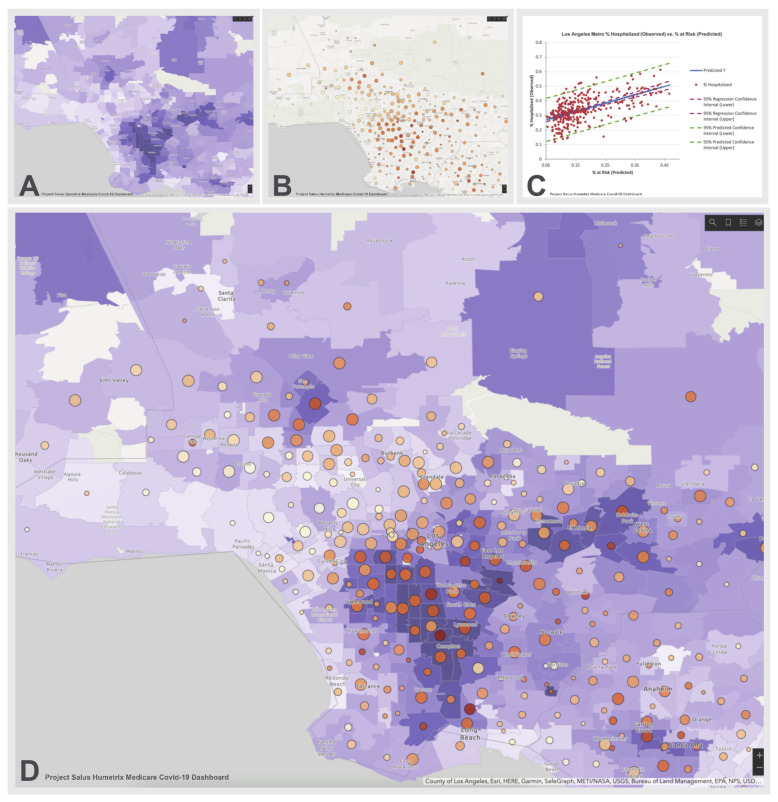
Recommendations for prioritizing COVID-19 vaccination have focused on the elderly at higher risk for severe disease. Existing models for identifying higher-risk individuals lack the needed integration of socio-demographic and clinical risk factors. Using multivariate logistic regression and random forest modeling, we developed a predictive model of severe COVID-19 using clinical data from Medicare claims for 16 million Medicare beneficiaries and socio-economic data from the CDC Social Vulnerability Index. Predicted individual probabilities of COVID-19 hospitalization were then calculated for population risk stratification and vaccine prioritization and mapping. The leading COVID-19 hospitalization risk factors were non-white ethnicity, end-stage renal disease, advanced age, prior hospitalization, leukemia, morbid obesity, chronic kidney disease, lung cancer, chronic liver disease, pulmonary fibrosis or pulmonary hypertension, and chemotherapy. However, previously reported risk factors such as chronic obstructive pulmonary disease and diabetes conferred modest hospitalization risk. Among all social vulnerability factors, residence in a low-income zip code was the only risk factor independently predicting hospitalization. This multifactor risk model and its population risk dashboard can be used to optimize COVID-19 vaccine allocation in the higher-risk Medicare population.
优先进行新冠病毒疫苗接种的建议主要集中在患重病风险较高的老年人身上。现有的识别高风险个体的模型缺乏对社会人口统计学和临床风险因素的必要整合。我们使用多变量逻辑回归和随机森林建模,利用来自1600万医疗保险受益人的医疗保险理赔临床数据以及来自疾病控制与预防中心社会脆弱性指数的社会经济数据,开发了一个预测严重新冠病毒疾病的模型。然后计算出新冠病毒住院的个体预测概率,用于人群风险分层、疫苗接种优先级确定和绘制地图。导致新冠病毒住院的主要风险因素包括非白人种族、终末期肾病、高龄、既往住院史、白血病、病态肥胖、慢性肾病、肺癌、慢性肝病、肺纤维化或肺动脉高压以及化疗。然而,之前报道的风险因素如慢性阻塞性肺疾病和糖尿病导致的住院风险相对较小。在所有社会脆弱性因素中,居住在低收入邮政编码地区是唯一能独立预测住院的风险因素。这个多因素风险模型及其人群风险仪表盘可用于优化在风险较高的医疗保险人群中新冠病毒疫苗的分配。