Kory Pierre, Meduri Ginfranco Umberto, Iglesias Jose, Varon Joseph, Cadegiani Flavio Adsuara, Marik Paul E
Front Line Critical Care Consortium (FLCCC.org), Washington DC, USA.
Department of Medicine, University of Tennessee Health Science Center, Memphis, TN, USA.
J Clin Med Res. 2022 Feb;14(2):53-79. doi: 10.14740/jocmr4658. Epub 2022 Feb 24.
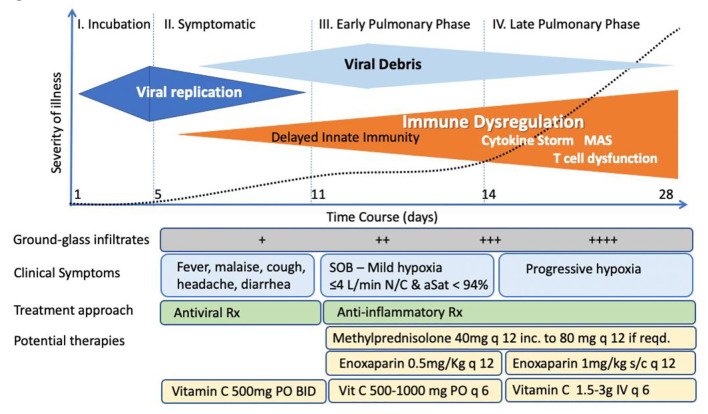
In December 2019, coronavirus disease 2019 (COVID-19), a severe respiratory illness caused by the new coronavirus severe acute respiratory syndrome coronavirus 2 (SARS-CoV-2) emerged in Wuhan, China. The greatest impact that COVID-19 had was on intensive care units (ICUs), given that approximately 20% of hospitalized cases developed acute respiratory failure (ARF) requiring ICU admission. Based on the assumption that COVID-19 represented a viral pneumonia and no anti-coronaviral therapy existed, nearly all national and international health care societies recommended "supportive care only" avoiding other therapies outside of randomized controlled trials, with a specific prohibition against the use of corticosteroids in treatment. However, early studies of COVID-19-associated ARF reported inexplicably high mortality rates, with frequent prolonged durations of mechanical ventilation (MV), even from centers expert in such supportive care strategies. These reports led the authors to form a clinical expert panel called the Front-Line COVID-19 Critical Care Alliance (www.flccc.net). The panel collaboratively reviewed the emerging clinical, radiographic, and pathological reports of COVID-19 while initiating multiple discussions among a wide clinical network of front-line clinical ICU experts from initial outbreak areas in China, Italy, and New York. Based on the shared early impressions of "what was working and what wasn't working", the increasing medical journal publications and the rapidly accumulating personal clinical experiences with COVID-19 patients, a treatment protocol was created for the hospitalized patients based on the core therapies of methylprednisolone, ascorbic acid, thiamine, heparin and non-antiviral co-interventions (MATH+). This manuscript reviews the scientific and clinical rationale behind MATH+ based on published , pre-clinical, and clinical data in support of each medicine, with a special emphasis of studies supporting their use in the treatment of patients with viral syndromes and COVID-19 specifically.
2019年12月,新型冠状病毒严重急性呼吸综合征冠状病毒2(SARS-CoV-2)引发的2019冠状病毒病(COVID-19)在中国武汉出现。鉴于约20%的住院病例出现需要入住重症监护病房(ICU)的急性呼吸衰竭(ARF),COVID-19产生的最大影响是对ICU造成的。基于COVID-19代表病毒性肺炎且不存在抗冠状病毒疗法这一假设,几乎所有国家和国际医疗协会都建议“仅采取支持性治疗”,避免在随机对照试验之外采用其他疗法,并特别禁止在治疗中使用皮质类固醇。然而,早期关于COVID-19相关ARF的研究报告了高得令人费解的死亡率,机械通气(MV)时间频繁延长,即使是来自擅长此类支持性治疗策略的中心。这些报告促使作者们组建了一个名为“一线COVID-19重症护理联盟”(www.flccc.net)的临床专家小组。该小组共同审查了COVID-19新出现的临床、影像学和病理学报告,同时在中国、意大利和纽约等初始疫情地区的一线临床ICU专家广泛临床网络中展开了多次讨论。基于对“哪些方法有效、哪些无效”的共同早期印象、不断增加的医学期刊发表文章以及与COVID-19患者迅速积累的个人临床经验,基于甲泼尼龙、维生素C、硫胺素、肝素和非抗病毒联合干预措施(MATH+)的核心疗法,为住院患者制定了一种治疗方案。本文基于已发表的临床前和临床数据,回顾了支持每种药物的MATH+背后的科学和临床原理,并特别强调了支持其用于治疗病毒综合征患者尤其是COVID-19患者的研究。