Mastore Maristella, Quadroni Silvia, Caramella Sara, Brivio Maurizio Francesco
Laboratory of Comparative Immunology and Parasitology, Department of Theoretical and Applied Sciences, University of Insubria, 21100 Varese, Italy.
Laboratory of Ecology, Department of Theoretical and Applied Sciences, University of Insubria, 21100 Varese, Italy.
Antibiotics (Basel). 2021 Nov 2;10(11):1339. doi: 10.3390/antibiotics10111339.
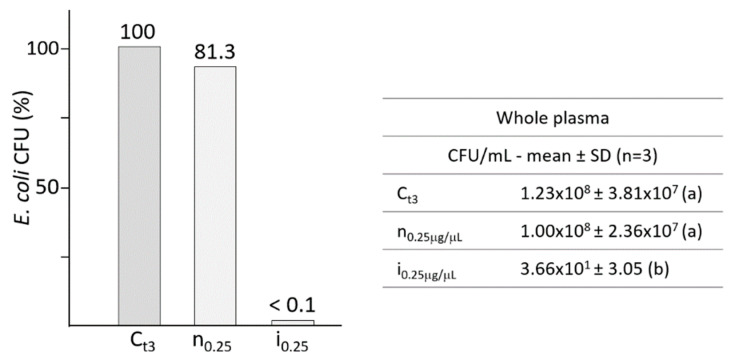
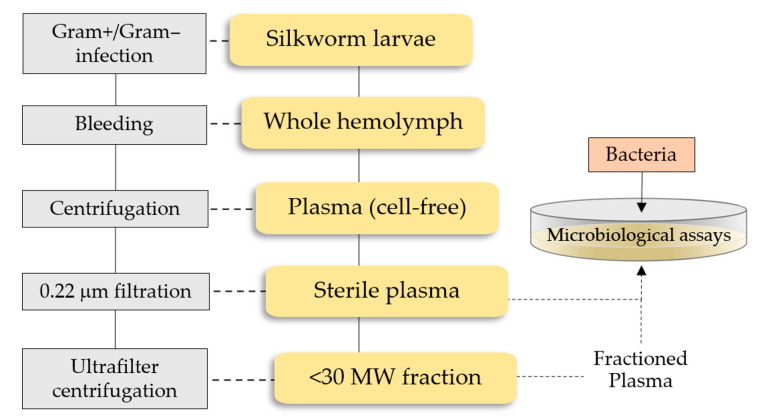
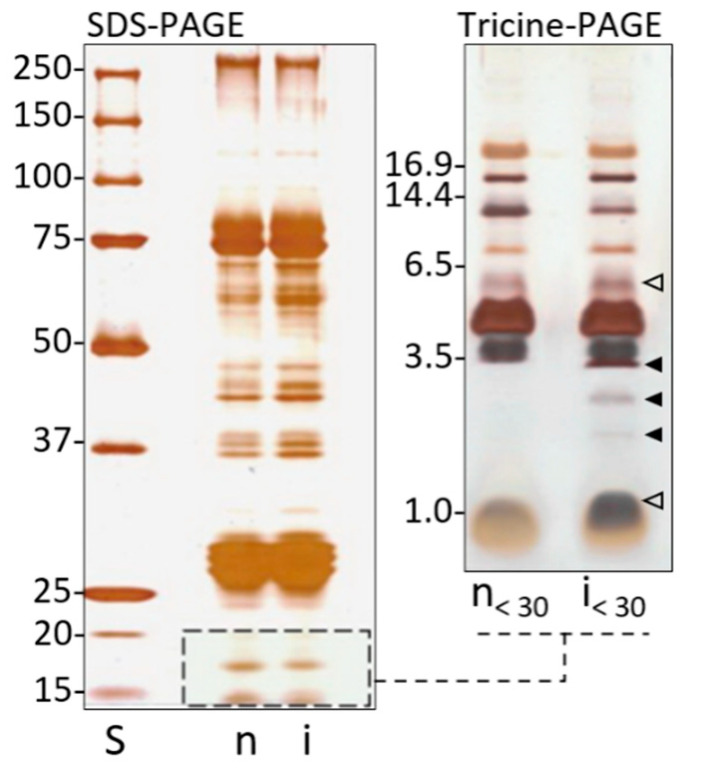
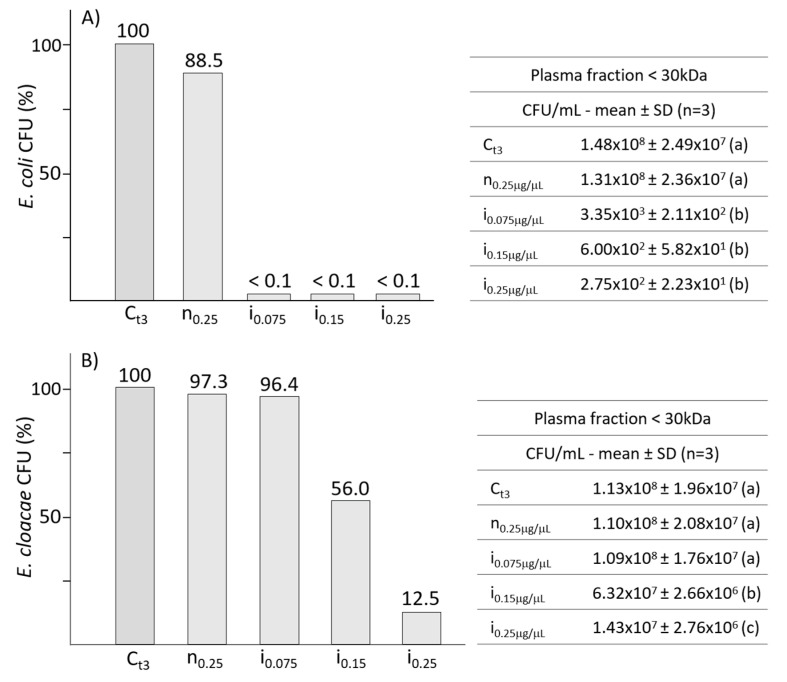
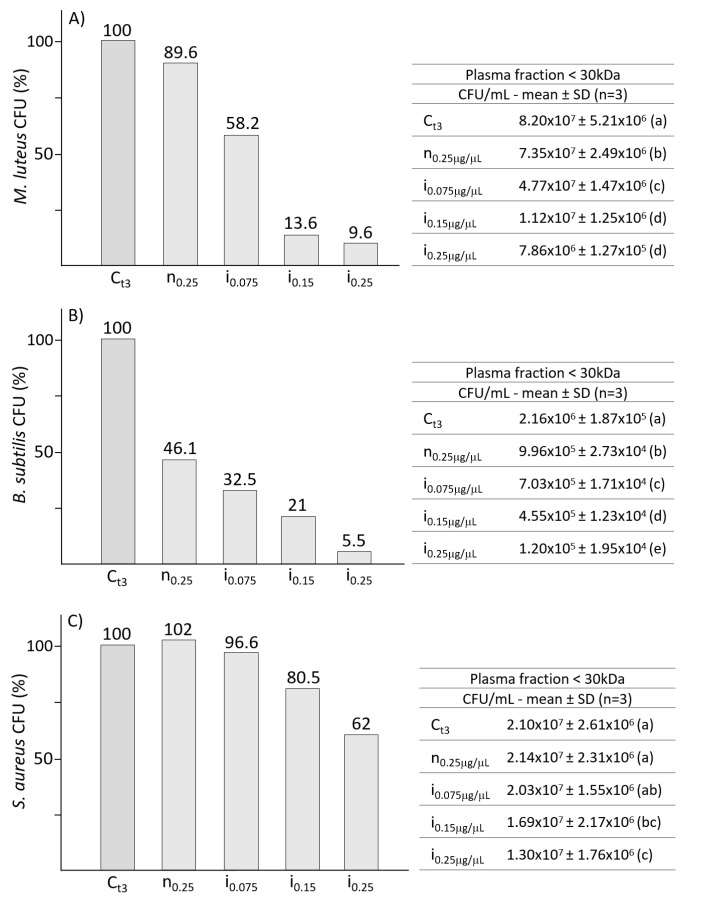
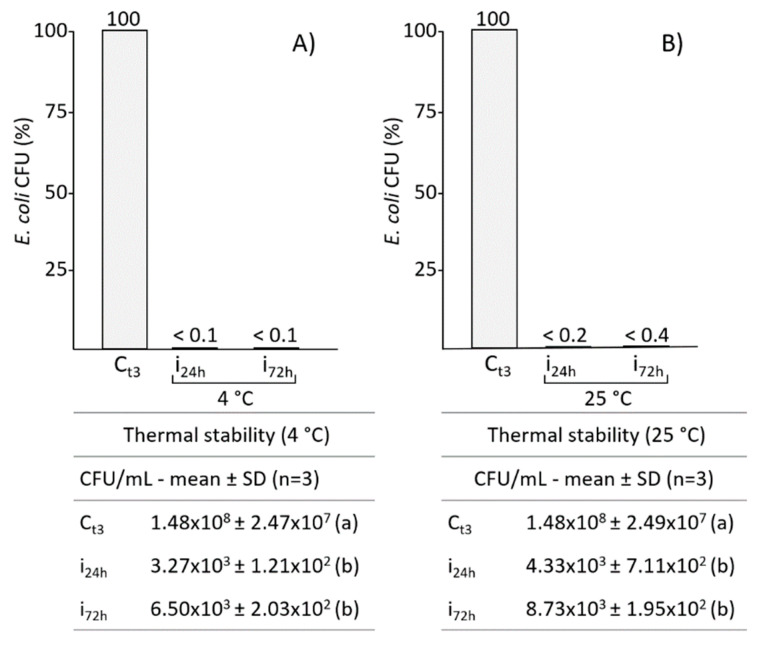
The global spread of multi-resistant pathogens responsible for infections, which cannot be treated with existing drugs such as antibiotics, is of particular concern. Antibiotics are becoming increasingly ineffective and drug resistance is leading to more difficult-to-treat infections; therefore, new bioactive compounds with antimicrobial activity are needed and new alternative sources should be found. Antimicrobial peptides (AMPs) are synthesized by processes typical of the innate immune system and are present in almost all organisms. Insects are extremely resistant to bacterial infections as they can produce a wide range of AMPs, providing an effective first line of defense. The AMPs produced by insects therefore represent a possible source of natural antimicrobial molecules. In this paper, the possibility of using plasma preparations from silkworm () larvae as a source of antimicrobials was evaluated. After simple purification steps, insect plasma was analyzed and tested on different Gram-positive and Gram-negative bacterial strains. The results obtained are encouraging as the assays on and showed significant decrease in the growth of these Gram-negative bacteria. Similar results were obtained on Gram-positive bacteria, such as and , which showed strong susceptibility to the silkworm AMPs pool. In contrast, displayed high resistance to plasma. Finally, the tested plasma formulations were assessed for possible storage not only at 4 °C, but also above room temperature. In conclusion, partially purified plasma from silkworm could be a promising source of AMPs which could be used in formulations for topical applications, without additional and expensive purification steps.
对感染负有责任的多重耐药病原体在全球范围内传播,而这些感染无法用抗生素等现有药物治疗,这尤其令人担忧。抗生素正变得越来越无效,耐药性导致感染更难治疗;因此,需要具有抗菌活性的新型生物活性化合物,并应寻找新的替代来源。抗菌肽(AMPs)是通过固有免疫系统的典型过程合成的,几乎存在于所有生物体中。昆虫对细菌感染具有极强的抵抗力,因为它们可以产生多种抗菌肽,提供有效的第一道防线。因此,昆虫产生的抗菌肽代表了一种天然抗菌分子的可能来源。在本文中,评估了使用家蚕幼虫血浆制剂作为抗菌剂来源的可能性。经过简单的纯化步骤后,对昆虫血浆进行分析,并在不同的革兰氏阳性和革兰氏阴性细菌菌株上进行测试。所获得的结果令人鼓舞,因为对大肠杆菌和肺炎克雷伯菌的检测显示这些革兰氏阴性细菌的生长显著下降。在革兰氏阳性细菌如金黄色葡萄球菌和枯草芽孢杆菌上也获得了类似的结果,它们对家蚕抗菌肽库表现出很强的敏感性。相比之下,铜绿假单胞菌对家蚕血浆表现出高度抗性。最后,对测试的血浆制剂不仅在4℃,而且在室温以上进行了可能的储存评估。总之,家蚕部分纯化的血浆可能是一种有前途的抗菌肽来源,可用于局部应用制剂,而无需额外且昂贵的纯化步骤。