Sun Xiaojin, Deng Yang, Fu Xinxin, Wang Siyu, Duan Rui, Zhang Yingdong
School of Basic Medicine and Clinical Pharmacy, China Pharmaceutical University, Nanjing 211198, China.
Department of Neurology, Nanjing First Hospital, Nanjing Medical University, Nanjing 210006, China.
Brain Sci. 2021 Nov 11;11(11):1487. doi: 10.3390/brainsci11111487.
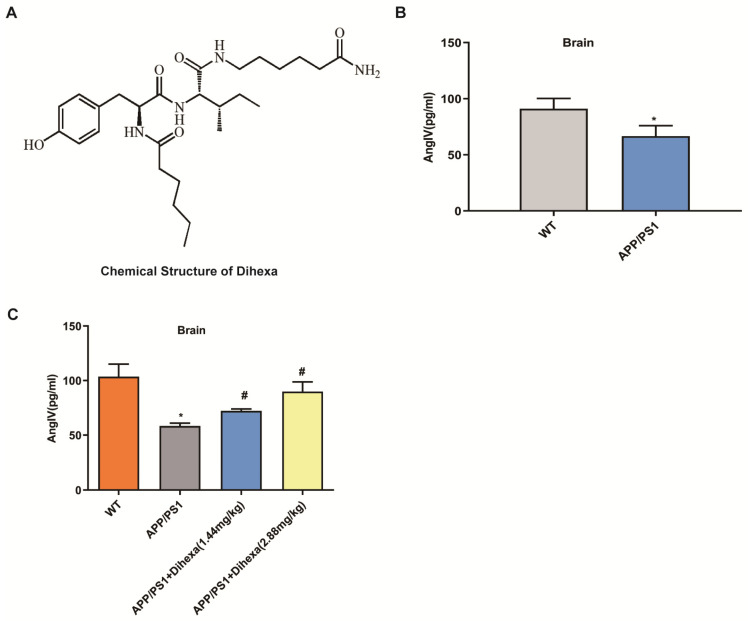
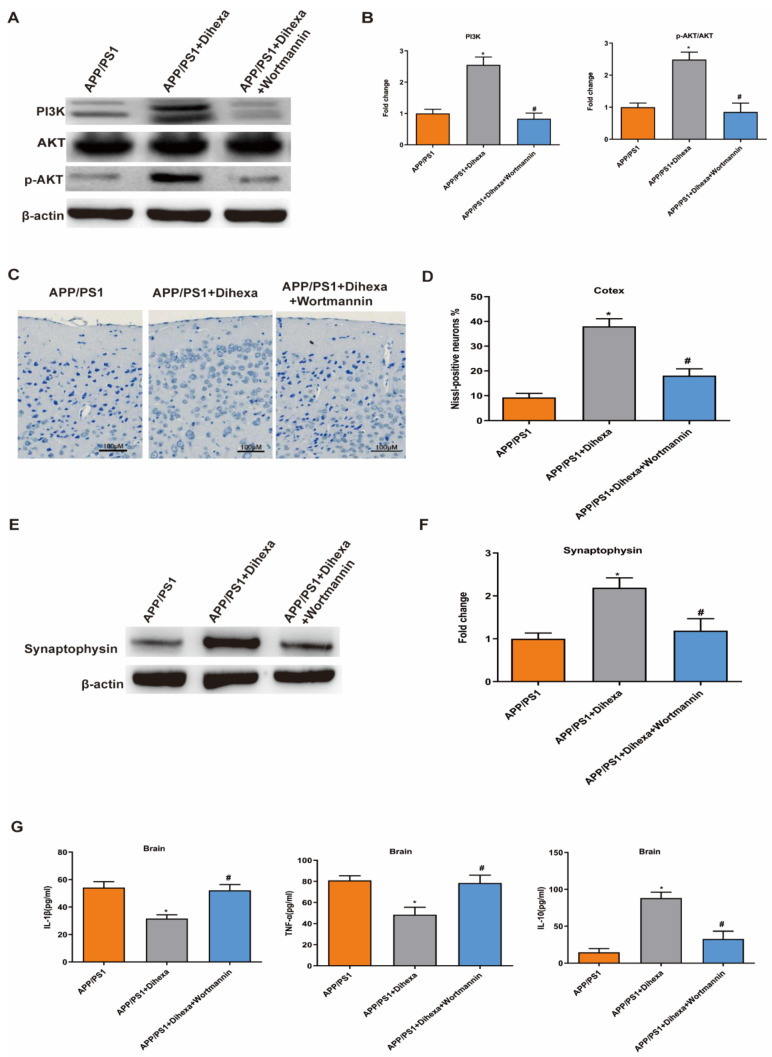
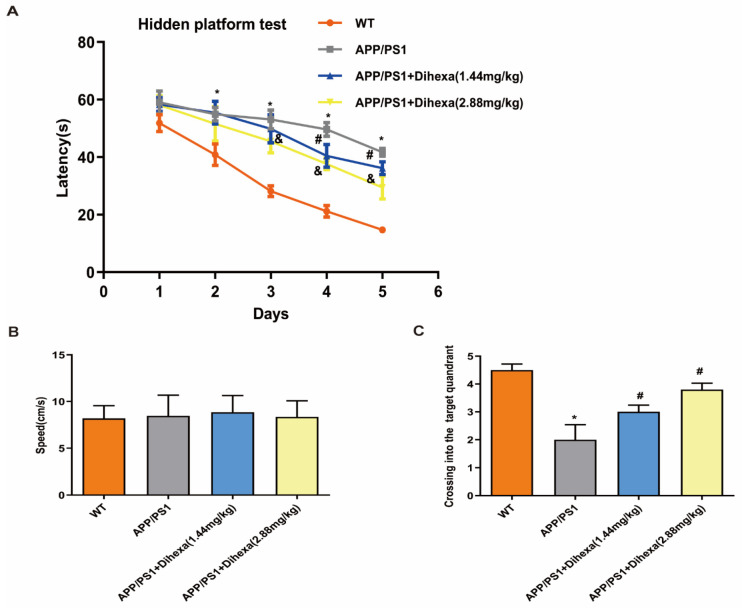
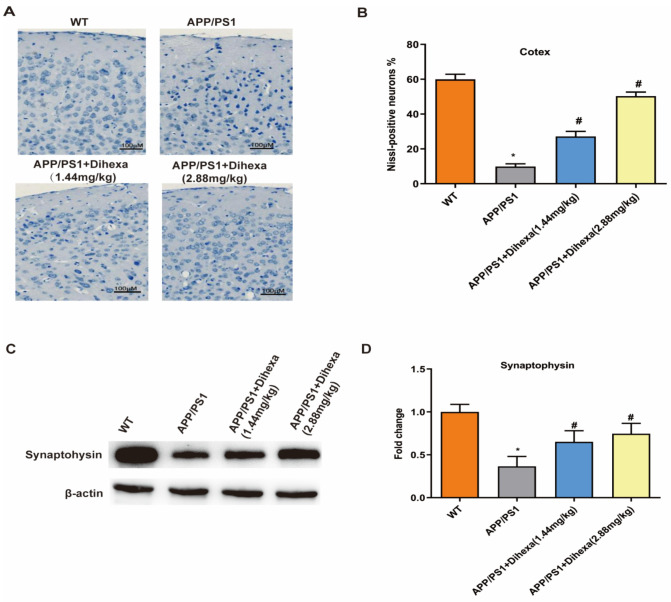
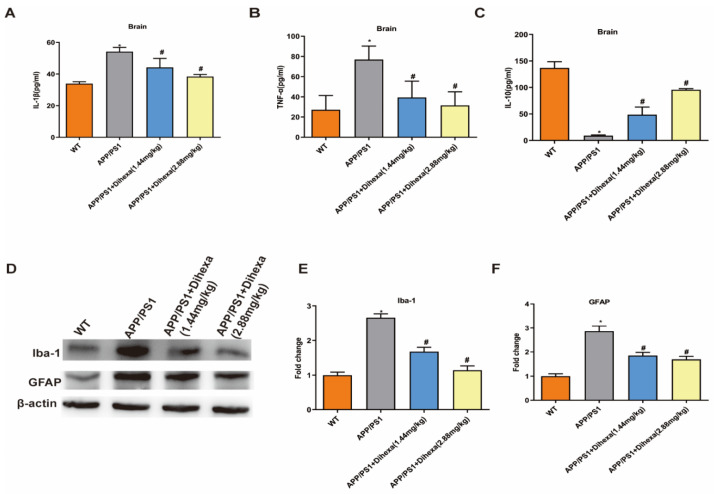
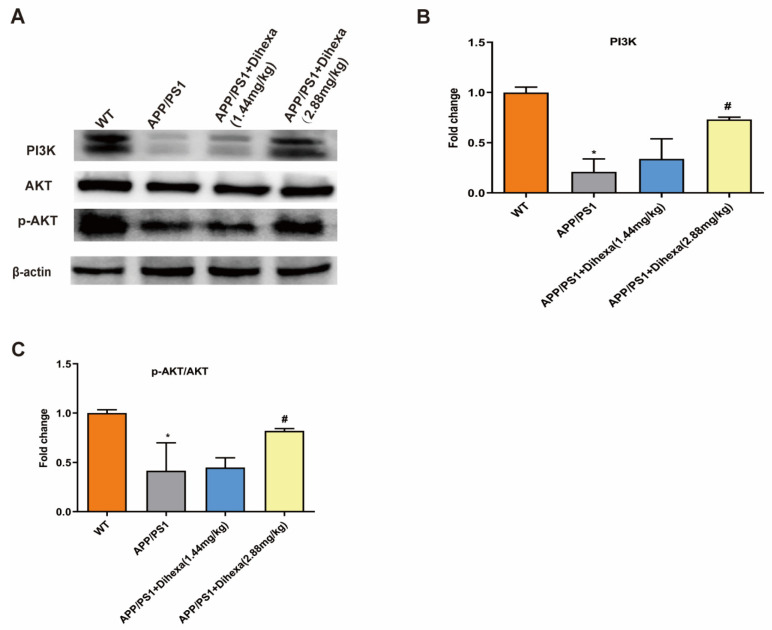
The renin-angiotensin system (RAS) is a paracrine RAS within the central nervous system (CNS) and is closely related to Alzheimer's disease (AD). The endogenous hexapeptide angiotensin IV (Ang IV), an important component of the brain RAS, was found to rescue cognitive impairment and recover memory in previous studies. In our study, we used different doses of Dihexa, which can be orally administered and cross the BBB in APP/PS1 mice. We found that the amount of AngIV in mouse tissue increased after the administration of Dihexa compared to that in the WT group. Meanwhile, Dihexa restored spatial learning and cognitive functions in the Morris water maze test. Dihexa increased the neuronal cells and the expression of SYP protein in APP/PS1 mice in Nissl staining. Furthermore, Dihexa decreased the activation of astrocytes and microglia, markedly reduced levels of the pro-inflammatory cytokines IL-1β and TNF-α and increased the levels of the anti-inflammatory cytokine IL-10. Dihexa activated the PI3K/AKT signaling pathway, while PI3K inhibitor wortmannin significantly reversed the anti-inflammatory and anti-apoptotic effects of APP/PS1 mice. These findings highlight the brain AngIV/PI3K/AKT axis as a potential target for the treatment of AD.
肾素-血管紧张素系统(RAS)是中枢神经系统(CNS)内的旁分泌RAS,与阿尔茨海默病(AD)密切相关。内源性六肽血管紧张素IV(Ang IV)是脑RAS的重要组成部分,在先前的研究中发现其可挽救认知障碍并恢复记忆。在我们的研究中,我们使用了不同剂量的二己环肽(Dihexa),其可口服给药并能穿过血脑屏障(BBB)作用于APP/PS1小鼠。我们发现,与野生型(WT)组相比,给予Dihexa后小鼠组织中AngIV的量增加。同时,Dihexa在莫里斯水迷宫试验中恢复了空间学习和认知功能。在尼氏染色中,Dihexa增加了APP/PS1小鼠的神经元细胞和突触素(SYP)蛋白的表达。此外,Dihexa降低了星形胶质细胞和小胶质细胞的激活,显著降低了促炎细胞因子白细胞介素-1β(IL-1β)和肿瘤坏死因子-α(TNF-α)的水平,并增加了抗炎细胞因子白细胞介素-10(IL-10)的水平。Dihexa激活了磷脂酰肌醇-3激酶(PI3K)/蛋白激酶B(AKT)信号通路,而PI3K抑制剂渥曼青霉素显著逆转了APP/PS1小鼠的抗炎和抗凋亡作用。这些发现突出了脑AngIV/PI3K/AKT轴作为AD治疗的潜在靶点。