Hiyama Eiso
Department of Pediatric Surgery, Hiroshima University Hospital, Hiroshima 734-8551, Japan.
Natural Science Center for Basic Research and Development, Hiroshima University, Hiroshima 734-8551, Japan.
Children (Basel). 2021 Nov 5;8(11):1015. doi: 10.3390/children8111015.
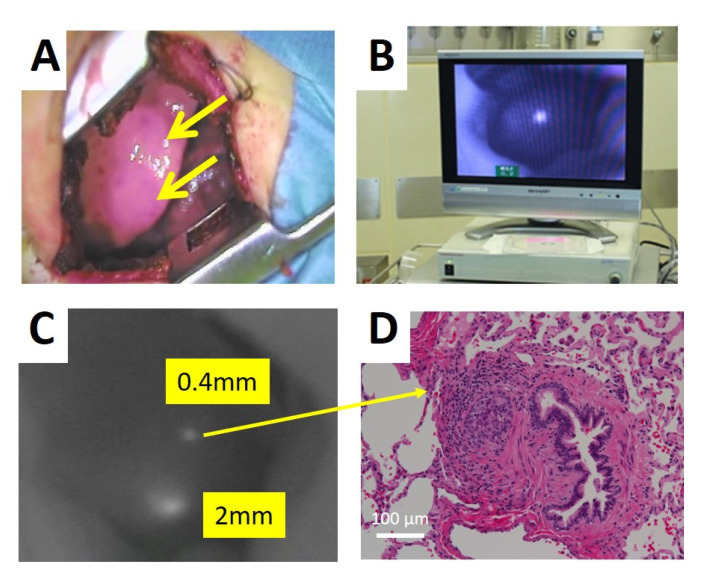
In the past decade, navigation surgery using fluorescent indocyanine green (ICG) dye for hepatoblastoma (HB) has been developed for the resection of primary or metastatic tumors. Since HB cells can take up ICG but cannot excrete it to the bile duct, ICG remains in the HB cells, which can be used for navigation by fluorescent activation. The complete resection of the primary tumor as well as metastatic tumors, along with appropriate neoadjuvant and adjuvant chemotherapy, is essential for cure. ICG fluorescence can detect microscopic residual lesions in the primary lesion and identify micro-metastases in the lung or other lesions; consequently, ICG navigation surgery may improve outcomes for patients with HB. The basic technique and recent advances in ICG navigation for HB surgery are reviewed.
在过去十年中,已开发出使用荧光吲哚菁绿(ICG)染料进行肝母细胞瘤(HB)导航手术,用于原发性或转移性肿瘤的切除。由于HB细胞能够摄取ICG但不能将其排泄到胆管,ICG会留在HB细胞中,可通过荧光激活用于导航。完整切除原发性肿瘤以及转移性肿瘤,再加上适当的新辅助化疗和辅助化疗,对于治愈至关重要。ICG荧光可检测原发性病变中的微小残留病灶,并识别肺部或其他病变中的微转移灶;因此,ICG导航手术可能改善HB患者的治疗效果。本文综述了HB手术中ICG导航的基本技术和最新进展。