Saint-Fleur Ashley L, Christophides Alexa, Gummalla Prabhavathi, Kier Catherine
Department of Pediatrics, Stony Brook University Medical Center, Stony Brook, NY 11794, USA.
Department of Anesthesiology, Stony Brook University Medical Center, Stony Brook, NY 11794, USA.
Children (Basel). 2021 Nov 11;8(11):1032. doi: 10.3390/children8111032.
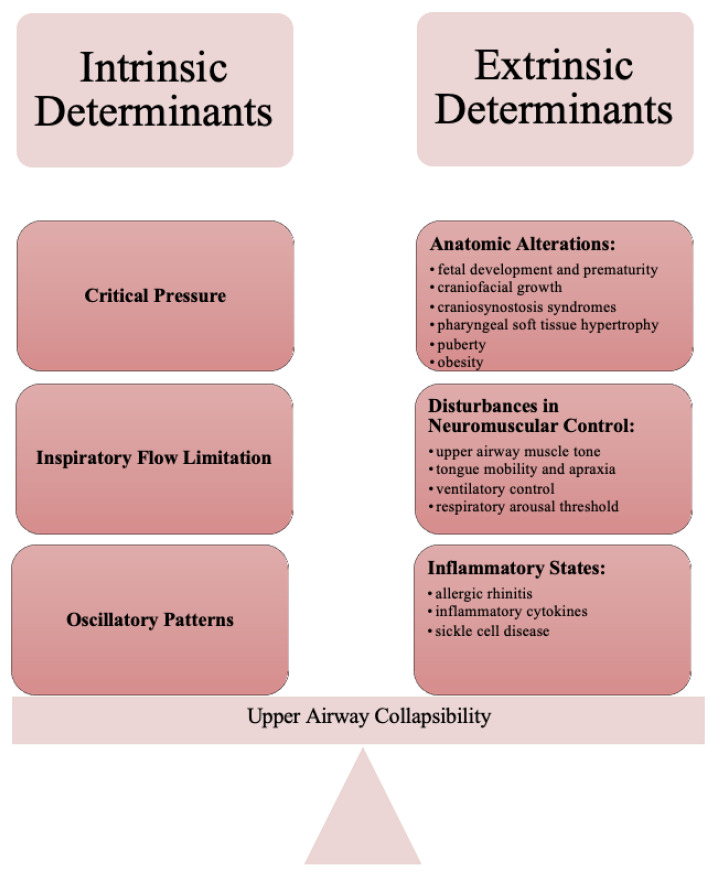
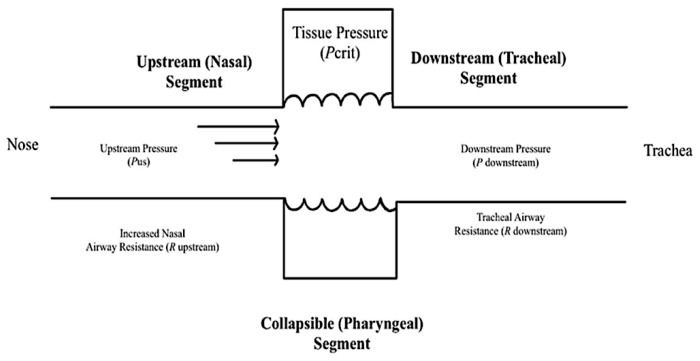
Obstructive Sleep Apnea (OSA) is a form of sleep-disordered breathing characterized by upper airway collapse during sleep resulting in recurring arousals and desaturations. However, many aspects of this syndrome in children remain unclear. Understanding underlying pathogenic mechanisms of OSA is critical for the development of therapeutic strategies. In this article, we review current concepts surrounding the mechanism, pathogenesis, and predisposing factors of pediatric OSA. Specifically, we discuss the biomechanical properties of the upper airway that contribute to its primary role in OSA pathogenesis and examine the anatomical and neuromuscular factors that predispose to upper airway narrowing and collapsibility.
阻塞性睡眠呼吸暂停(OSA)是一种睡眠呼吸紊乱形式,其特征是睡眠期间上呼吸道塌陷,导致反复觉醒和血氧饱和度下降。然而,该综合征在儿童中的许多方面仍不清楚。了解OSA的潜在致病机制对于制定治疗策略至关重要。在本文中,我们综述了围绕小儿OSA的机制、发病机制和易感因素的当前概念。具体而言,我们讨论了上呼吸道的生物力学特性,这些特性在OSA发病机制中起主要作用,并研究了易导致上呼吸道狭窄和可塌陷性的解剖学和神经肌肉因素。