Totsuka Sho, Nishino Tomofumi, Watanabe Ryunosuke, Yamazaki Masashi, Mishima Hajime
Department of Orthopaedic Surgery, Faculty of Medicine, University of Tsukuba, Tsukuba 305-8575, Japan.
Diagnostics (Basel). 2021 Nov 12;11(11):2094. doi: 10.3390/diagnostics11112094.
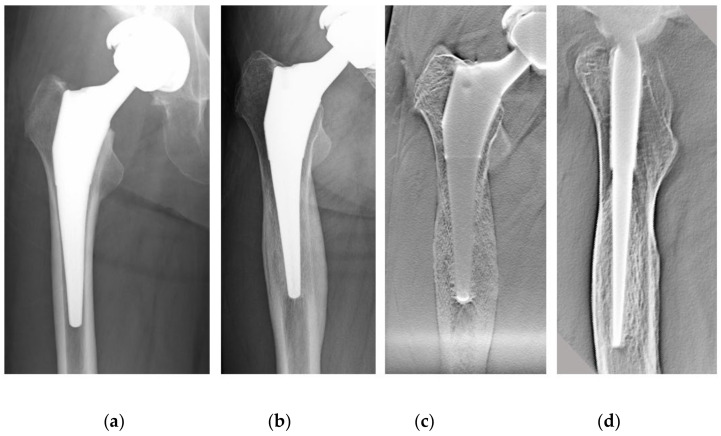
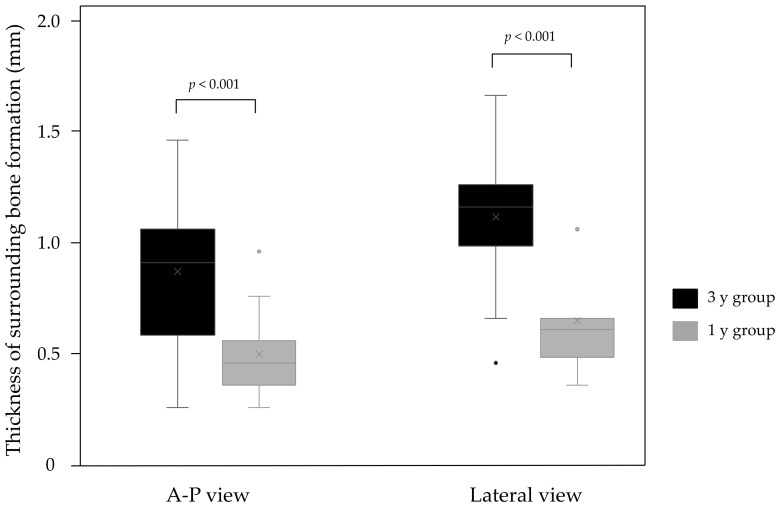
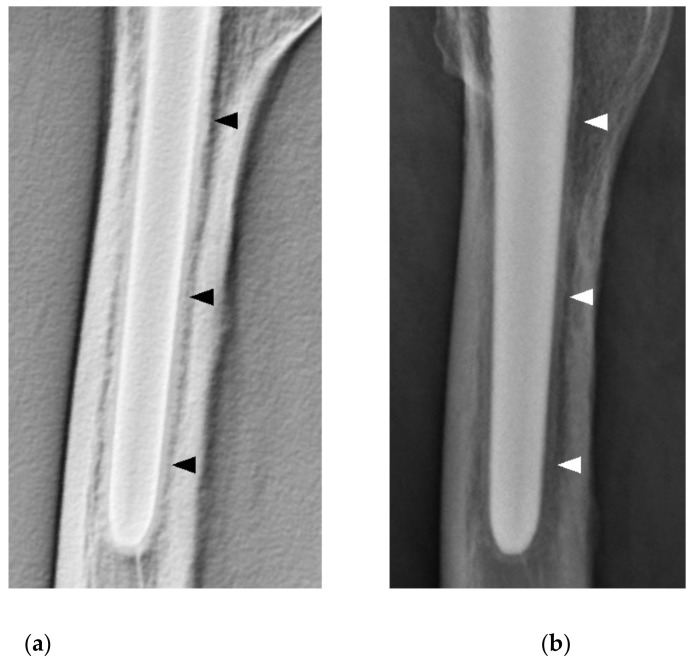
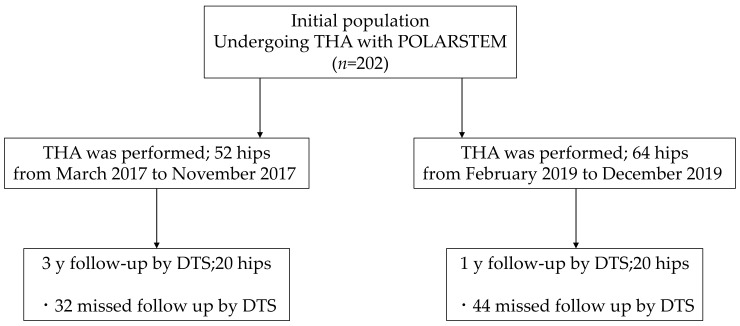
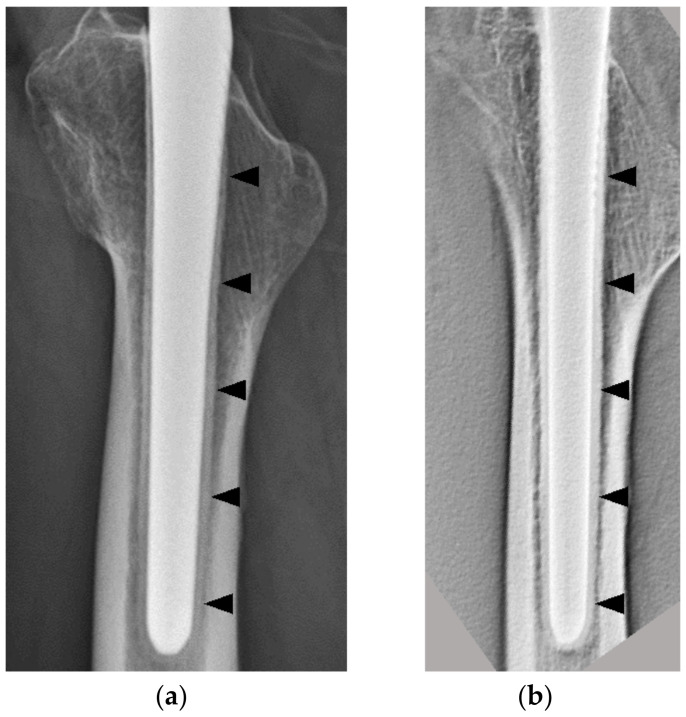
Digital tomosynthesis (DTS) is a new imaging technique derived from radiography, and its usefulness has been gradually reported in the field of orthopedic diagnosis in recent years. A fully hydroxyapatite (HA)-coated stem, which is used for total hip arthroplasty (THA), is a type of cementless stem that has been widely used recently and reported to have good results. However, stem loosening on plain radiographs is difficult to determine in some cases due to cancellous condensation around the stem. In this retrospective cross-sectional study, we compared the results of plain radiography versus DTS to evaluate the imaging findings after THA using a fully HA-coated stem. Twenty joints each in the 3 y and 1 y postoperative groups underwent plain radiography and DTS. On DTS, bone formation around the stem was confirmed in all cases; however, this formation was not reproducible on plain radiography, and there were cases in which the reaction could not be confirmed or cases with cancellous condensation resembling reactive lines. This reaction was not reproducible on plain radiographs, and in some cases, the reaction could not be confirmed, or there were cases with cancellous condensation that resembled reactive lines. Therefore, DTS was useful in the diagnosis of bone formation around the implant.
数字断层合成(DTS)是一种源自放射摄影的新型成像技术,近年来其在骨科诊断领域的应用价值逐渐得到报道。一种用于全髋关节置换术(THA)的全羟基磷灰石(HA)涂层假体柄,是近年来广泛应用的一种非骨水泥型假体柄,且报道显示效果良好。然而,由于假体柄周围的松质骨致密化,在某些情况下,普通X线片上很难判断假体柄是否松动。在这项回顾性横断面研究中,我们比较了普通X线摄影与DTS的结果,以评估使用全HA涂层假体柄进行THA后的影像学表现。术后3年组和1年组各20个关节接受了普通X线摄影和DTS检查。在DTS上,所有病例均证实假体柄周围有骨形成;然而,这种骨形成在普通X线片上无法再现,存在无法证实反应或出现类似反应线的松质骨致密化的情况。这种反应在普通X线片上无法再现,在某些情况下,无法证实反应,或存在类似反应线的松质骨致密化情况。因此,DTS在诊断植入物周围的骨形成方面很有用。