Lee Ikjun, Piao Shuyu, Kim Seonhee, Nagar Harsha, Choi Su-Jeong, Jeon Byeong Hwa, Oh Sang-Ha, Irani Kaikobad, Kim Cuk-Seong
Department of Physiology and Medical Science, College of Medicine, Chungnam National University, Daejeon 301-747, Korea.
Department of Plastic and Reconstructive Surgery, College of Medicine, Chungnam National University, Daejeon 301-721, Korea.
Antioxidants (Basel). 2021 Oct 20;10(11):1645. doi: 10.3390/antiox10111645.
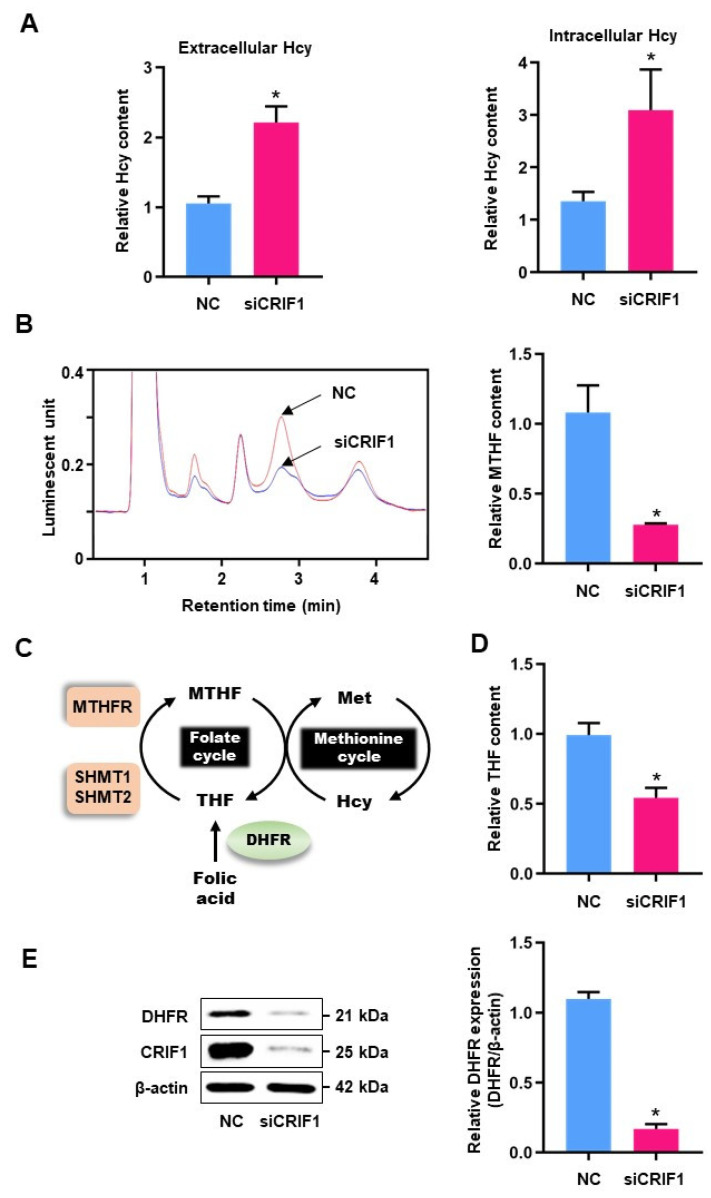
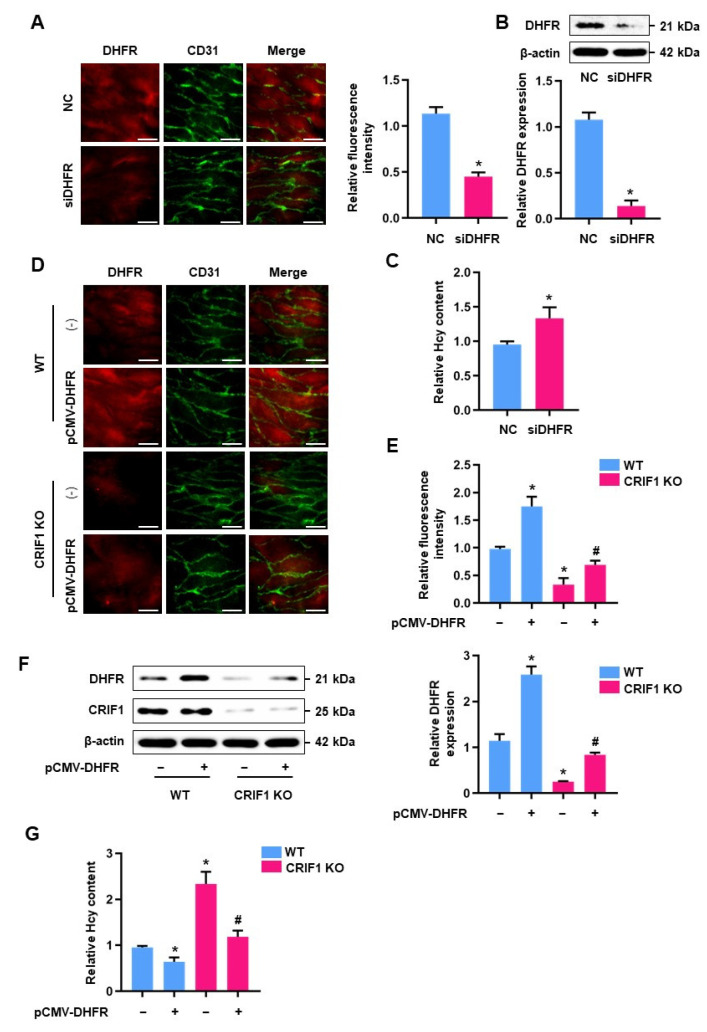
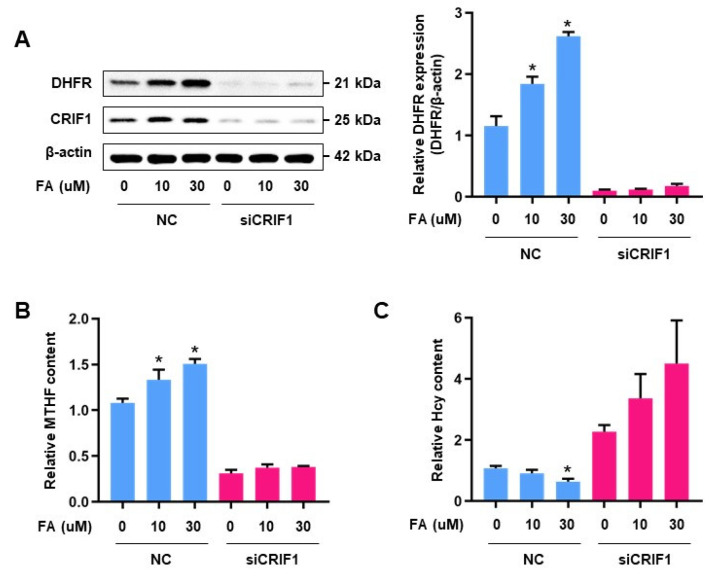
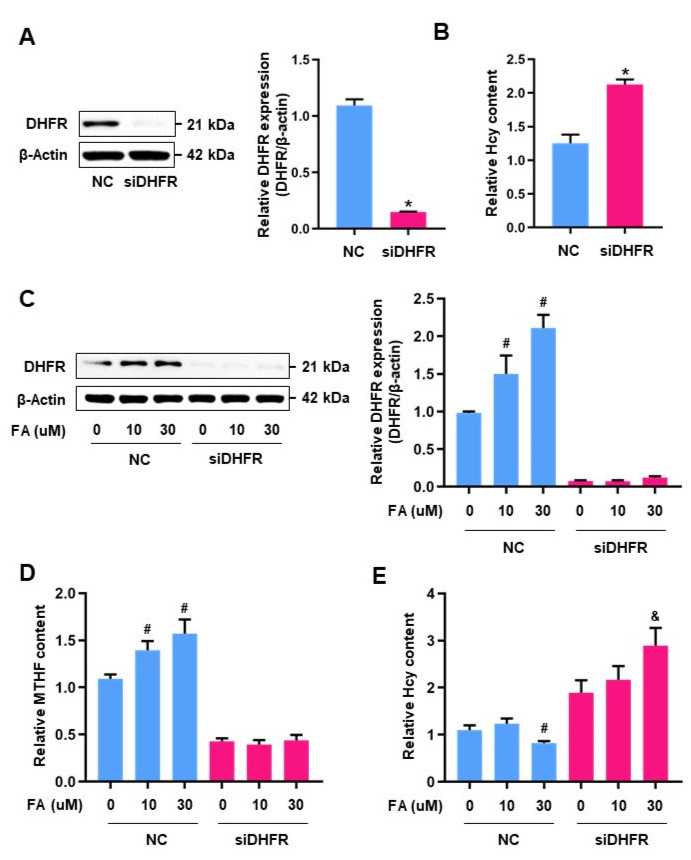
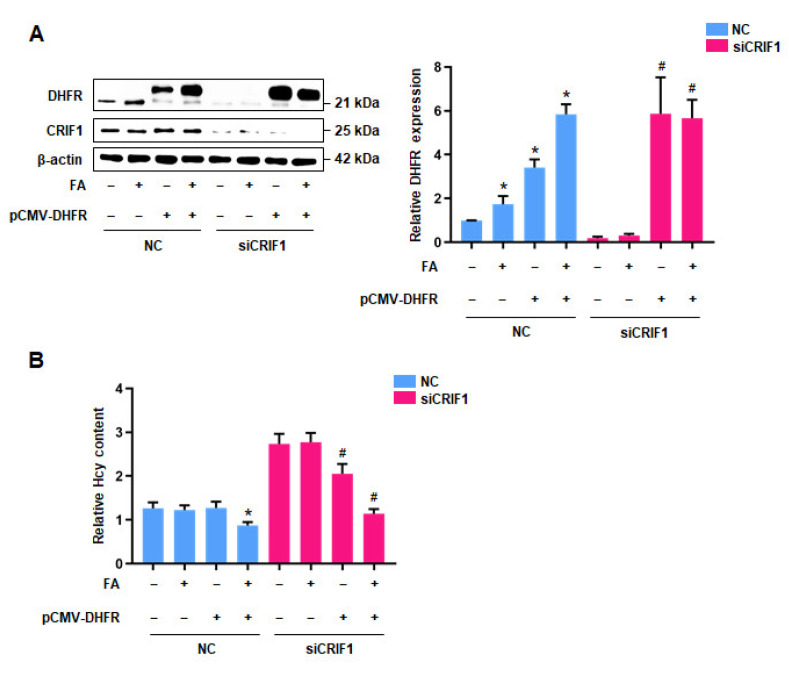
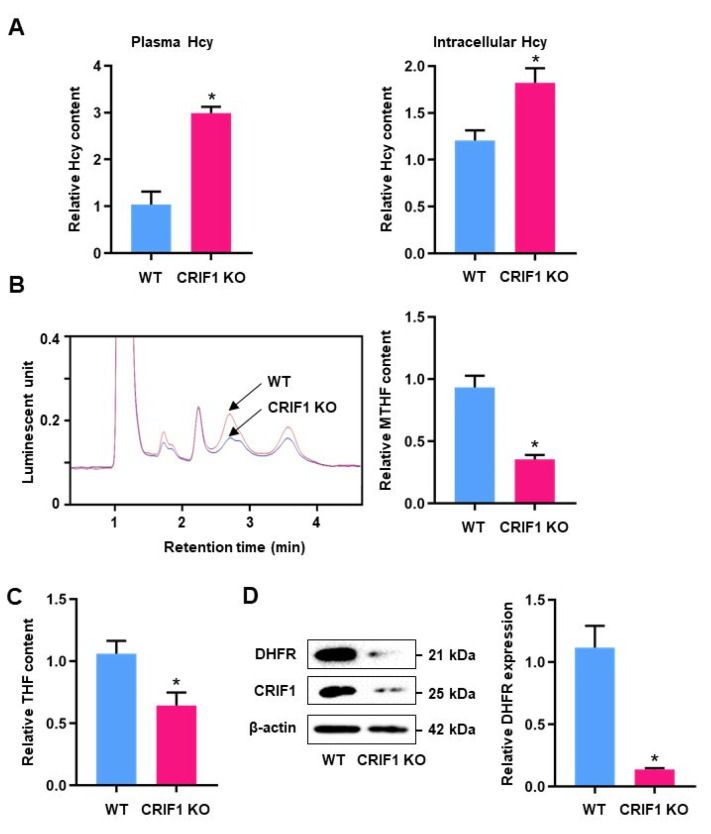
Elevated plasma homocysteine levels can induce vascular endothelial dysfunction; however, the mechanisms regulating homocysteine metabolism in impaired endothelial cells are currently unclear. In this study, we deleted the essential mitoribosomal gene CR6 interacting factor 1 (CRIF1) in human umbilical vein endothelial cells (HUVECs) and mice to induce endothelial cell dysfunction; then, we monitored homocysteine accumulation. We found that CRIF1 downregulation caused significant increases in intracellular and plasma concentrations of homocysteine, which were associated with decreased levels of folate cycle intermediates such as 5-methyltetrahydrofolate (MTHF) and tetrahydrofolate (THF). Moreover, dihydrofolate reductase (DHFR), a key enzyme in folate-mediated metabolism, exhibited impaired activity and decreased protein expression in CRIF1 knockdown endothelial cells. Supplementation with folic acid did not restore DHFR expression levels or MTHF and homocysteine concentrations in endothelial cells with a CRIF1 deletion or DHFR knockdown. However, the overexpression of DHFR in CRIF1 knockdown endothelial cells resulted in decreased accumulation of homocysteine. Taken together, our findings suggest that CRIF1-deleted endothelial cells accumulated more homocysteine, compared with control cells; this was primarily mediated by the disruption of DHFR expression.
血浆同型半胱氨酸水平升高可诱导血管内皮功能障碍;然而,目前尚不清楚在内皮细胞受损时调节同型半胱氨酸代谢的机制。在本研究中,我们在人脐静脉内皮细胞(HUVECs)和小鼠中敲除了必需的线粒体核糖体基因CR6相互作用因子1(CRIF1)以诱导内皮细胞功能障碍;然后,我们监测了同型半胱氨酸的积累情况。我们发现CRIF1下调导致细胞内和血浆中的同型半胱氨酸浓度显著增加,这与叶酸循环中间体如5-甲基四氢叶酸(MTHF)和四氢叶酸(THF)水平降低有关。此外,叶酸介导代谢中的关键酶二氢叶酸还原酶(DHFR)在CRIF1敲低的内皮细胞中活性受损且蛋白表达降低。用叶酸补充并不能恢复CRIF1缺失或DHFR敲低的内皮细胞中的DHFR表达水平、MTHF和同型半胱氨酸浓度。然而,在CRIF1敲低的内皮细胞中过表达DHFR导致同型半胱氨酸积累减少。综上所述,我们的研究结果表明,与对照细胞相比,CRIF1缺失的内皮细胞积累了更多的同型半胱氨酸;这主要是由DHFR表达的破坏介导的。