Mollica Adriano, Scioli Giuseppe, Della Valle Alice, Cichelli Angelo, Novellino Ettore, Bauer Marta, Kamysz Wojciech, Llorent-Martínez Eulogio J, Fernández-de Córdova Maria Luisa, Castillo-López R, Ak Gunes, Zengin Gokhan, Pieretti Stefano, Stefanucci Azzurra
Department of Pharmacy, G. d'Annunzio University of Chieti-Pescara, 66100 Chieti, Italy.
Department of Medical, Oral and Biotechnological Sciences, "G. d'Annunzio" University Chieti-Pescara, Via dei Vestini 31, 66100 Chieti, Italy.
Antioxidants (Basel). 2021 Oct 27;10(11):1704. doi: 10.3390/antiox10111704.
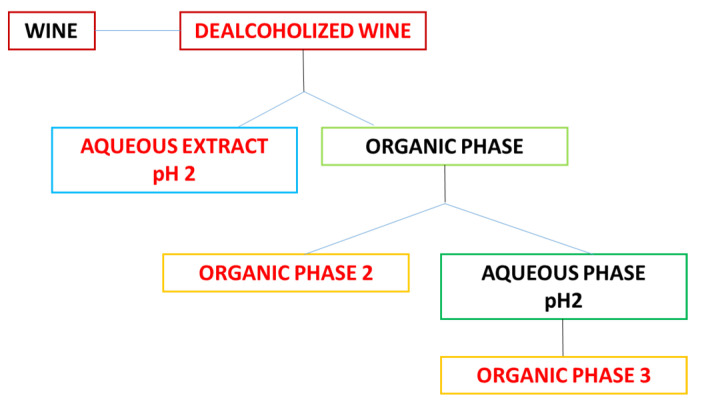
Grape pomace is commonly considered a waste product of monovarietal red wine production. Methods: HPLC-DAD analysis was performed to determine the polyphenol and flavonoid contents of all the extracts obtained from Montepulciano d'Abruzzo red wine and grape skins whereas, GC-MS was applied to the determination of fatty acid composition in grape seeds oil. Biological characterization involves antioxidant and antimicrobial assays for all the extracts and seeds oil; Their ability to inhibit α-glucosidase, α-amylase, α-tyrosinase, and ChE enzymes was also detected, together with anti-inflammatory activity on wine, grape skin extracts, and seeds oil by lipoxygenase (5-LOX) and LPS-stimulated macrophage release assays. Data indicate significative polyphenols content (199.31 ± 7.21 mgGAE/g), antioxidant (CUPRAC assay (1036.98 mgTE/g)), enzymatic inhibition (α-tyrosinase: 151.30 ± 1.20 mgKAE/g) and anti-inflammatory activities for wine-organic extract 2, while the antimicrobial activity of grape skin decoction is higher than those reported by wine extracts on three bacterial strains. Interestingly only dealcoholized wine and wine-aqueous extract exerts inhibitory effects on α-glucosidase (20.62 ± 0.23 mmolACAE/g and 19.81 ± 0.03 mmolACAE/g, respectively), while seeds oil is rich in oleic and linoleic acids. These results confirm the strong antioxidant properties of Montepulciano d'Abruzzo grape pomace, suggesting the potential use of this waste product as functional food supplements in the human diet and in cosmeceutics.
葡萄皮渣通常被认为是单一品种红葡萄酒生产的废弃物。方法:采用高效液相色谱 - 二极管阵列检测法(HPLC - DAD)测定从阿布鲁佐蒙特布查诺红葡萄酒和葡萄皮中获得的所有提取物中的多酚和黄酮含量,而气相色谱 - 质谱联用仪(GC - MS)用于测定葡萄籽油中的脂肪酸组成。生物学特性鉴定包括对所有提取物和籽油进行抗氧化和抗菌测定;还检测了它们抑制α - 葡萄糖苷酶、α - 淀粉酶、α - 酪氨酸酶和胆碱酯酶的能力,以及通过脂氧合酶(5 - LOX)和脂多糖刺激的巨噬细胞释放试验对葡萄酒、葡萄皮提取物和籽油的抗炎活性。数据表明,葡萄酒有机提取物2具有显著的多酚含量(199.31±7.21 mgGAE/g)、抗氧化能力(铜离子还原抗氧化能力测定法(CUPRAC)为1036.98 mgTE/g)、酶抑制能力(α - 酪氨酸酶:151.30±1.20 mgKAE/g)和抗炎活性,而葡萄皮煎剂对三种细菌菌株的抗菌活性高于葡萄酒提取物。有趣的是,只有脱醇葡萄酒和葡萄酒水提取物对α - 葡萄糖苷酶有抑制作用(分别为20.62±0.23 mmolACAE/g和19.81±0.03 mmolACAE/g),而籽油富含油酸和亚油酸。这些结果证实了阿布鲁佐蒙特布查诺葡萄皮渣具有强大的抗氧化特性,表明这种废弃物有潜力作为功能性食品补充剂用于人类饮食和化妆品中。