Lee Chi-Ho, Choi Ji Woong
Laboratory of Neuropharmacology, College of Pharmacy and Gachon Institute of Pharmaceutical Sciences, Incheon 21936, Korea.
Antioxidants (Basel). 2021 Oct 27;10(11):1706. doi: 10.3390/antiox10111706.
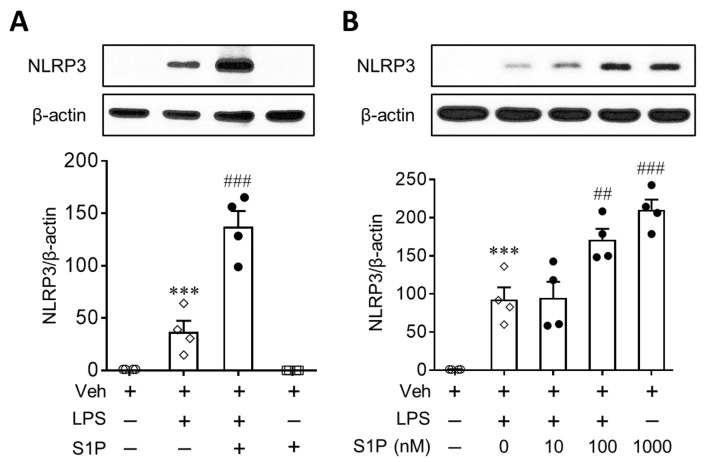
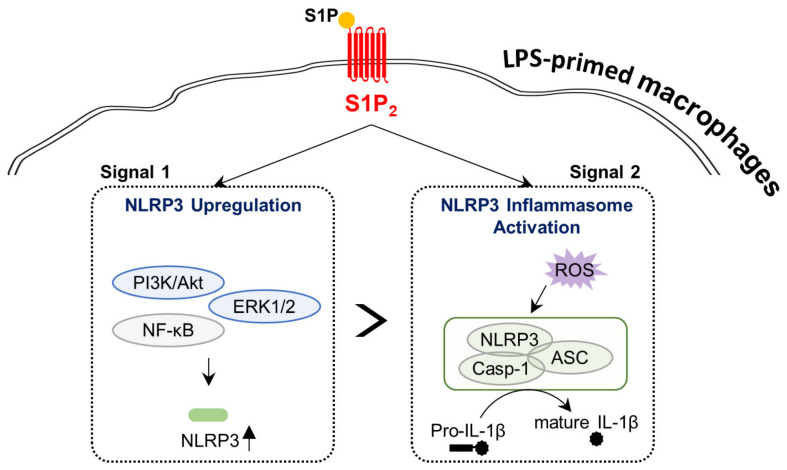
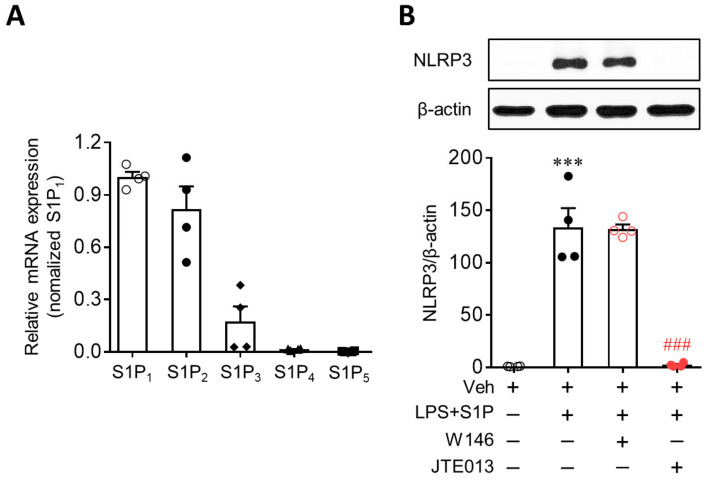
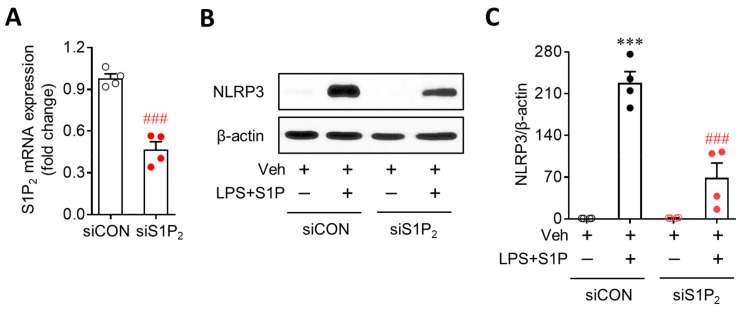
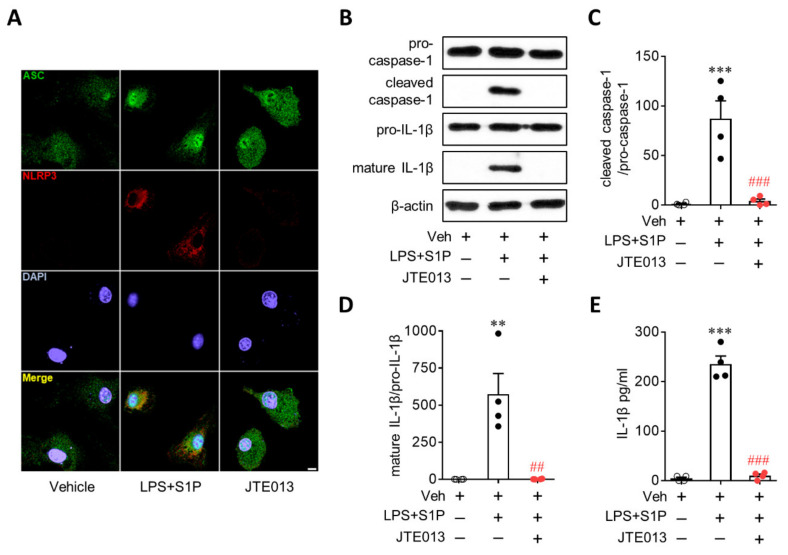
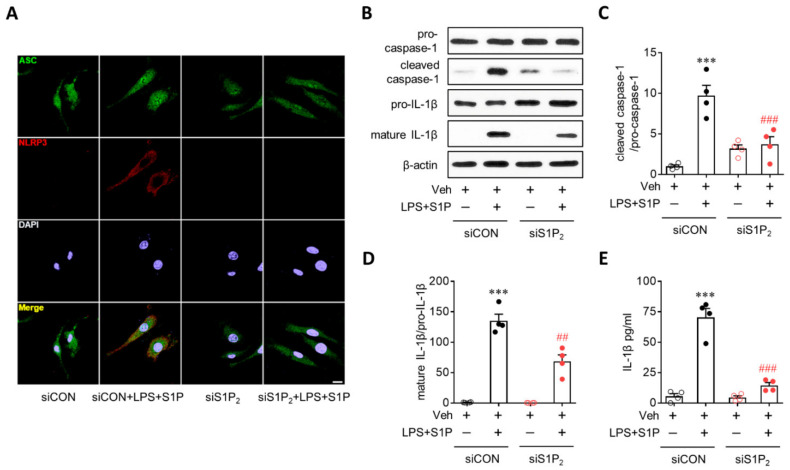
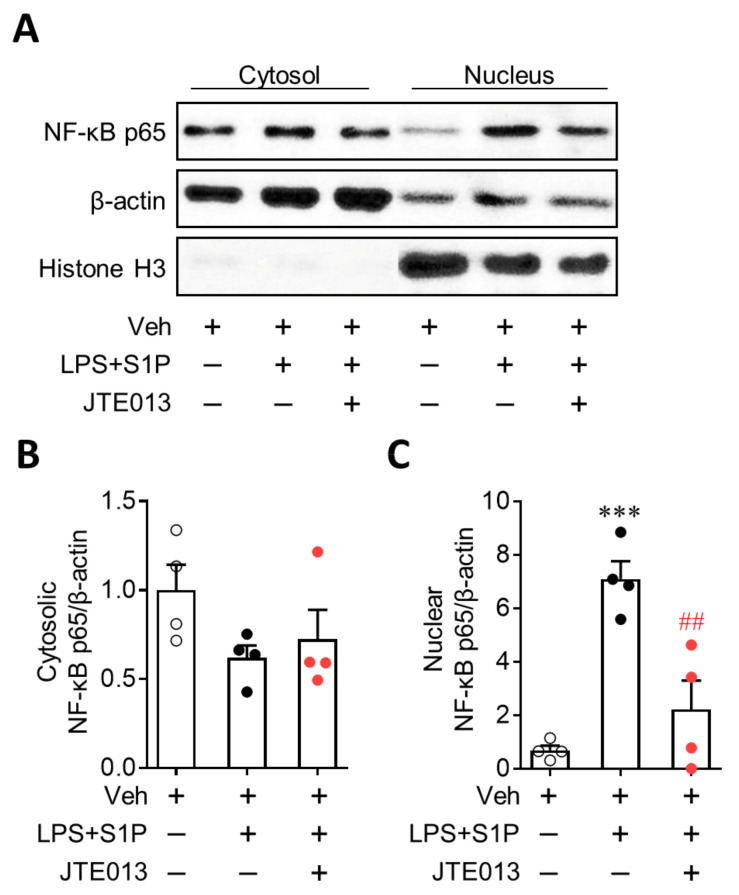
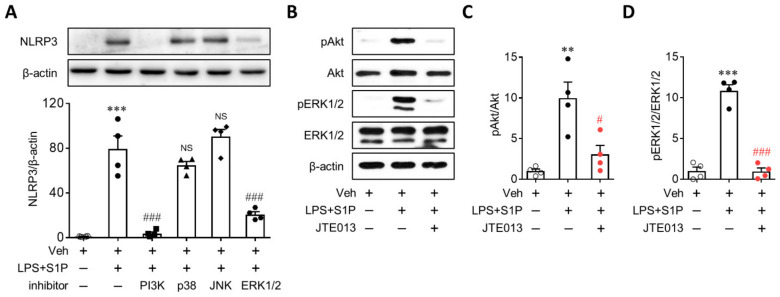
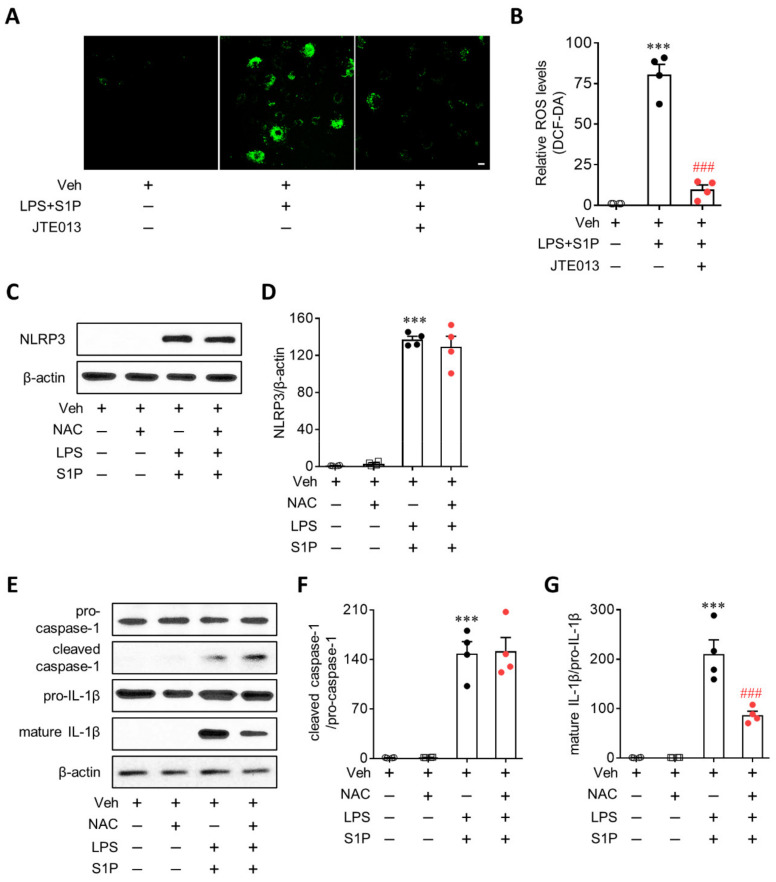
The activation of NLRP3 inflammasome is a key factor for various inflammatory diseases. Here, we provide experimental evidence supporting the regulatory role of sphingosine-1-phosphate (S1P) in NLRP3 inflammasome activation in mouse bone-marrow-derived macrophages (BMDMs), along with the S1P receptor subtype involved and underlying regulatory mechanisms. During the priming stage, S1P induced NLRP3 upregulation in BMDMs only when primed with lipopolysaccharide (LPS). In this event, S1P, but not S1P, was involved based on the attenuated NLRP3 upregulation with JTE013 (S1P antagonist) or S1P knockdown. During the activation stage, S1P induced NLRP3 inflammasome activation in LPS-primed BMDMs via caspase-1 activation, interleukin 1β maturation, apoptosis-associated speck-like protein containing a CARD (ASC) speck formation, and IL-1β secretion. Such NLRP3 inflammasome activation was blocked by either pharmacological inhibition or genetic knockdown of S1P. NF-κB, PI3K/Akt, and ERK1/2 were identified as effector pathways underlying S1P/S1P signaling in the regulation of NLRP3 upregulation in LPS-primed BMDMs. Further, reactive oxygen species (ROS) production was dependent on the S1P/S1P signaling axis in these cells, and the ROS generated regulate NLRP3 inflammasome activation, but not NLRP3 priming. Collectively, our findings suggest that S1P promotes NLRP3 upregulation and NLRP3 inflammasome activation in LPS-primed BMDMs via S1P and subsequent effector pathways.
NLRP3炎性小体的激活是多种炎症性疾病的关键因素。在此,我们提供实验证据,支持鞘氨醇-1-磷酸(S1P)在小鼠骨髓来源巨噬细胞(BMDM)中对NLRP3炎性小体激活的调节作用,以及所涉及的S1P受体亚型和潜在调节机制。在启动阶段,仅在用脂多糖(LPS)启动时,S1P才诱导BMDM中NLRP3上调。在此情况下,基于用JTE013(S1P拮抗剂)或S1P敲低后NLRP3上调减弱,表明是S1P而非S1P参与其中。在激活阶段,S1P通过激活半胱天冬酶-1、白细胞介素1β成熟、含CARD的凋亡相关斑点样蛋白(ASC)斑点形成和IL-1β分泌,诱导LPS启动的BMDM中NLRP3炎性小体激活。这种NLRP3炎性小体激活可通过S1P的药理学抑制或基因敲低来阻断。NF-κB、PI3K/Akt和ERK1/2被确定为LPS启动的BMDM中S1P/S1P信号调节NLRP3上调的效应途径。此外,这些细胞中的活性氧(ROS)产生依赖于S1P/S1P信号轴,所产生的ROS调节NLRP3炎性小体激活,但不调节NLRP3启动。总体而言,我们的研究结果表明,S1P通过S1P和随后的效应途径促进LPS启动的BMDM中NLRP3上调和NLRP3炎性小体激活。