Ma Xueting, Liu Baohong, Gong Zhenxing, Qu Zigang, Cai Jianping
State Key Laboratory of Veterinary Etiological Biology, Key Laboratory of Veterinary Parasitology of Gansu Province, Lanzhou Veterinary Research Institute, Chinese Academy of Agricultural Sciences, Lanzhou 730046, China.
Jiangsu Co-Innovation Center for Prevention and Control of Important Animal Infectious Diseases and Zoonoses, Yangzhou 225009, China.
Int J Mol Sci. 2021 Nov 9;22(22):12110. doi: 10.3390/ijms222212110.
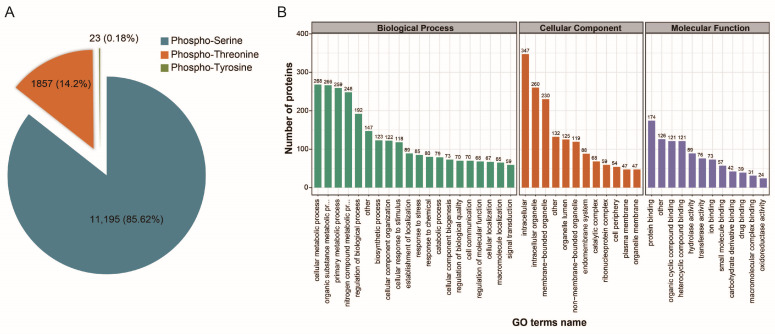
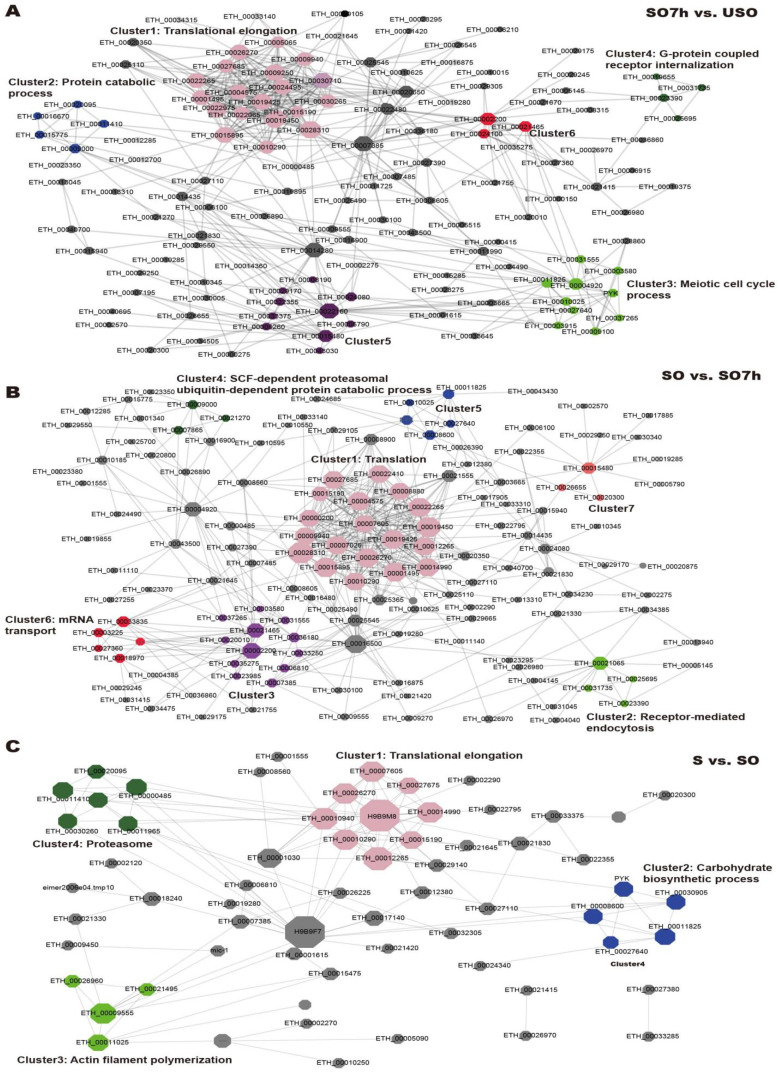
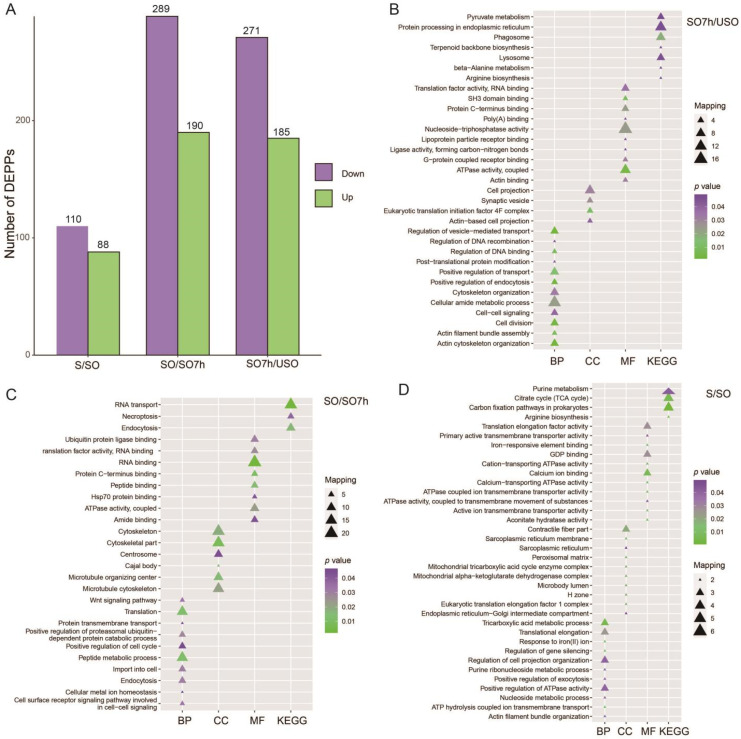
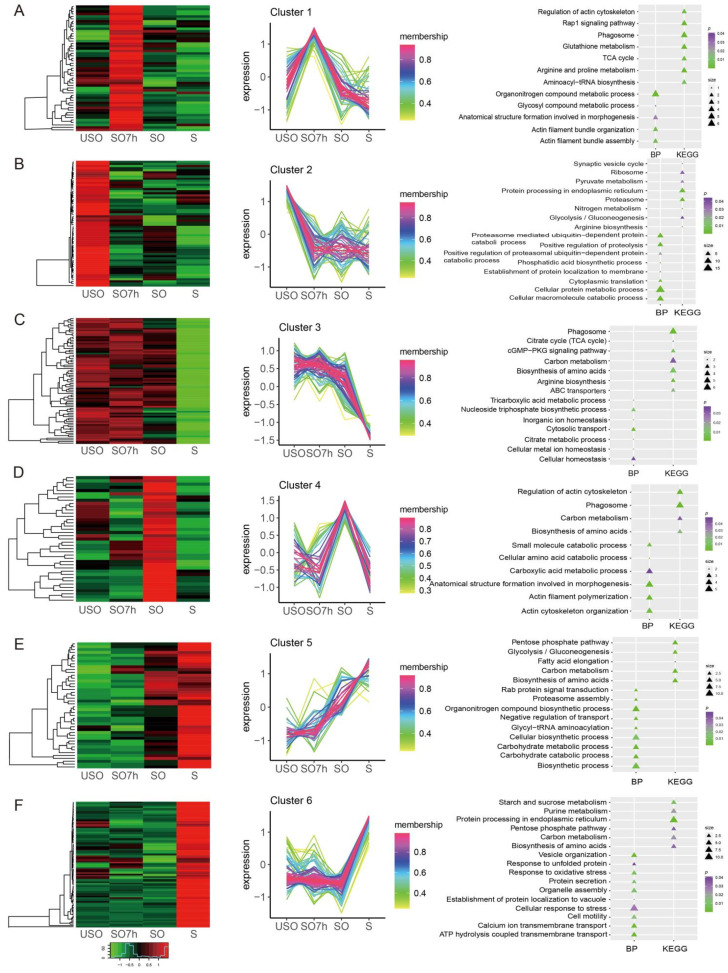
Protein phosphorylation is an important post-translational modification (PTM) involved in diverse cellular functions. It is the most prevalent PTM in both and , but its status in has not been reported. Herein, we performed a comprehensive, quantitative phosphoproteomic profile analysis of four stages of the life cycle: unsporulated oocysts (USO), partially sporulated (7 h) oocysts (SO7h), sporulated oocysts (SO), and sporozoites (S). A total of 15,247 phosphorylation sites on 9514 phosphopeptides corresponding to 2897 phosphoproteins were identified across the four stages. In addition, 456, 479, and 198 differentially expressed phosphoproteins (DEPPs) were identified in the comparisons SO7h vs. USO, SO vs. SO7h, and S vs. SO, respectively. Gene Ontology (GO) term and Kyoto Encyclopedia of Genes and Genomes (KEGG) pathway enrichment analyses of DEPPs suggested that they were involved in diverse functions. For SO7h vs. USO, DEPPs were mainly involved in cell division, actin cytoskeleton organization, positive regulation of transport, and pyruvate metabolism. For SO vs. SO7h, they were related to the peptide metabolic process, translation, and RNA transport. DEPPs in the S vs. SO comparison were associated with the tricarboxylic acid metabolic process, positive regulation of ATPase activity, and calcium ion binding. Time course sequencing data analysis (TCseq) identified six clusters with similar expression change characteristics related to carbohydrate metabolism, cytoskeleton organization, and calcium ion transport, demonstrating different regulatory profiles across the life cycle of . The results revealed significant changes in the abundance of phosphoproteins during development. The findings shed light on the key roles of protein phosphorylation and dephosphorylation in the life cycle.
蛋白质磷酸化是一种重要的翻译后修饰(PTM),参与多种细胞功能。它是人和动物中最普遍的PTM,但在[具体生物名称未提及]中的情况尚未见报道。在此,我们对[具体生物名称未提及]生命周期的四个阶段进行了全面、定量的磷酸化蛋白质组图谱分析:未孢子化卵囊(USO)、部分孢子化(7小时)卵囊(SO7h)、孢子化卵囊(SO)和子孢子(S)。在这四个阶段共鉴定出对应于2897个磷酸化蛋白质的9514个磷酸肽上的15247个磷酸化位点。此外,在SO7h与USO、SO与SO7h、S与SO的比较中分别鉴定出456、479和198个差异表达的磷酸化蛋白质(DEPPs)。对DEPPs的基因本体(GO)术语和京都基因与基因组百科全书(KEGG)通路富集分析表明它们参与多种功能。对于SO7h与USO,DEPPs主要参与细胞分裂、肌动蛋白细胞骨架组织、转运的正调控和丙酮酸代谢。对于SO与SO7h,它们与肽代谢过程、翻译和RNA转运有关。S与SO比较中的DEPPs与三羧酸代谢过程、ATP酶活性的正调控和钙离子结合有关。时间进程测序数据分析(TCseq)确定了六个与碳水化合物代谢、细胞骨架组织和钙离子转运相关的具有相似表达变化特征的簇,表明在[具体生物名称未提及]生命周期中存在不同的调控模式。结果揭示了[具体生物名称未提及]发育过程中磷酸化蛋白质丰度的显著变化。这些发现阐明了蛋白质磷酸化和去磷酸化在[具体生物名称未提及]生命周期中的关键作用。