School of Pharmacy and Pharmaceutical Sciences, Cardiff University, Cardiff CF10 3NB, UK.
Institute of Life Sciences, School of Medicine, Swansea University, Swansea SA2 8PP, UK.
Int J Mol Sci. 2021 Nov 16;22(22):12346. doi: 10.3390/ijms222212346.
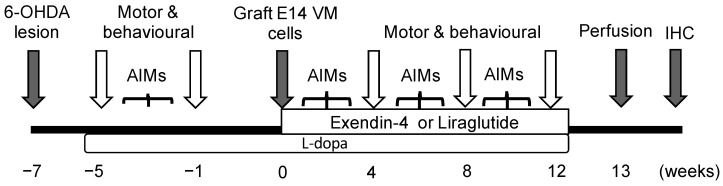
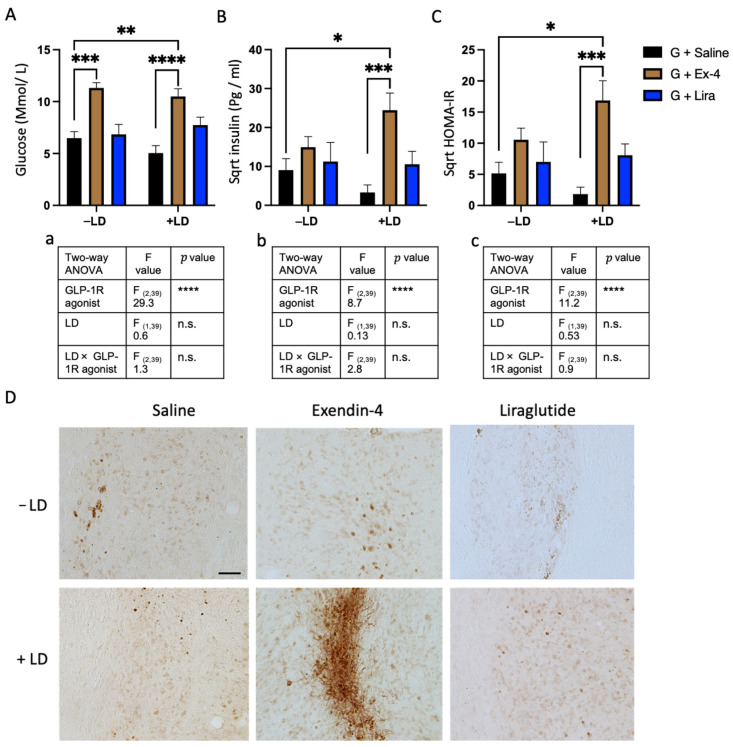
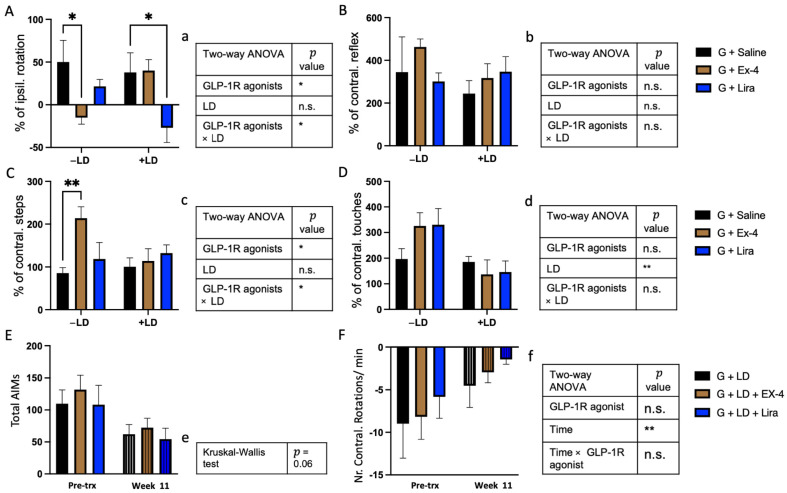
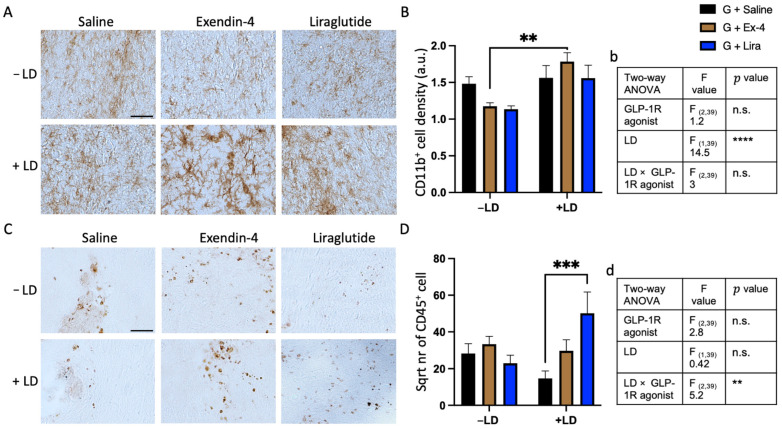
Cell therapy is a promising treatment for Parkinson's disease (PD), however clinical trials to date have shown relatively low survival and significant patient-to-patient variability. Glucagon Like Peptide-1 receptor (GLP-1R) agonists have potential neuroprotective effects on endogenous dopaminergic neurons. This study explores whether these agents could similarly support the growth and survival of newly transplanted neurons. 6-OHDA lesioned Sprague Dawley rats received intra-striatal grafts of dopaminergic ventral mesencephalic cells from embryonic day 14 Wistar rat embryos. Transplanted rats then received either saline or L-dopa (12 mg/kg) administered every 48 h prior to, and following cell transplantation. Peripheral GLP-1R agonist administration (exendin-4, 0.5 μg/kg twice daily or liraglutide, 100 μg/kg once daily) commenced immediately after cell transplantation and was maintained throughout the study. Graft survival increased under administration of exendin-4, with motor function improving significantly following treatment with both exendin-4 and liraglutide. However, this effect was not observed in rats administered with L-dopa. In contrast, L-dopa treatment with liraglutide increased graft volume, with parallel increases in motor function. However, this improvement was accompanied by an increase in leukocyte infiltration around the graft. The co-administration of L-dopa and exendin-4 also led to indicators of insulin resistance not seen with liraglutide, which may underpin the differential effects observed between the two GLP1-R agonists. Overall, there may be some benefit to the supplementation of grafted patients with GLP-1R agonists but the potential interaction with other pharmacological treatments needs to be considered in more depth.
细胞治疗是治疗帕金森病(PD)的一种有前途的方法,然而迄今为止的临床试验表明,其存活率相对较低,且患者间差异较大。胰高血糖素样肽-1 受体(GLP-1R)激动剂对内源性多巴胺能神经元具有潜在的神经保护作用。本研究探讨了这些药物是否同样可以支持新移植神经元的生长和存活。6-OHDA 损伤的 Sprague Dawley 大鼠接受来自胚胎第 14 天 Wistar 大鼠胚胎的多巴胺能腹侧中脑细胞的纹状体内移植。移植后大鼠接受生理盐水或 L-多巴(12mg/kg)治疗,在细胞移植前和移植后每 48 小时给药一次。外周 GLP-1R 激动剂(exendin-4,0.5μg/kg,每日两次或 liraglutide,100μg/kg,每日一次)在细胞移植后立即开始给药,并在整个研究过程中维持。给予 exendin-4 可增加移植物存活率,并且 exendin-4 和 liraglutide 联合治疗后运动功能显著改善。然而,给予 L-多巴的大鼠则未观察到这种效果。相比之下,给予 liraglutide 的 L-多巴治疗可增加移植物体积,并使运动功能平行增加。然而,这种改善伴随着移植物周围白细胞浸润的增加。L-多巴和 exendin-4 的联合给药也导致了与 liraglutide 不同的胰岛素抵抗指标,这可能是两种 GLP1-R 激动剂之间观察到的差异作用的基础。总的来说,给移植患者补充 GLP-1R 激动剂可能会有一些益处,但需要更深入地考虑与其他药物治疗的潜在相互作用。