Key Laboratory of Pathogenic Microbiology and Immunology, Institute of Microbiology, Chinese Academy of Sciences (CAS), Beijing 100101, China.
Savaid Medical School, University of Chinese Academy of Sciences, Beijing 100049, China.
Int J Mol Sci. 2021 Nov 19;22(22):12497. doi: 10.3390/ijms222212497.
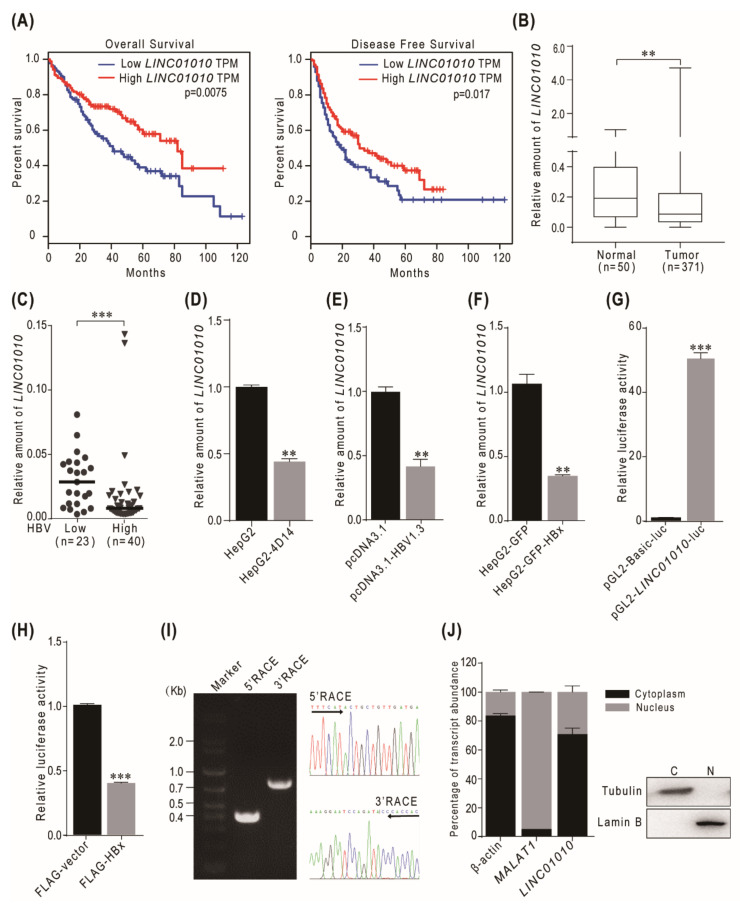
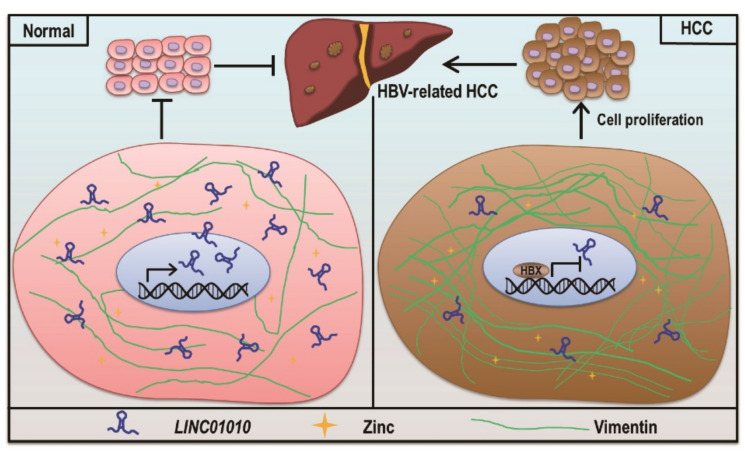
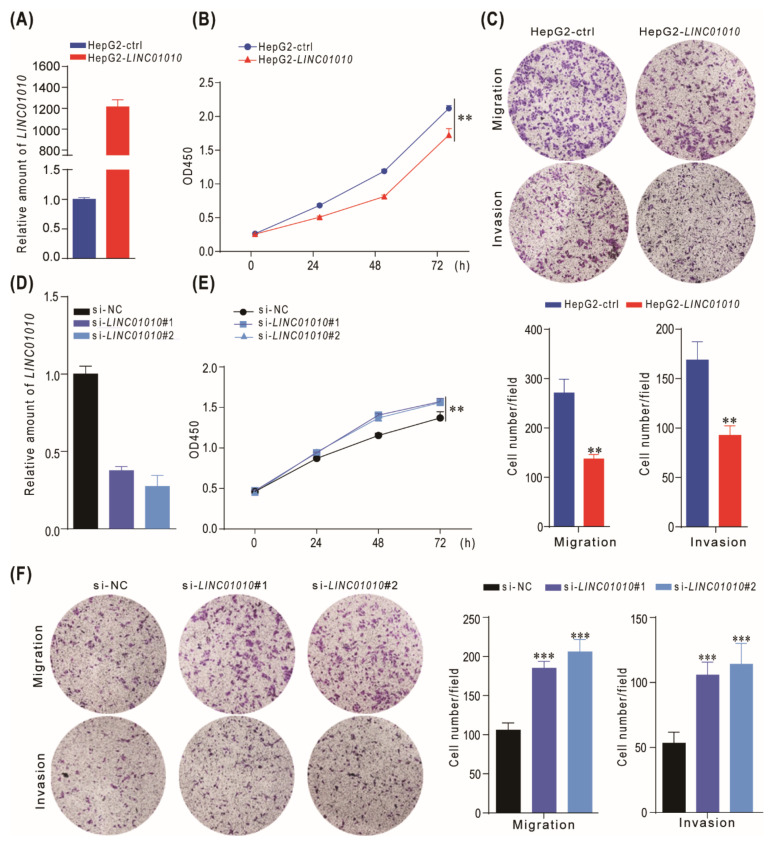
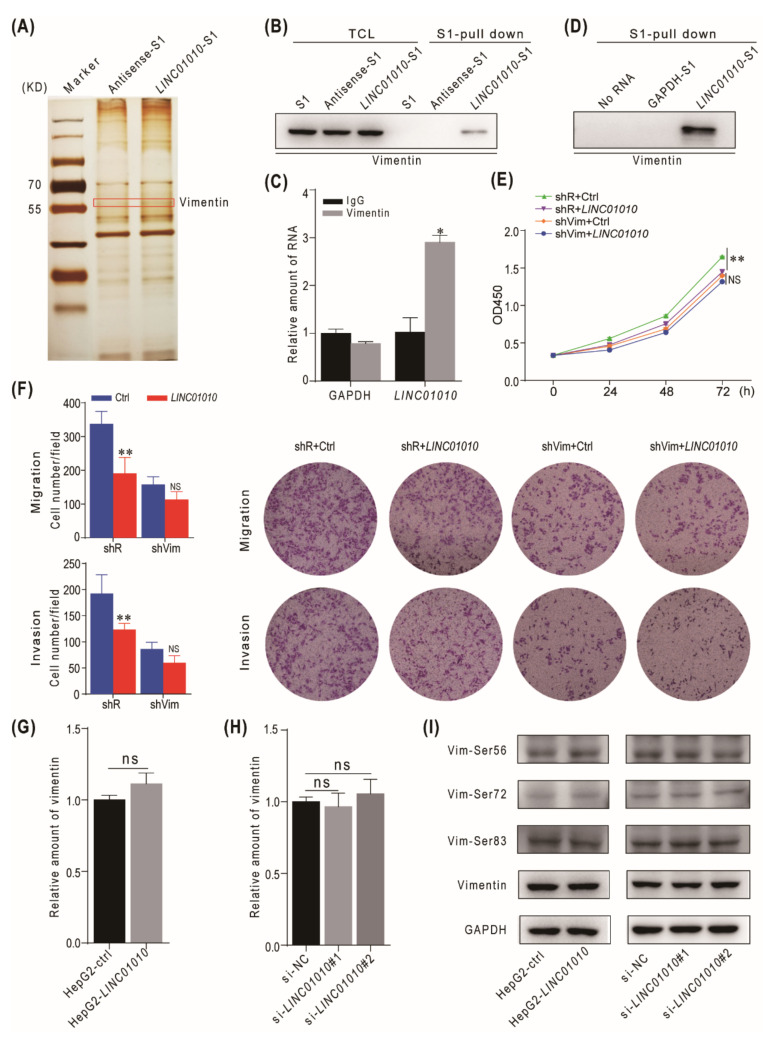
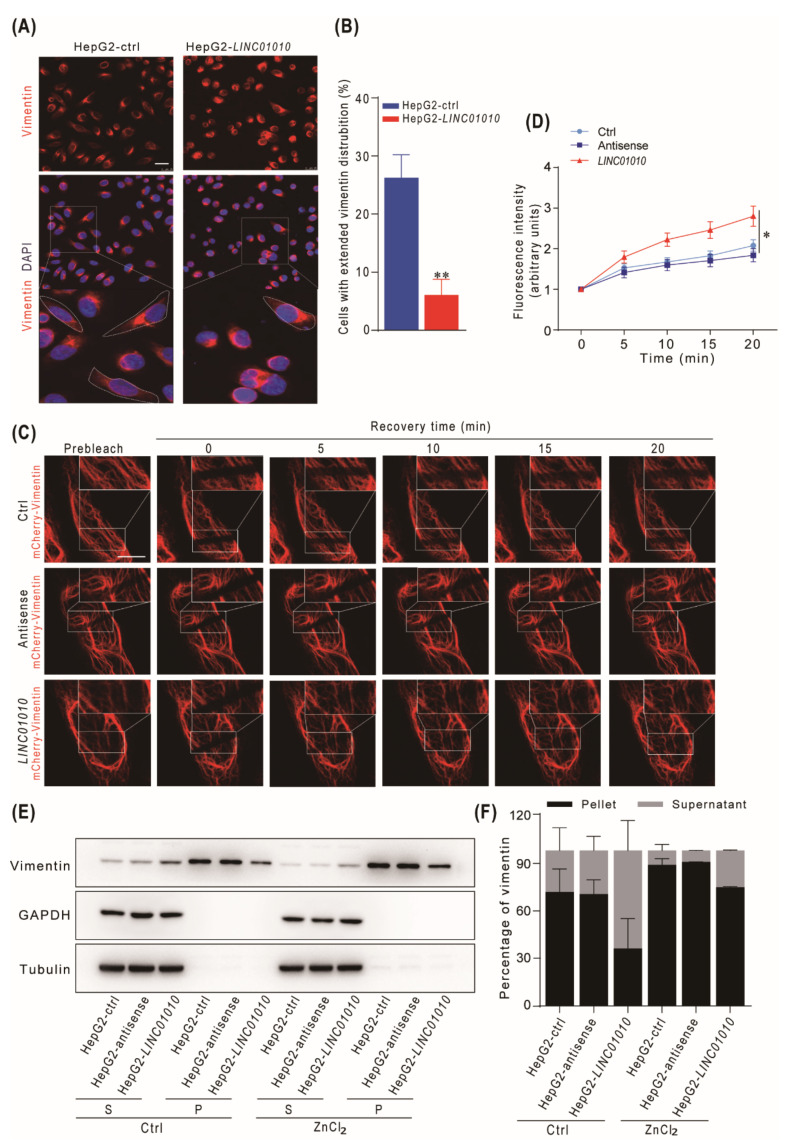
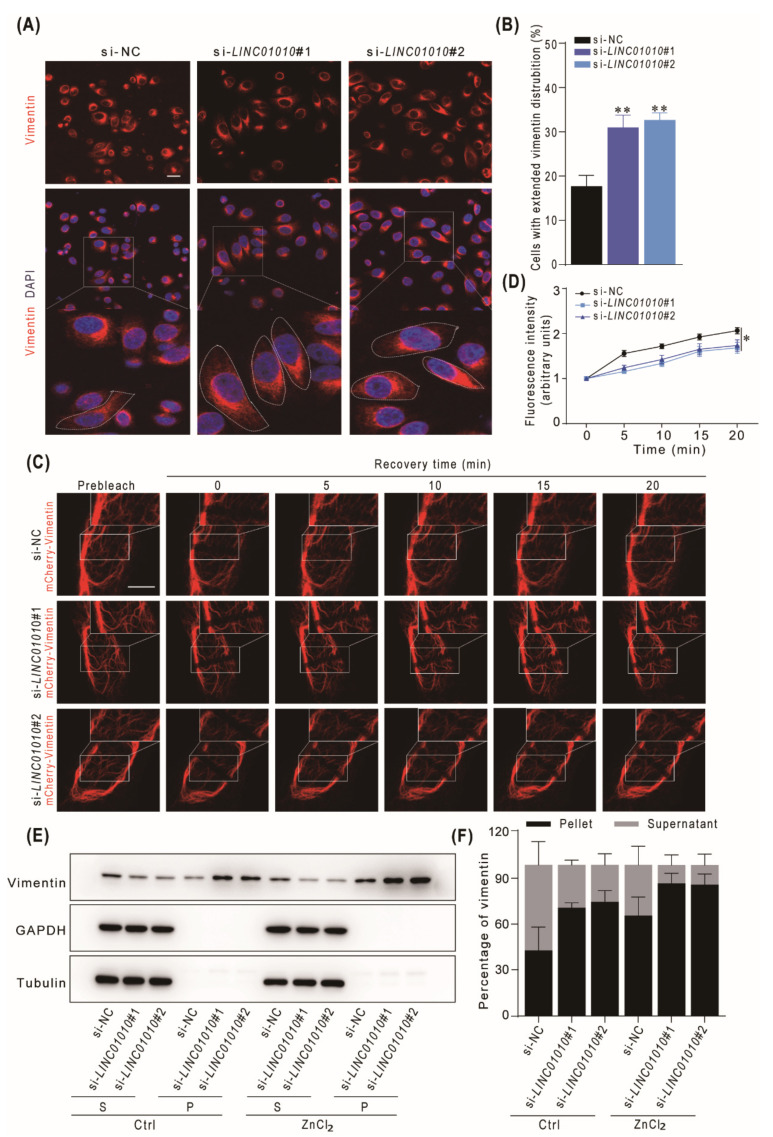
Hepatitis B virus (HBV) infection is closely related to hepatocellular carcinoma (HCC) development. To investigate the mechanism of HBV causing HCC, we previously analyzed the transcription of the HBV-transgenic cell line HepG2-4D14 and parental HepG2 cells and identified a subset of long noncoding RNAs (lncRNAs) differentially expressed between them. In this study, we focus on lncRNA , as it is significantly downregulated in HepG2-4D14 cells and in liver tissues of HCC patients, and positively correlated with survival. We found that HBV-encoded HBx can reduce the transcription of . Functional analysis showed that the overexpression of inhibits proliferation, migration and invasion of HepG2 cells while the knockdown of promotes these processes. By taking the approach of RNA immunoprecipitation (RIP) and mass spectrometry, we identified that can interact with vimentin. Further studies demonstrated that negatively affects the vimentin network extension and causes more rapid subunit exchange and lower stability of vimentin filaments. In addition, can reduce the amount of insoluble vimentin within cells, which suggests that interfers with vimentin polymerization. These data indicate that can inhibit the assembly of vimentin filament. Thus, we revealed that HBV HBx-downregulated , which suppresses cell proliferation and migration by negatively regulating the formation of vimentin filament. Taken together, is a potential tumor suppressor that may restrain HBV-related HCC development.
乙型肝炎病毒 (HBV) 感染与肝细胞癌 (HCC) 的发展密切相关。为了研究 HBV 导致 HCC 的机制,我们之前分析了 HBV 转基因细胞系 HepG2-4D14 和亲本 HepG2 细胞的转录组,并鉴定出它们之间差异表达的一组长链非编码 RNA (lncRNA)。在这项研究中,我们重点关注 lncRNA ,因为它在 HepG2-4D14 细胞和 HCC 患者的肝组织中显著下调,并且与存活率呈正相关。我们发现乙型肝炎病毒编码的 HBx 可以降低 的转录。功能分析表明, 的过表达抑制 HepG2 细胞的增殖、迁移和侵袭,而 的敲低则促进这些过程。通过 RNA 免疫沉淀 (RIP) 和质谱分析,我们鉴定出 可以与波形蛋白相互作用。进一步的研究表明, 负调控波形蛋白网络延伸,并导致波形蛋白纤维的亚基交换更快和稳定性更低。此外, 可以减少细胞内不溶性波形蛋白的含量,这表明 干扰了波形蛋白的聚合。这些数据表明 可以抑制波形蛋白纤维的组装。因此,我们揭示了乙型肝炎病毒 HBx 下调 ,通过负调控波形蛋白纤维的形成来抑制细胞增殖和迁移。综上所述, 是一种潜在的肿瘤抑制因子,可能抑制 HBV 相关 HCC 的发展。