Liu Junhui, Gao Lun, Zhu Xiaonan, Geng Rongxin, Tao Xiang, Xu Haitao, Chen Zhibiao
Department of Neurosurgery, Renmin Hospital of Wuhan University, Wuhan 430060, China.
Central Laboratory, Renmin Hospital of Wuhan University, Wuhan 430060, China.
Cancers (Basel). 2021 Nov 10;13(22):5620. doi: 10.3390/cancers13225620.
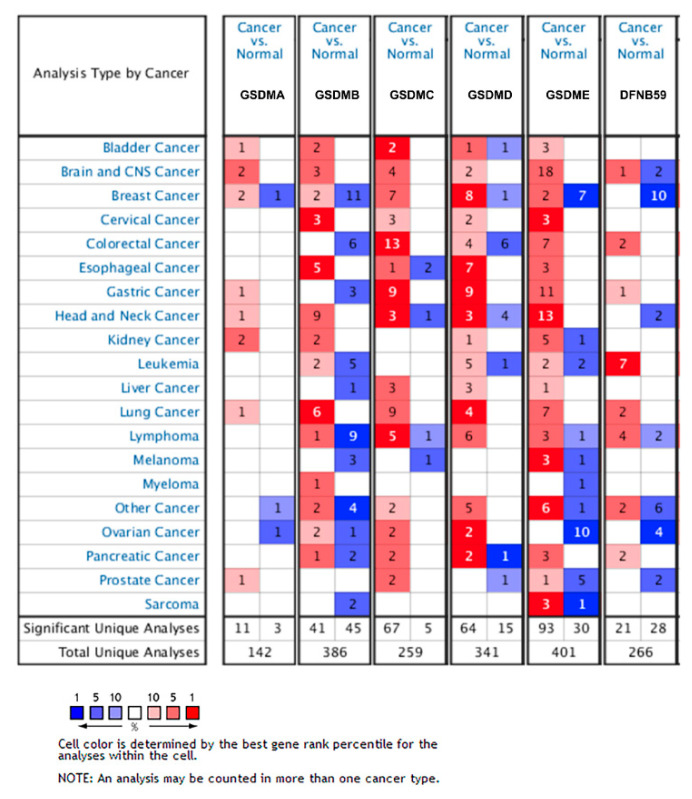
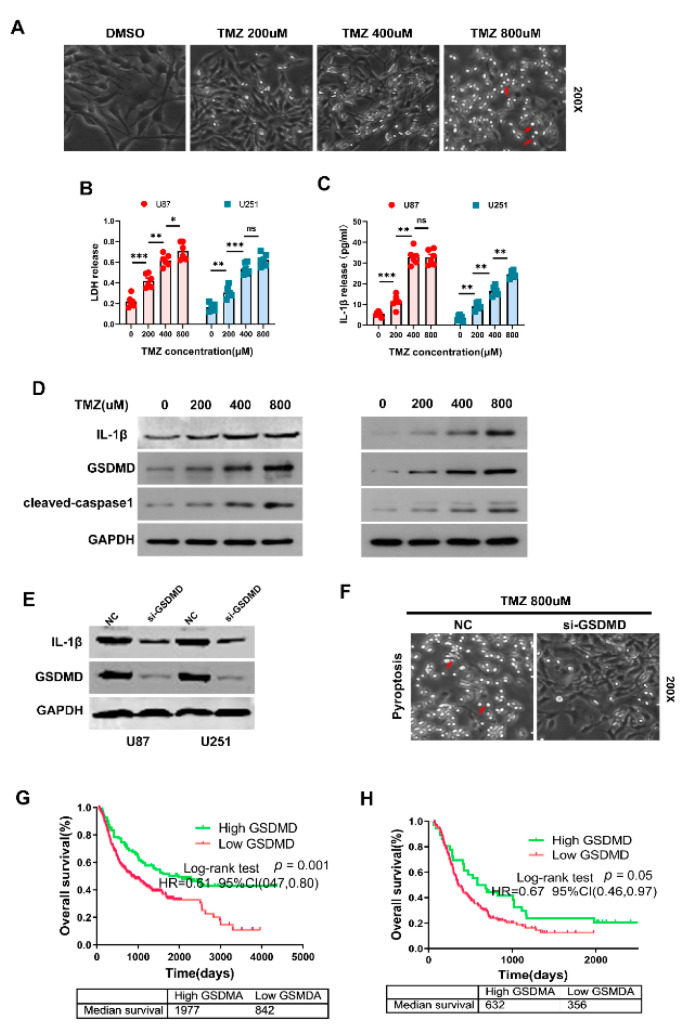
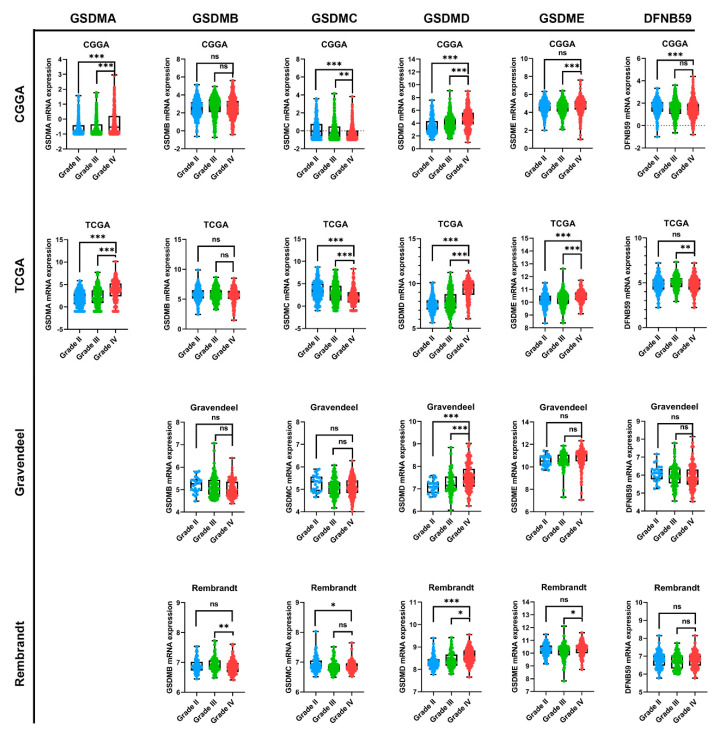
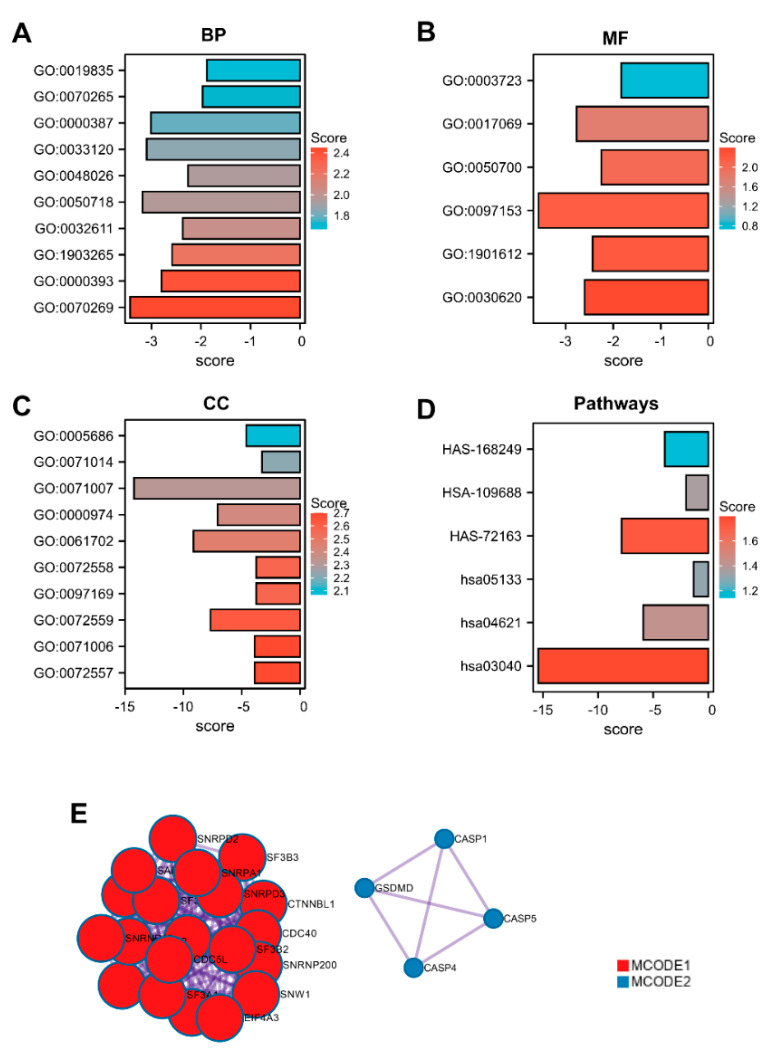
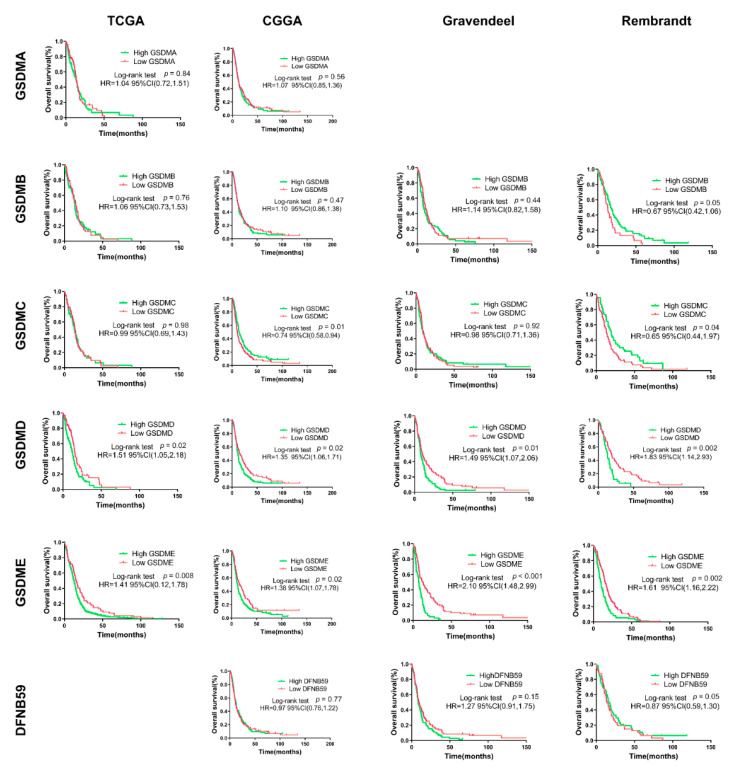
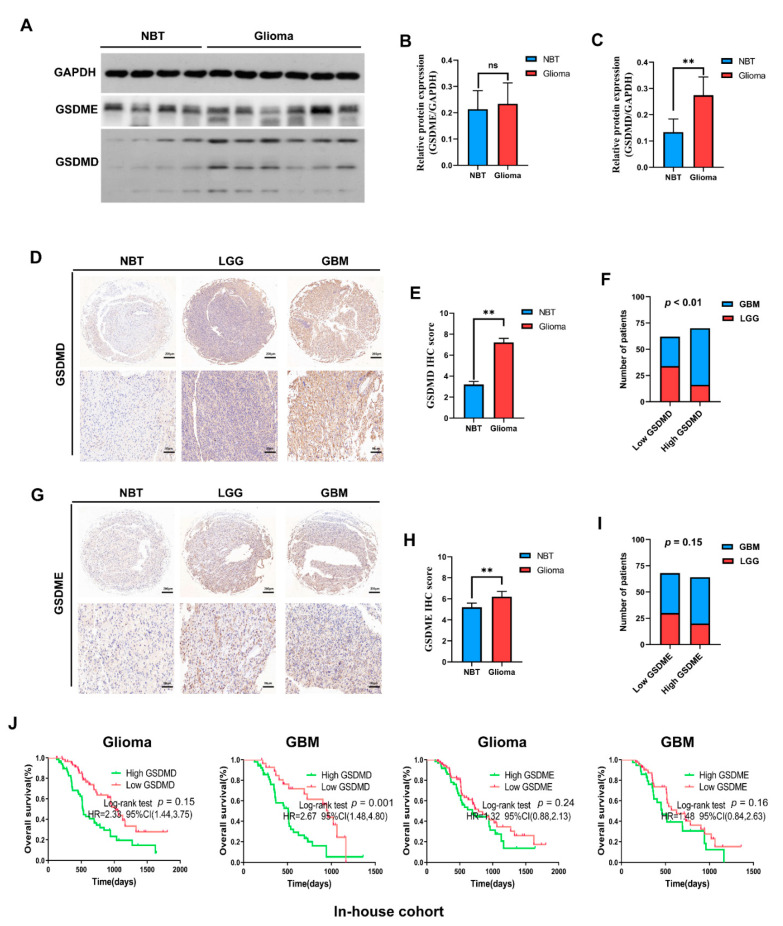
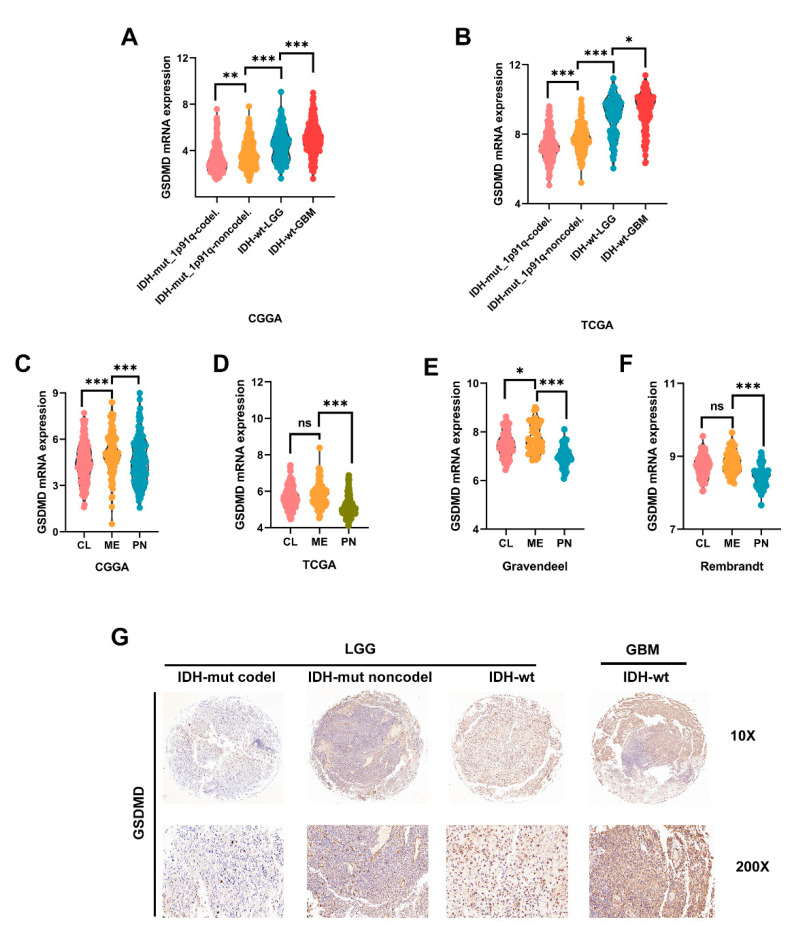
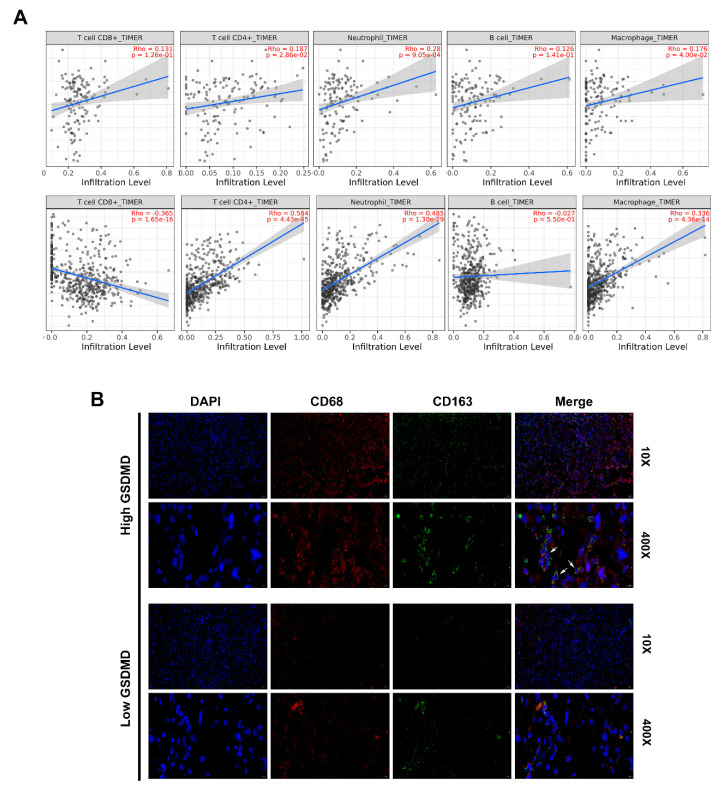
The gasdermin (GSDM) family act as executioners during pyroptosis. However, its expression and biological role in glioma remain to be determined. This study carried out gene expression from six public datasets. Westerns blots and immunohistochemistry (IHC) staining were employed to examine GSDM expression in glioma in an in-house cohort. Kaplan-Meier and Cox regression analyses were performed to evaluate the prognostic role of GSDMs in glioma. Association between gene expression and immune infiltration was assessed by IHC and immunofluorescence (IF) staining of tissue sections. TMZ-induced pyroptosis was assessed by observation of morphological changes, WB and ELISA detection. Only GSDMD expression was upregulated in glioma compared with nontumor brain tissues both in the public datasets and in-house cohort. High GSDMD expression was significantly associated with WHO grade IV, IDH 1/2 wild-type and mesenchymal subtypes. Besides, high GSDMD expression was associated with shorter overall survival and could be used as an independent risk factor for poor outcomes in LGG and GBM. GO enrichment analysis and IHC validation revealed that GSDMD expression might participate in regulating macrophage infiltration and polarization. TMZ treatment induced the pyroptosis in GBM cells and GSDMD expression increased with after treating with TMZ in a time-dependent manner. Moreover, knocking down GSDMD obviously decreased IL-1β expression and reduced TMZ-induced pyroptosis in in vitro. GSDMD was a novel prognostic biomarker, as well as TMZ-treatment response marker in glioma.
Gasdermin(GSDM)家族在细胞焦亡过程中起执行者的作用。然而,其在胶质瘤中的表达及生物学作用仍有待确定。本研究从六个公共数据集进行基因表达分析。采用蛋白质免疫印迹法和免疫组织化学(IHC)染色来检测胶质瘤组织中GSDM的表达。进行Kaplan-Meier和Cox回归分析以评估GSDMs在胶质瘤中的预后作用。通过对组织切片进行IHC和免疫荧光(IF)染色来评估基因表达与免疫浸润之间的关联。通过观察形态学变化、蛋白质免疫印迹法和酶联免疫吸附测定(ELISA)检测来评估替莫唑胺(TMZ)诱导的细胞焦亡。在公共数据集和内部队列中,与非肿瘤脑组织相比,胶质瘤中只有GSDMD的表达上调。高GSDMD表达与世界卫生组织(WHO)IV级、异柠檬酸脱氢酶(IDH)1/2野生型和间充质亚型显著相关。此外,高GSDMD表达与总生存期缩短相关,并且可作为低级别胶质瘤(LGG)和胶质母细胞瘤(GBM)预后不良的独立危险因素。基因本体(GO)富集分析和IHC验证表明,GSDMD表达可能参与调节巨噬细胞浸润和极化。TMZ处理诱导GBM细胞发生细胞焦亡,并且GSDMD表达在TMZ处理后呈时间依赖性增加。此外,在体外敲低GSDMD明显降低白细胞介素-1β(IL-1β)表达并减少TMZ诱导的细胞焦亡。GSDMD是一种新型的预后生物标志物,也是胶质瘤中TMZ治疗反应的标志物。