Mansi Rosalba, Nock Berthold A, Dalm Simone U, Busstra Martijn B, van Weerden Wytske M, Maina Theodosia
Division of Radiopharmaceutical Chemistry, Clinic of Radiology and Nuclear Medicine University Hospital Basel, 4031 Basel, Switzerland.
Molecular Radiopharmacy, INRaSTES, NCSR "Demokritos", 15310 Athens, Greece.
Cancers (Basel). 2021 Nov 17;13(22):5766. doi: 10.3390/cancers13225766.
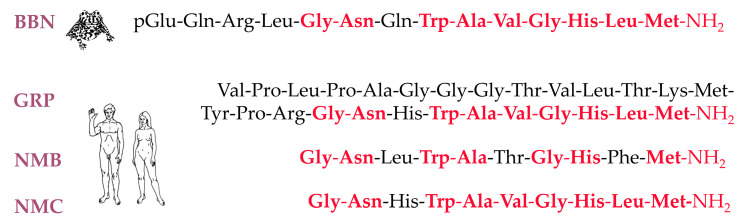
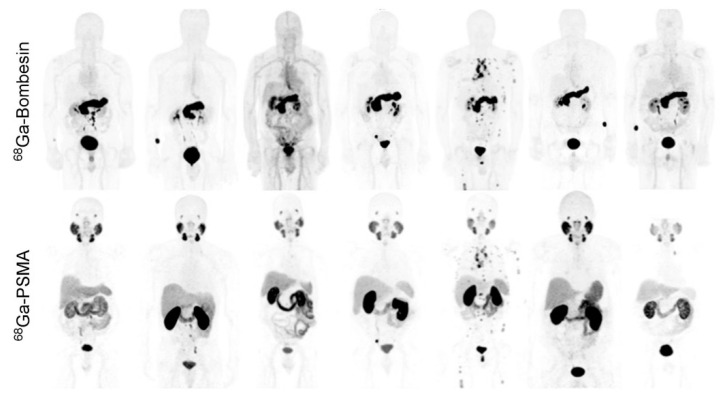
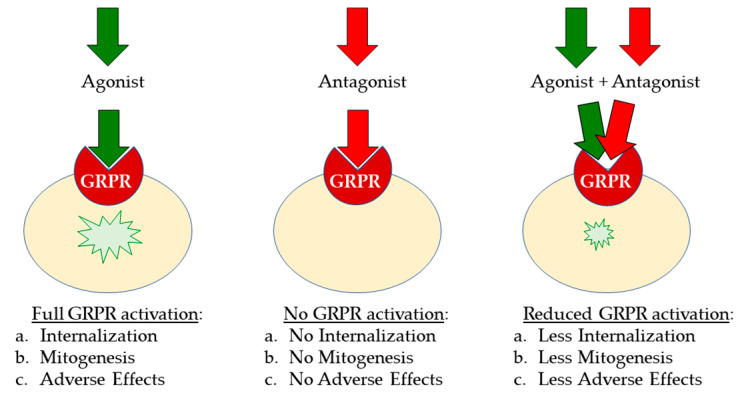
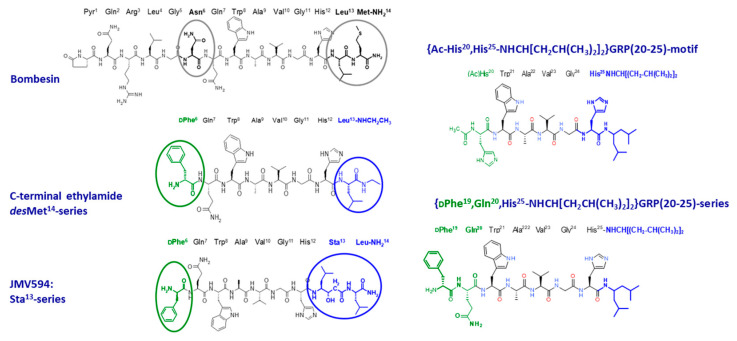
The gastrin-releasing peptide receptor (GRPR) is expressed in high numbers in a variety of human tumors, including the frequently occurring prostate and breast cancers, and therefore provides the rationale for directing diagnostic or therapeutic radionuclides on cancer lesions after administration of anti-GRPR peptide analogs. This concept has been initially explored with analogs of the frog 14-peptide bombesin, suitably modified at the N-terminus with a number of radiometal chelates. Radiotracers that were selected for clinical testing revealed inherent problems associated with these GRPR agonists, related to low metabolic stability, unfavorable abdominal accumulation, and adverse effects. A shift toward GRPR antagonists soon followed, with safer analogs becoming available, whereby, metabolic stability and background clearance issues were gradually improved. Clinical testing of three main major antagonist types led to promising outcomes, but at the same time brought to light several limitations of this concept, partly related to the variation of GRPR expression levels across cancer types, stages, previous treatments, and other factors. Currently, these parameters are being rigorously addressed by cell biologists, chemists, nuclear medicine physicians, and other discipline practitioners in a common effort to make available more effective and safe state-of-the-art molecular tools to combat GRPR-positive tumors. In the present review, we present the background, current status, and future perspectives of this endeavor.
胃泌素释放肽受体(GRPR)在多种人类肿瘤中高表达,包括常见的前列腺癌和乳腺癌,因此为在给予抗GRPR肽类似物后将诊断或治疗性放射性核素导向癌症病灶提供了理论依据。这一概念最初是用青蛙14肽蛙皮素的类似物进行探索的,这些类似物在N端用多种放射性金属螯合物进行了适当修饰。被选用于临床试验的放射性示踪剂显示出与这些GRPR激动剂相关的固有问题,包括代谢稳定性低、腹部蓄积不良和不良反应。随后很快转向了GRPR拮抗剂,有了更安全的类似物,代谢稳定性和本底清除问题逐渐得到改善。三种主要拮抗剂类型的临床试验取得了有前景的结果,但同时也揭示了这一概念的一些局限性,部分与不同癌症类型、阶段、既往治疗及其他因素导致的GRPR表达水平变化有关。目前,细胞生物学家、化学家、核医学医师和其他学科从业者正在共同努力严格解决这些参数问题,以便提供更有效、安全的先进分子工具来对抗GRPR阳性肿瘤。在本综述中,我们介绍了这一努力的背景、现状和未来展望。