Gil Hyo-Sun, Lee Jeong-Hun, Farag Ahmed K, Hassan Ahmed H E, Chung Kyung-Sook, Choi Jung-Hye, Roh Eun-Joo, Lee Kyung-Tae
Department of Pharmaceutical Biochemistry, College of Pharmacy, Kyung Hee University, 26, Kyungheedae-ro, Seoul 02447, Korea.
Department of Life and Nanopharmaceutical Sciences, Graduate School, Kyung Hee University, 26, Kyungheedae-ro, Seoul 02447, Korea.
Cancers (Basel). 2021 Nov 22;13(22):5849. doi: 10.3390/cancers13225849.
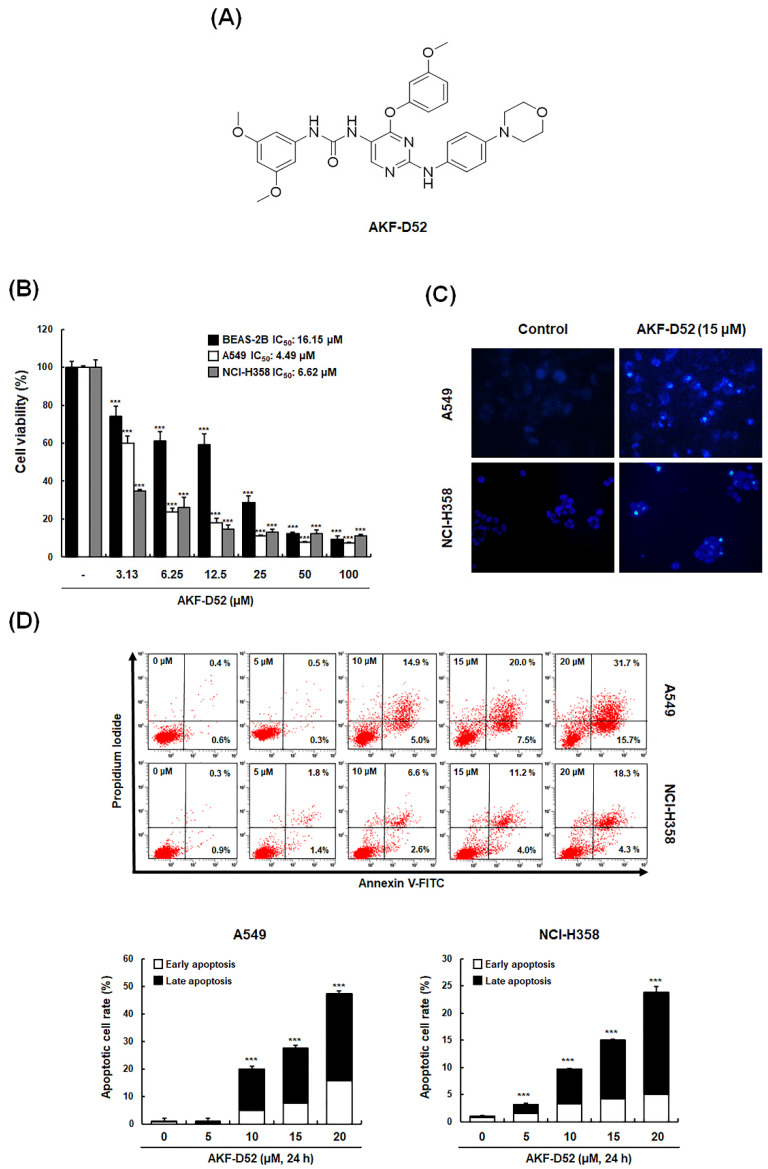
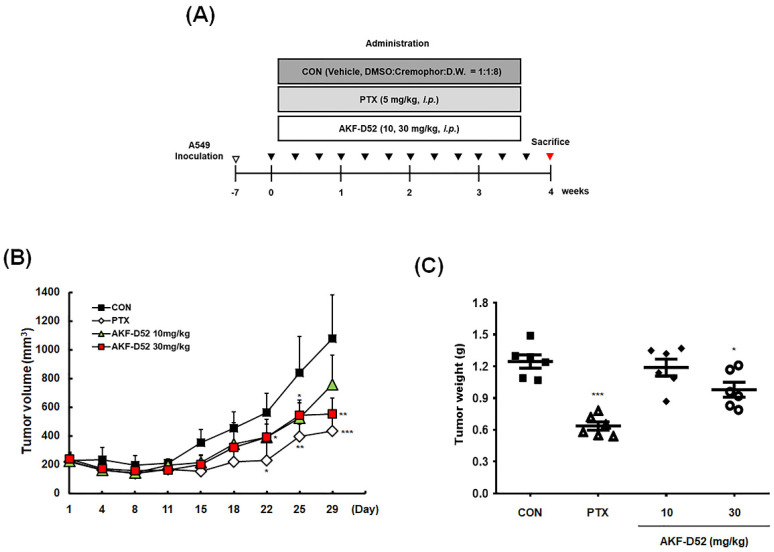
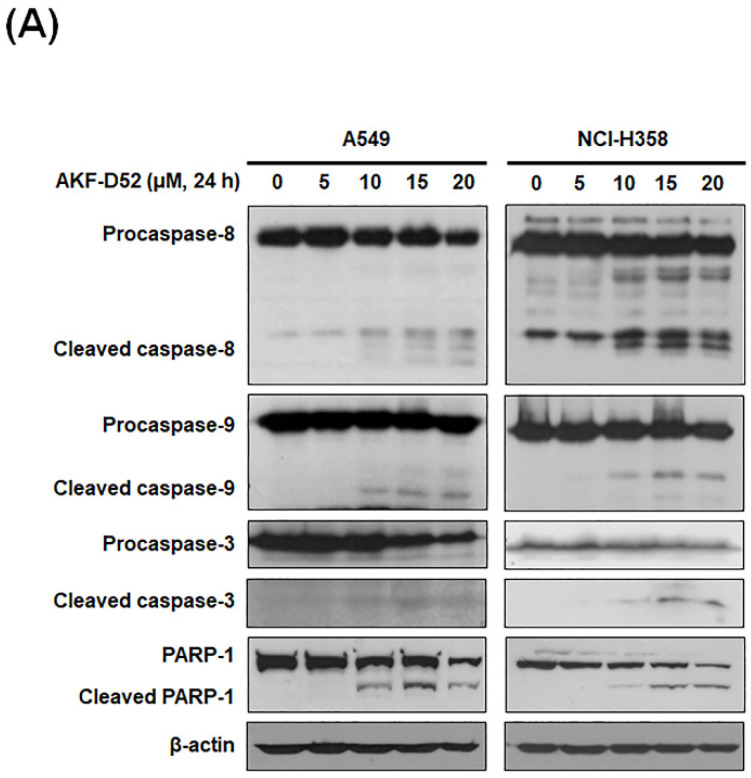
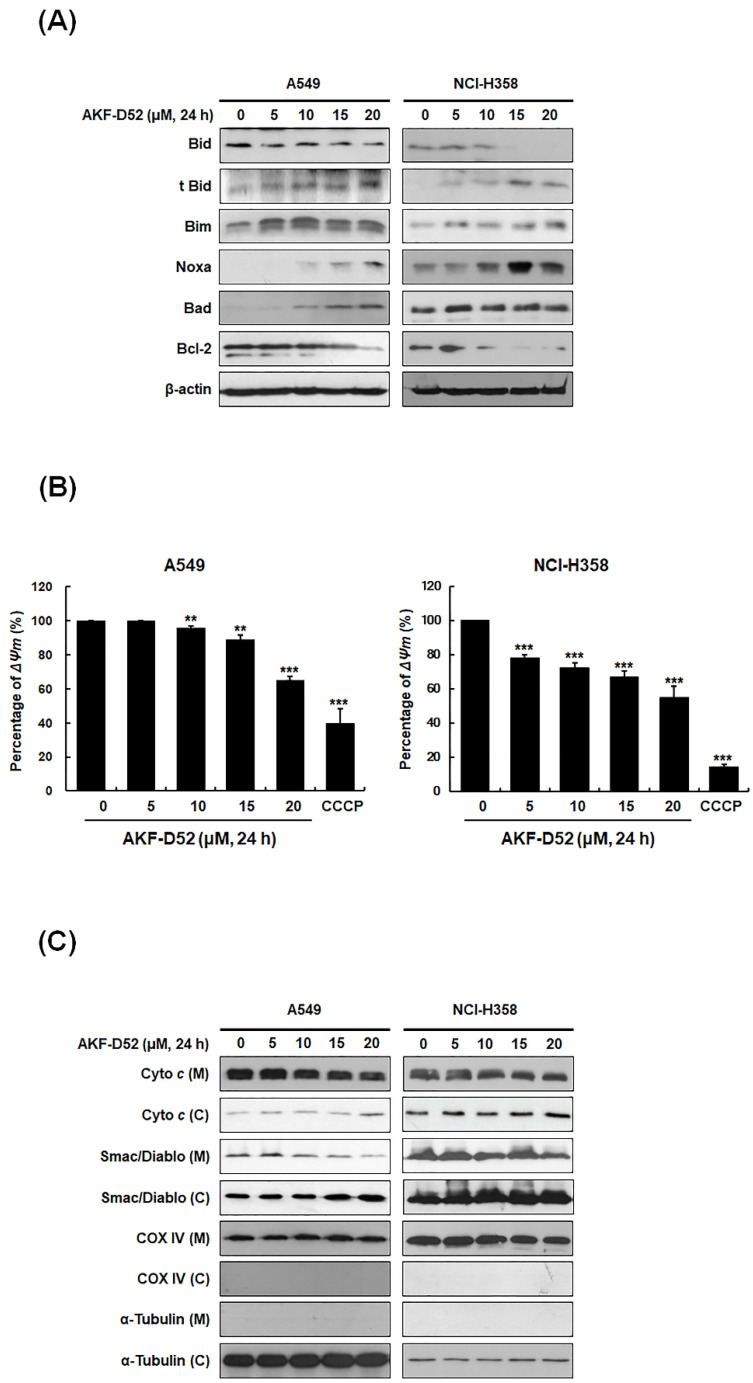
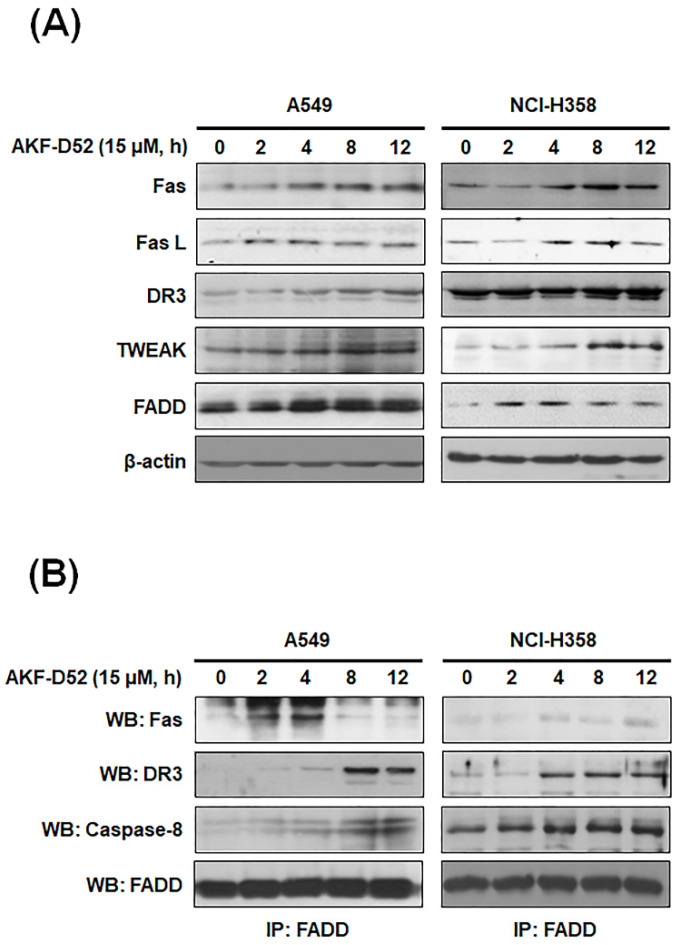
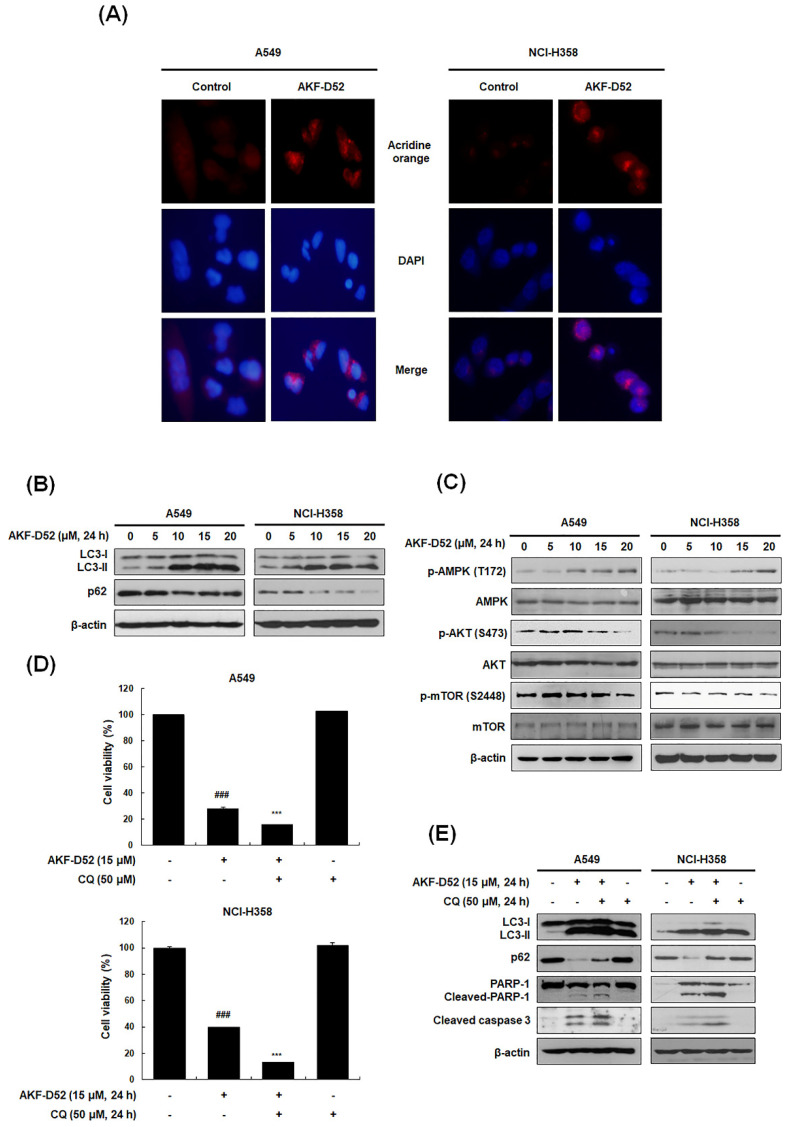
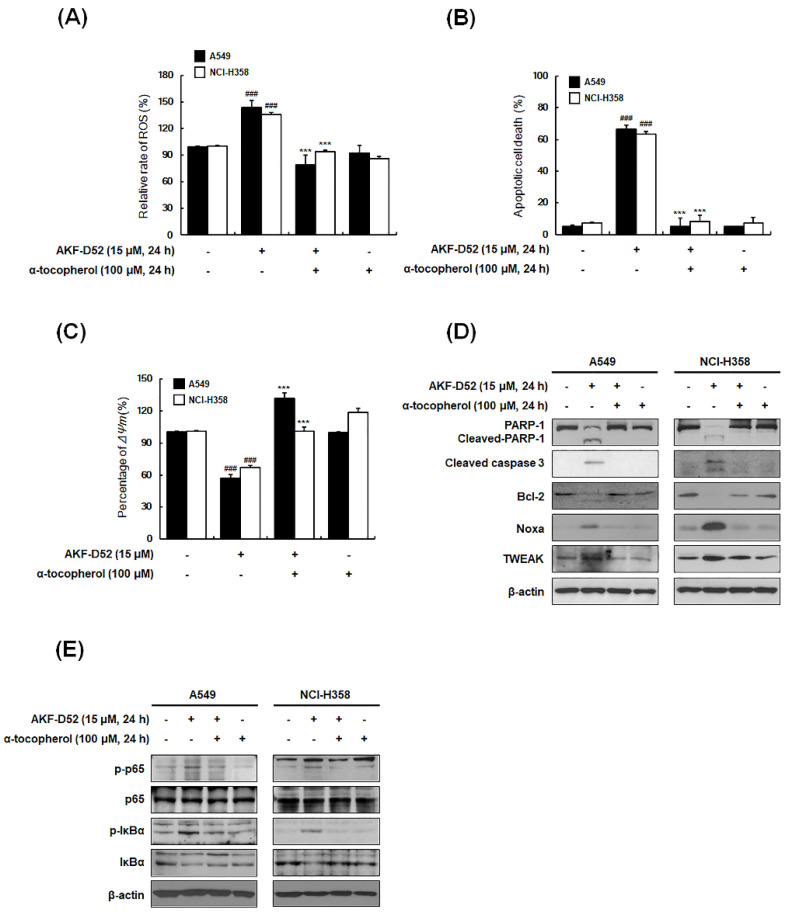
Previously, we discovered that 1-(3,5-dimethoxyphenyl)-3-(4-(3-methoxyphenoxy)-2-((4-morpholinophenyl)amino)pyrimidin-5-yl)urea (AKF-D52), a synthetic phenoxypyrimidine urea derivative, acts as a growth inhibitor of various cancer cell types. In this study, we elucidated the antiproliferative properties of AFK-D52 and underlying mechanisms in non-small cell lung cancer (NSCLC) cells and an A549 xenograft animal model. AKF-D52 was found to induce both caspase-dependent and -independent apoptotic cell death. Furthermore, the mitochondrial component of the AKF-D52-induced apoptosis mechanism involves a reduction in mitochondrial membrane potential and regulation in B cell lymphoma-2 family protein expression. Moreover, AKF-D52 activates the extrinsic pathway through up-regulated expression of death receptor 3 and Fas and then the formation of a death-inducing signaling complex. AKF-D52 also induced autophagy by increasing acidic vesicular organelle formation and microtubule-associated protein 1A/1B-light chain 3-II levels and reducing p62 levels. Notably, pretreatment with autophagy inhibitors enhanced AKF-D52-induced cell death, indicating that the induced autophagy is cytoprotective. AKF-D52 treatment also triggered reactive oxygen species (ROS) production in NSCLC cells, whereas the antioxidant α-tocopherol abolished AKF-D52-induced cell death. In a xenograft lung cancer mouse model, AKF-D52 administration attenuated tumor growth by inducing apoptosis and autophagy in tumor tissues. Collectively, our data indicate that AKF-D52-induced ROS production plays a role in mediating apoptosis and cytoprotective autophagy in NSCLC.
此前,我们发现1-(3,5-二甲氧基苯基)-3-(4-(3-甲氧基苯氧基)-2-((4-吗啉代苯基)氨基)嘧啶-5-基)脲(AKF-D52),一种合成的苯氧基嘧啶脲衍生物,可作为多种癌细胞类型的生长抑制剂。在本研究中,我们阐明了AFK-D52在非小细胞肺癌(NSCLC)细胞和A549异种移植动物模型中的抗增殖特性及潜在机制。发现AKF-D52可诱导半胱天冬酶依赖性和非依赖性凋亡细胞死亡。此外,AKF-D52诱导的凋亡机制的线粒体成分涉及线粒体膜电位降低和B细胞淋巴瘤-2家族蛋白表达的调节。此外,AKF-D52通过上调死亡受体3和Fas的表达,进而形成死亡诱导信号复合物来激活外源性途径。AKF-D52还通过增加酸性囊泡细胞器的形成和微管相关蛋白1A/1B轻链3-II水平以及降低p62水平来诱导自噬。值得注意的是,用自噬抑制剂预处理可增强AKF-D52诱导的细胞死亡,表明诱导的自噬具有细胞保护作用。AKF-D52处理还引发了NSCLC细胞中活性氧(ROS)的产生,而抗氧化剂α-生育酚可消除AKF-D52诱导的细胞死亡。在异种移植肺癌小鼠模型中,给予AKF-D52可通过诱导肿瘤组织中的凋亡和自噬来抑制肿瘤生长。总的来说,我们的数据表明,AKF-D52诱导的ROS产生在介导NSCLC中的凋亡和细胞保护自噬中起作用。