Jeong Soyeon, Farag Ahmed K, Yun Hye Kyeong, Jeong Yoon A, Kim Dae Yeong, Jo Min Jee, Park Seong Hye, Kim Bo Ram, Kim Jung Lim, Kim Bu Gyeom, Lee Dae-Hee, Roh Eun Joo, Oh Sang Cheul
Division of Oncology/Hematology, Department of Internal Medicine, College of Medicine, Korea University, Seoul 08308, Korea.
Senior Research Manager, Manufacturing Department, Curachem, Inc., Chungcheongbuk-do 28161, Korea.
Cancers (Basel). 2022 Jun 21;14(13):3043. doi: 10.3390/cancers14133043.
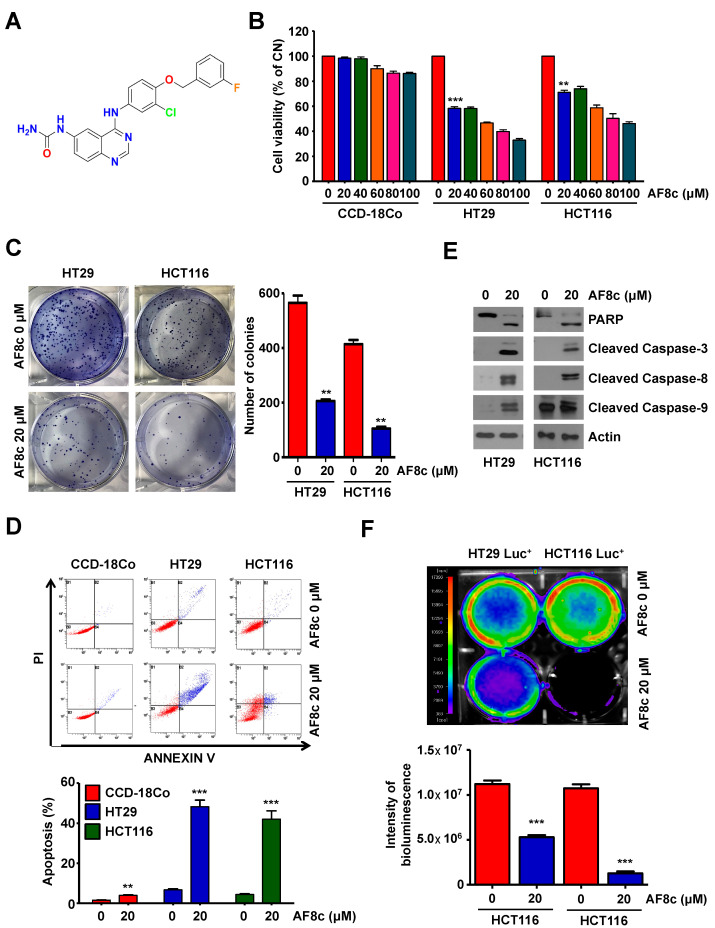
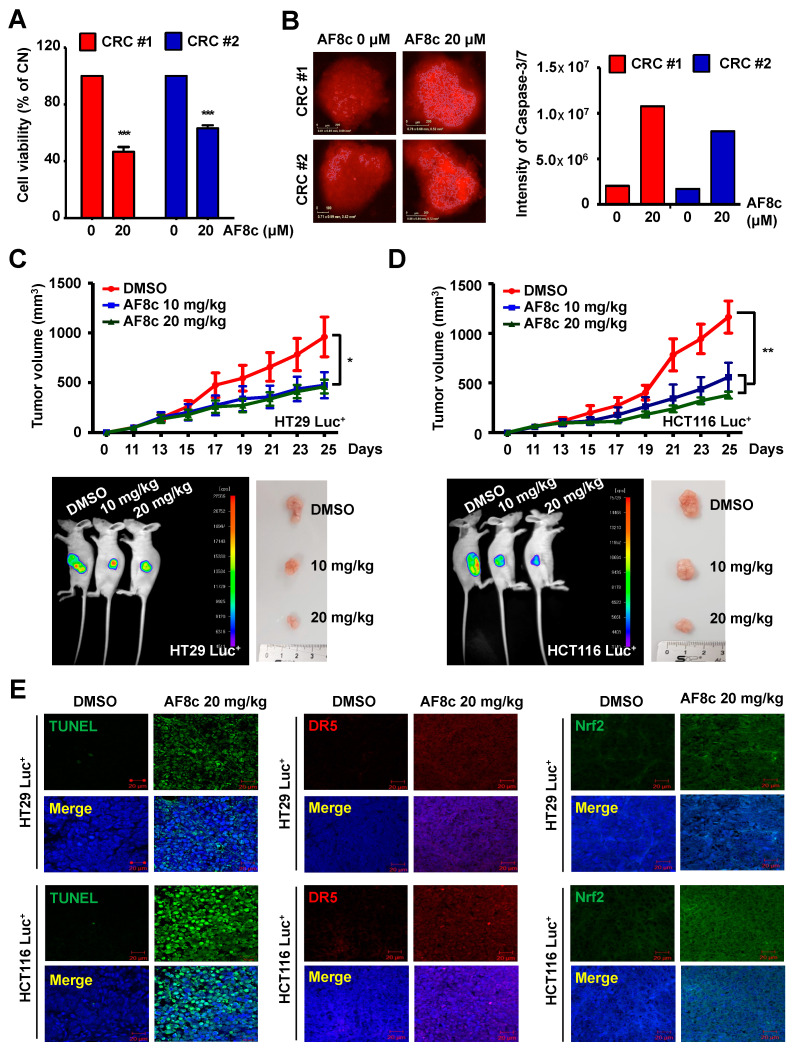
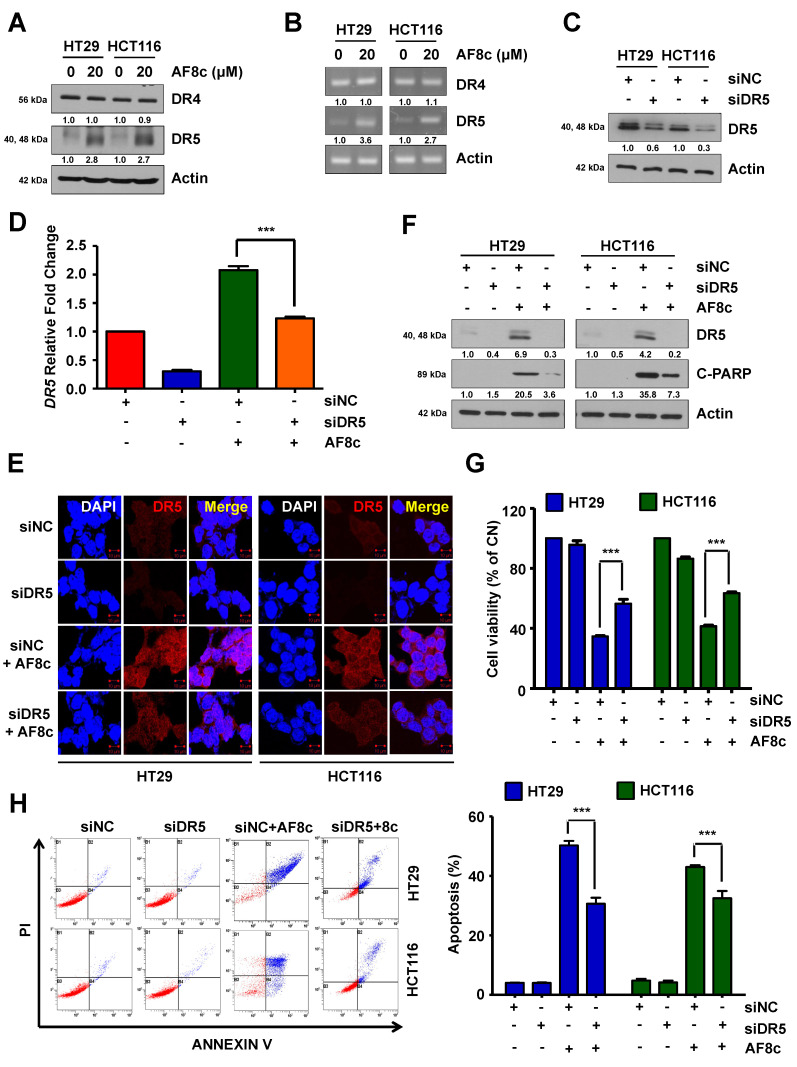
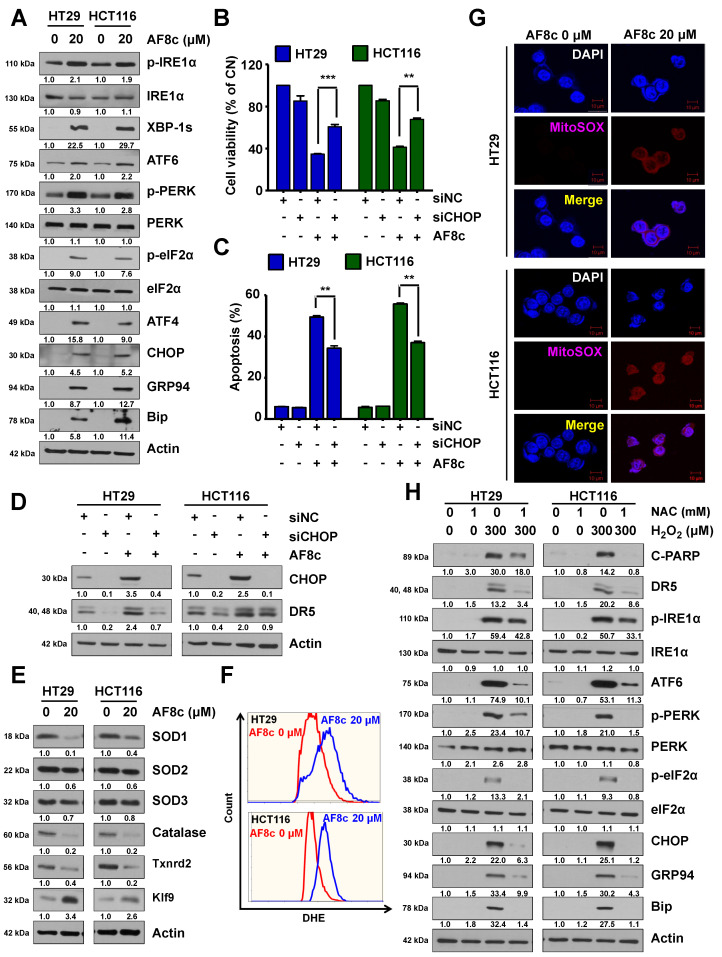
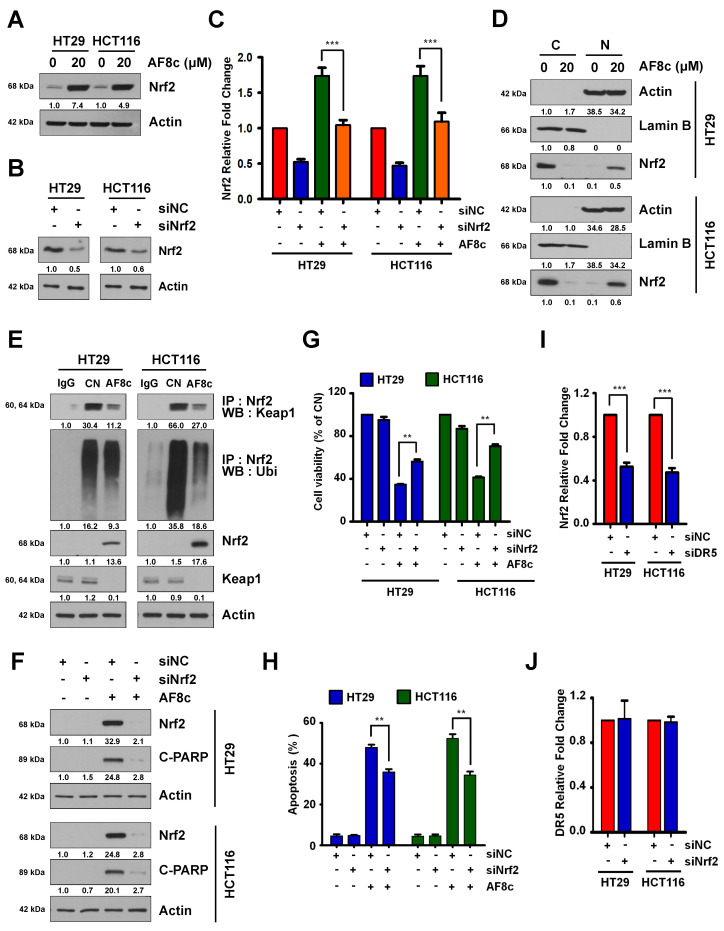
Our team has previously reported a series of quinazoline-based lapatinib hybrids as potent kinase-targeting anticancer agents. Among them, AF8c showed a relatively safe profile in colorectal cancer (CRC) cells. In this study, we delineate a novel anticancer activity of AF8c in CRC cells. AF8c mediated p53-dependent apoptosis of CRC cells via the generation of endoplasmic reticulum (ER) stress and reactive oxygen species (ROS), as well as activation of nuclear respiratory factor 2 alpha subunit (Nrf2) and death receptor 5 (DR5), among others. The silencing of DR5 attenuated the expression levels of Nrf2 and partially inhibited AF8c-induced apoptosis. Additionally, upregulation of Nrf2 by AF8c evoked apoptosis through a decrease in antioxidant levels. Treatment of a CRC mice model with AF8c also resulted in the upregulation of DR5, Nrf2, and CHOP proteins, subsequently leading to a significant decrease in tumor burden. In comparison with lapatinib, AF8c showed higher cellular antiproliferative activity at the tested concentrations in CRC cells and synergized TRAIL effects in CRC cells. Overall, our results suggest that AF8c-induced apoptosis may be associated with DR5/Nrf2 activation through ER stress and ROS generation in CRC cells. These findings indicate that AF8c represents a promising polypharmacological molecule for the treatment of human CRC.
我们的团队此前报道了一系列基于喹唑啉的拉帕替尼杂合物,作为有效的激酶靶向抗癌剂。其中,AF8c在结直肠癌(CRC)细胞中显示出相对安全的特性。在本研究中,我们阐述了AF8c在CRC细胞中的一种新的抗癌活性。AF8c通过产生内质网(ER)应激和活性氧(ROS),以及激活核呼吸因子2α亚基(Nrf2)和死亡受体5(DR5)等,介导CRC细胞的p53依赖性凋亡。DR5的沉默减弱了Nrf2的表达水平,并部分抑制了AF8c诱导的凋亡。此外,AF8c对Nrf2的上调通过降低抗氧化水平引发凋亡。用AF8c治疗CRC小鼠模型也导致DR5、Nrf2和CHOP蛋白的上调,随后导致肿瘤负担显著降低。与拉帕替尼相比,AF8c在测试浓度下对CRC细胞显示出更高的细胞抗增殖活性,并增强了CRC细胞中TRAIL的作用。总体而言,我们的结果表明,AF8c诱导的凋亡可能与CRC细胞中通过ER应激和ROS产生的DR5/Nrf2激活有关。这些发现表明,AF8c是一种有前景的多靶点药理分子,可用于治疗人类CRC。