Department of Quantitative and Computational Biology, University of Southern California, Los Angeles, CA 90089, USA.
Division of Biomedical Sciences, University of California, Riverside, CA 92521, USA.
Cells. 2021 Oct 27;10(11):2901. doi: 10.3390/cells10112901.
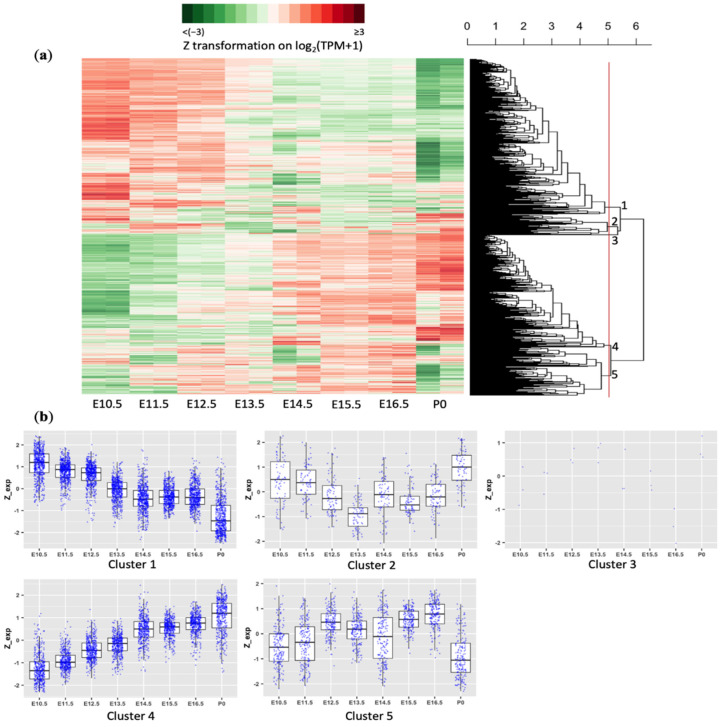
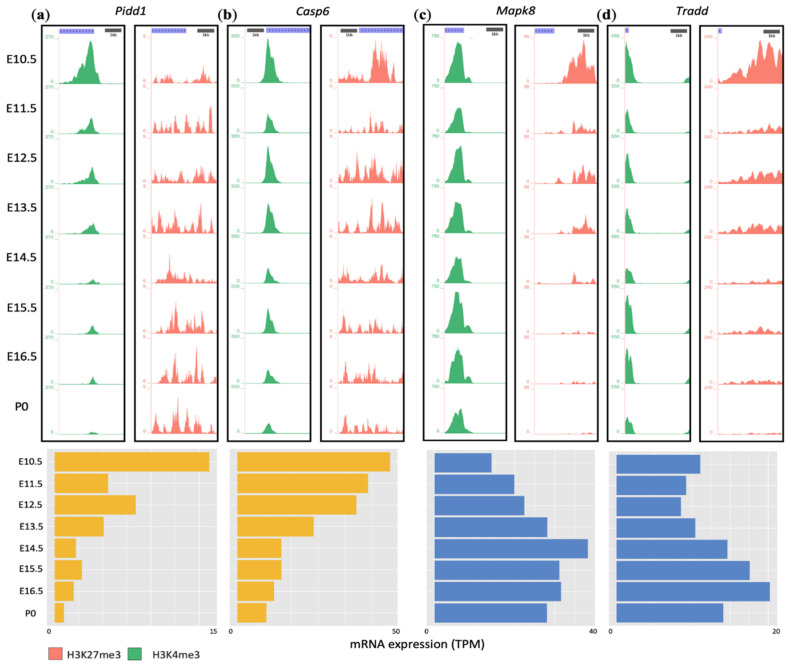
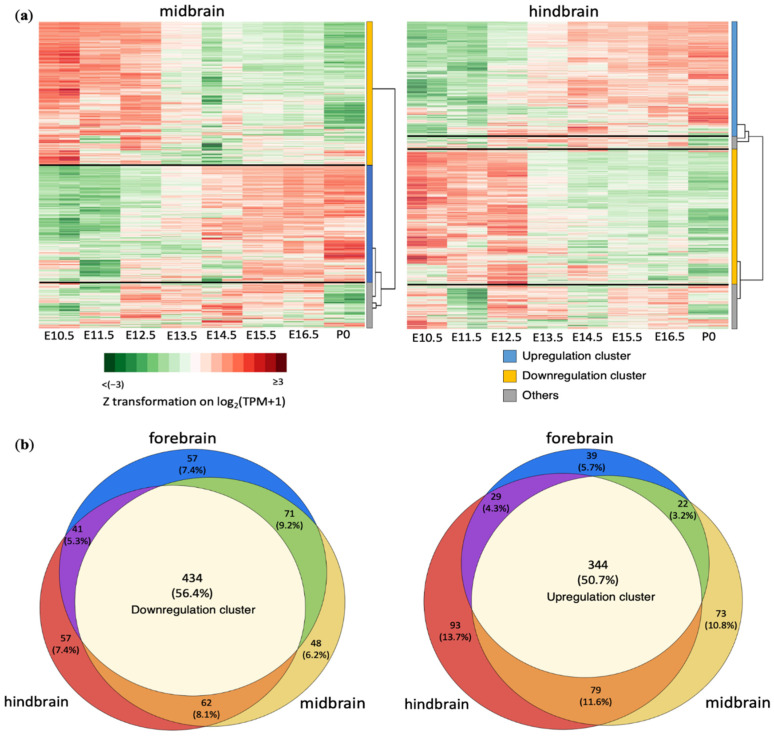
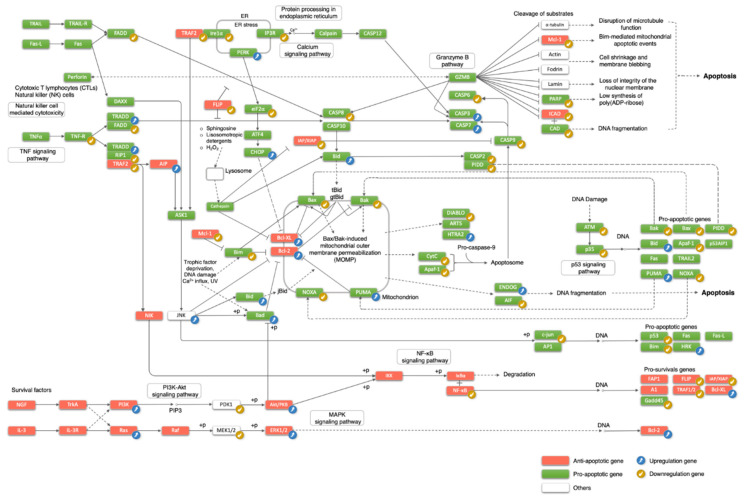
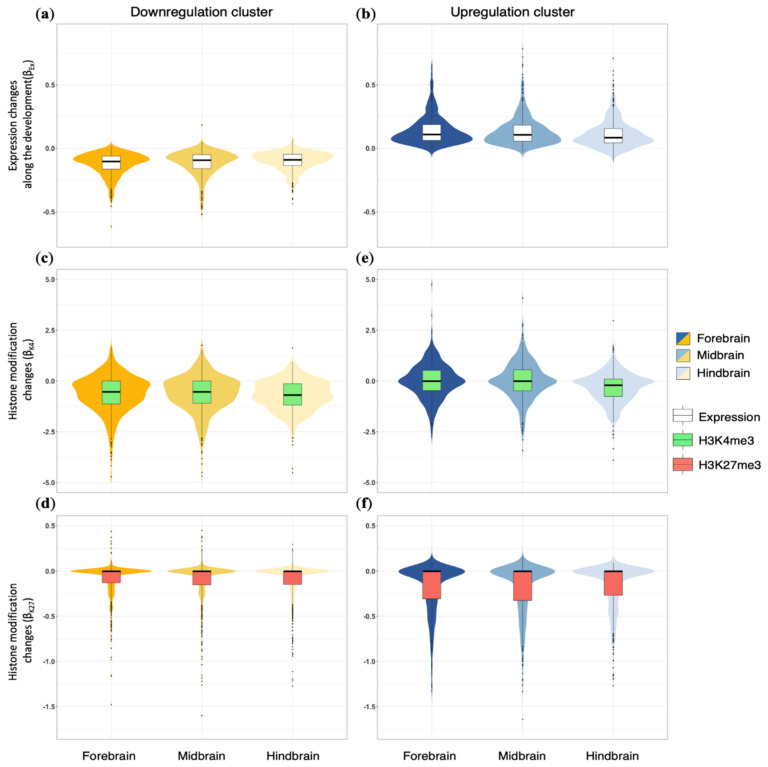
To enable long-term survival, mammalian adult neurons exhibit unique apoptosis competence. Questions remain as to whether and how neurons globally reprogram the expression of apoptotic genes during development. We systematically examined the in vivo expression of 1923 apoptosis-related genes and associated histone modifications at eight developmental ages of mouse brains. Most apoptotic genes displayed consistent temporal patterns across the forebrain, midbrain, and hindbrain, suggesting ubiquitous robust developmental reprogramming. Although both anti- and pro-apoptotic genes can be up- or downregulated, half the regulatory events in the classical apoptosis pathway are downregulation of pro-apoptotic genes. Reduced expression in initiator caspases, apoptosome, and pro-apoptotic Bcl-2 family members restrains effector caspase activation and attenuates neuronal apoptosis. The developmental downregulation of apoptotic genes is attributed to decreasing histone-3-lysine-4-trimethylation (H3K4me3) signals at promoters, where histone-3-lysine-27-trimethylation (H3K27me3) rarely changes. By contrast, repressive H3K27me3 marks are lost in the upregulated gene groups, for which developmental H3K4me3 changes are not predictive. Hence, developing brains remove epigenetic H3K4me3 and H3K27me3 marks on different apoptotic gene groups, contributing to their downregulation and upregulation, respectively. As such, neurons drastically alter global apoptotic gene expression during development to transform apoptosis controls. Research into neuronal cell death should consider maturation stages as a biological variable.
为了实现长期存活,哺乳动物成年神经元表现出独特的凋亡能力。目前仍存在疑问,即神经元在发育过程中是否以及如何全局重编程凋亡基因的表达。我们系统地检测了 1923 个凋亡相关基因及其相关组蛋白修饰在小鼠大脑 8 个发育阶段的体内表达情况。大多数凋亡基因在大脑前脑、中脑和后脑中表现出一致的时间模式,这表明存在普遍而强大的发育重编程。尽管抗凋亡和促凋亡基因都可以上调或下调,但经典凋亡途径中的一半调控事件是下调促凋亡基因。起始半胱天冬酶、凋亡体和促凋亡 Bcl-2 家族成员的表达减少,抑制效应半胱天冬酶的激活,减弱神经元凋亡。凋亡基因的发育下调归因于启动子处组蛋白-3-赖氨酸-4-三甲基化(H3K4me3)信号的减少,而组蛋白-3-赖氨酸-27-三甲基化(H3K27me3)很少发生变化。相比之下,在上调基因群中,抑制性 H3K27me3 标记丢失,而发育过程中的 H3K4me3 变化不能预测。因此,发育中的大脑去除了不同凋亡基因群上的表观遗传 H3K4me3 和 H3K27me3 标记,分别促进了它们的下调和上调。因此,神经元在发育过程中剧烈改变全局凋亡基因表达,从而改变凋亡调控。神经元细胞死亡的研究应将成熟阶段作为生物学变量加以考虑。