Department of Biology, Maynooth University, W23 F2H6 Maynooth, Ireland.
Kathleen Lonsdale Institute for Human Health Research, Maynooth University, W23 F2H6 Maynooth, Ireland.
Cells. 2021 Nov 2;10(11):2982. doi: 10.3390/cells10112982.
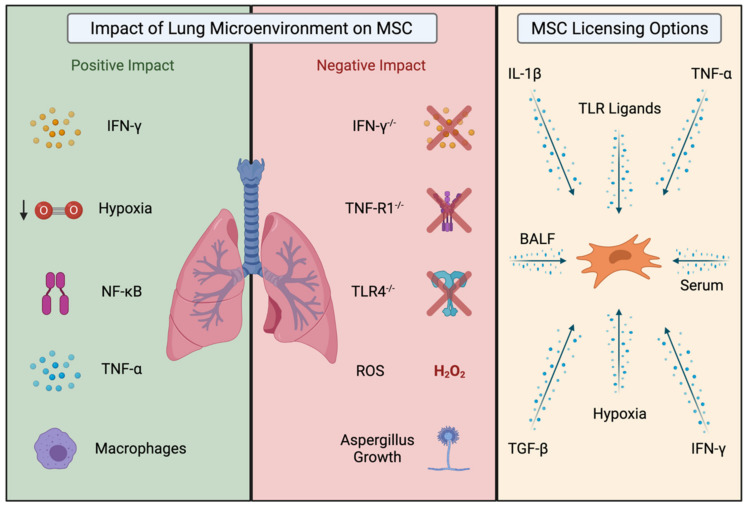
Recent clinical trials of mesenchymal stromal cell (MSC) therapy for various inflammatory conditions have highlighted the significant benefit to patients who respond to MSC administration. Thus, there is strong interest in investigating MSC therapy in acute inflammatory lung conditions, such as acute respiratory distress syndrome (ARDS). Unfortunately, not all patients respond, and evidence now suggests that the differential disease microenvironment present across patients and sub-phenotypes of disease or across disease severities influences MSC licensing, function and therapeutic efficacy. Here, we discuss the importance of licensing MSCs and the need to better understand how the disease microenvironment influences MSC activation and therapeutic actions, in addition to the need for a patient-stratification approach.
最近的间充质基质细胞 (MSC) 治疗各种炎症性疾病的临床试验强调了对接受 MSC 治疗有反应的患者的显著益处。因此,人们强烈关注急性炎症性肺疾病(如急性呼吸窘迫综合征(ARDS))的 MSC 治疗。不幸的是,并非所有患者都有反应,现在有证据表明,患者之间以及疾病亚表型或疾病严重程度之间存在的差异疾病微环境会影响 MSC 的许可、功能和治疗效果。在这里,我们讨论了许可 MSC 的重要性,以及需要更好地了解疾病微环境如何影响 MSC 的激活和治疗作用,此外还需要一种患者分层方法。