Musculoskeletal Research Group and Tumor Biology, Chair of Vegetative Anatomy, Institute of Anatomy, Faculty of Medicine, Ludwig-Maximilian-University Munich, 80336 Munich, Germany.
Immunology Research Center, Tabriz University of Medical Sciences, Tabriz 5166-15731, Iran.
Cells. 2021 Nov 4;10(11):3017. doi: 10.3390/cells10113017.
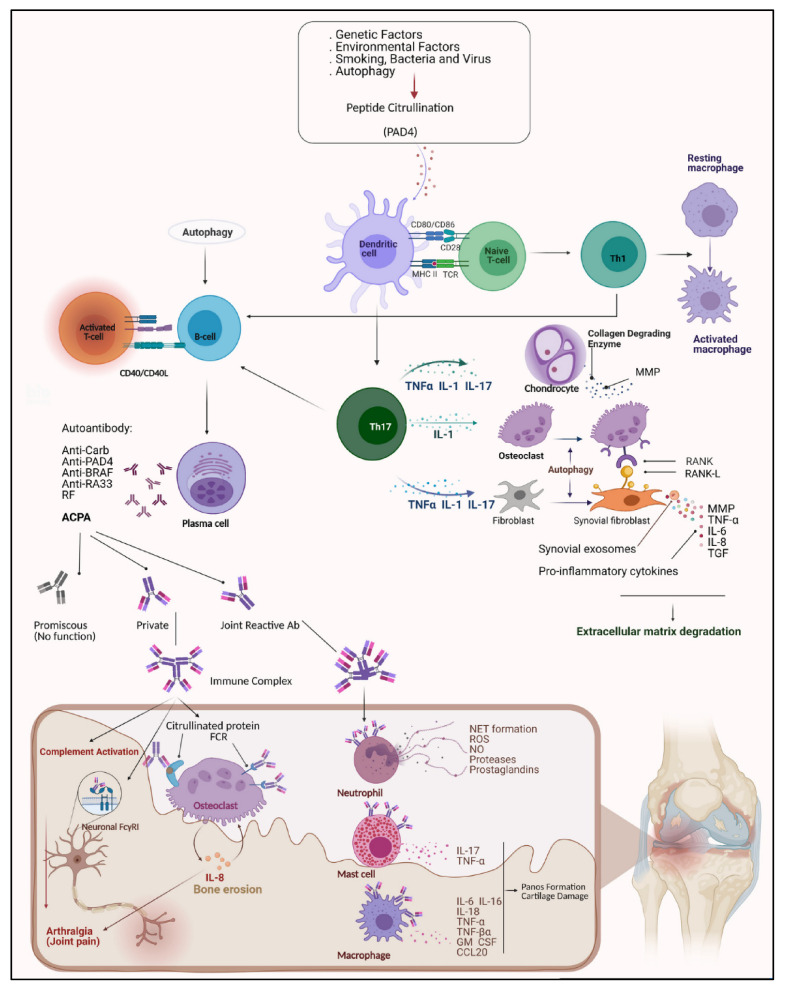
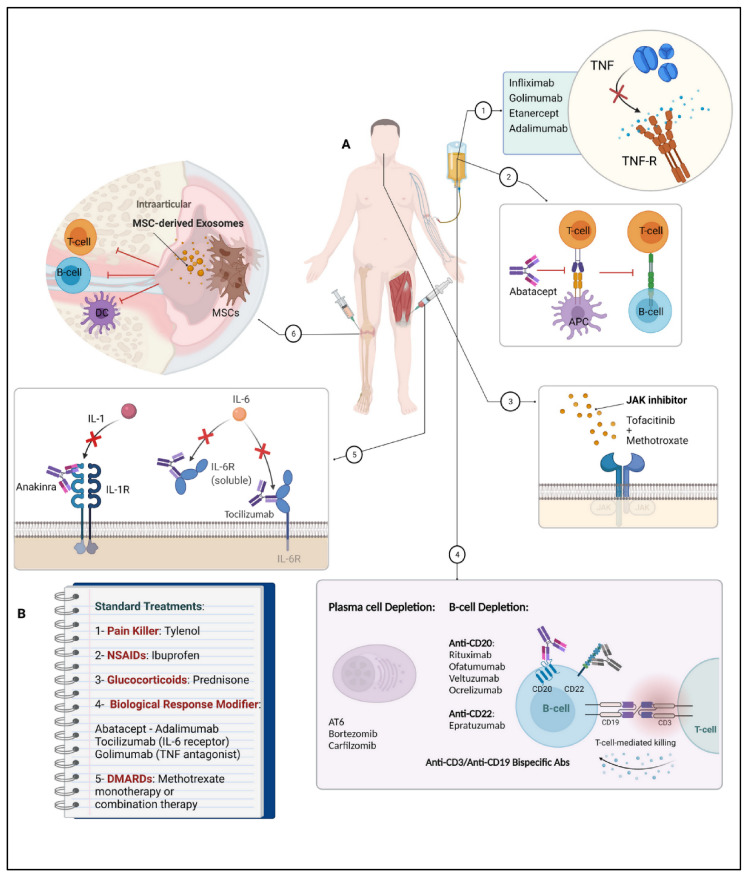
Rheumatoid arthritis (RA) is considered a chronic systemic, multi-factorial, inflammatory, and progressive autoimmune disease affecting many people worldwide. While patients show very individual courses of disease, with RA focusing on the musculoskeletal system, joints are often severely affected, leading to local inflammation, cartilage destruction, and bone erosion. To prevent joint damage and physical disability as one of many symptoms of RA, early diagnosis is critical. Auto-antibodies play a pivotal clinical role in patients with systemic RA. As biomarkers, they could help to make a more efficient diagnosis, prognosis, and treatment decision. Besides auto-antibodies, several other factors are involved in the progression of RA, such as epigenetic alterations, post-translational modifications, glycosylation, autophagy, and T-cells. Understanding the interplay between these factors would contribute to a deeper insight into the causes, mechanisms, progression, and treatment of the disease. In this review, the latest RA research findings are discussed to better understand the pathogenesis, and finally, treatment strategies for RA therapy are presented, including both conventional approaches and new methods that have been developed in recent years or are currently under investigation.
类风湿关节炎(RA)被认为是一种慢性全身性、多因素、炎症性和进行性自身免疫性疾病,影响着全世界许多人。虽然患者的疾病表现非常个体化,但 RA 主要影响骨骼肌肉系统,关节通常会受到严重影响,导致局部炎症、软骨破坏和骨侵蚀。为了防止关节损伤和身体残疾等 RA 的许多症状,早期诊断至关重要。自身抗体在系统性 RA 患者中具有重要的临床作用。作为生物标志物,它们可以帮助更有效地进行诊断、预后和治疗决策。除了自身抗体外,RA 的进展还涉及其他几个因素,如表观遗传改变、翻译后修饰、糖基化、自噬和 T 细胞。了解这些因素之间的相互作用将有助于更深入地了解疾病的病因、机制、进展和治疗。在这篇综述中,讨论了最新的 RA 研究结果,以更好地理解发病机制,最后提出了 RA 治疗的治疗策略,包括近年来开发或正在研究中的传统方法和新方法。