Institute of Cell Biology (Cancer Research), University Hospital Essen, University of Duisburg-Essen, 45147 Essen, Germany.
Science for Life Laboratory, Karolinska Institutet, 17121 Stockholm, Sweden.
Cells. 2021 Nov 5;10(11):3040. doi: 10.3390/cells10113040.
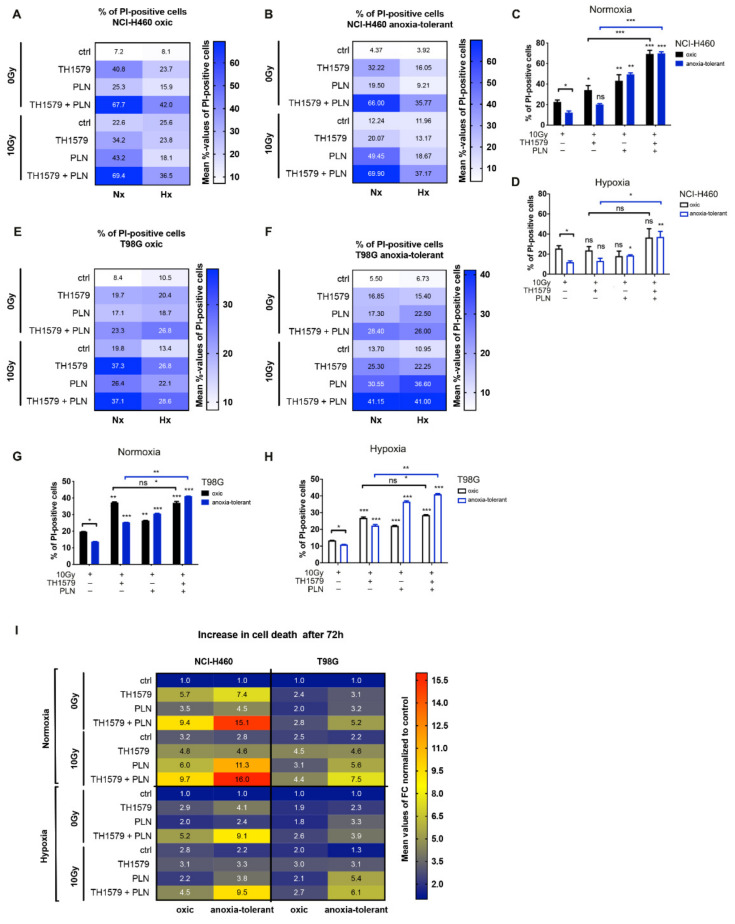
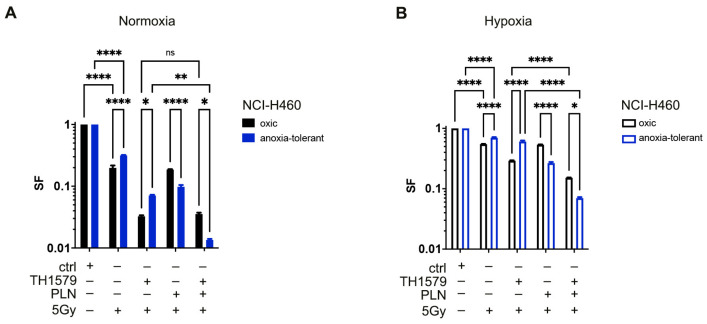
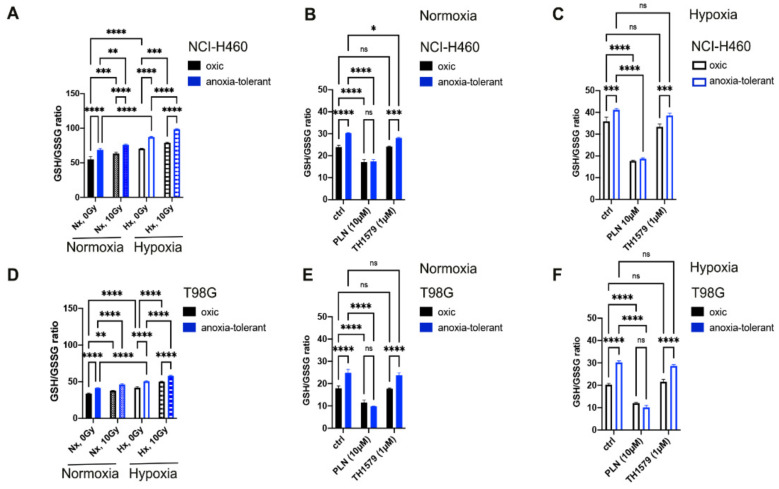
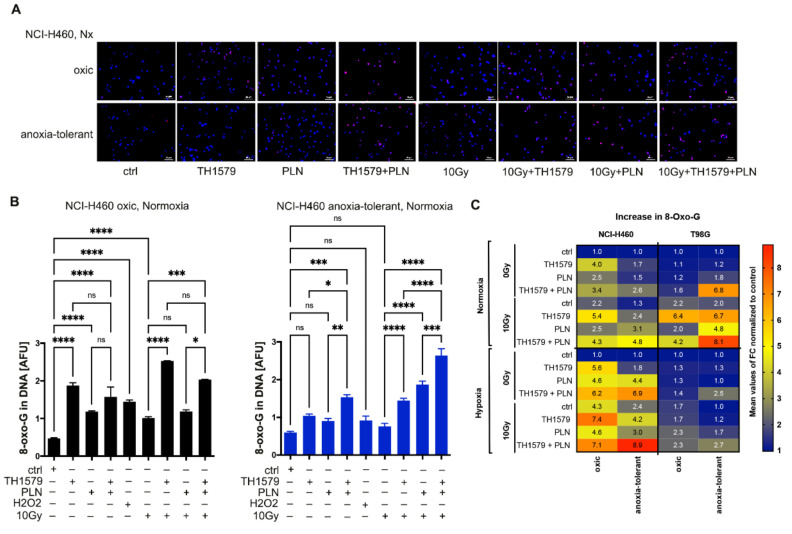
Tumor hypoxia and hypoxic adaptation of cancer cells represent major barriers to successful cancer treatment. We revealed that improved antioxidant capacity contributes to increased radioresistance of cancer cells with tolerance to chronic-cycling severe hypoxia/reoxygenation stress. We hypothesized, that the improved tolerance to oxidative stress will increase the ability of cancer cells to cope with ROS-induced damage to free deoxy-nucleotides (dNTPs) required for DNA replication and may thus contribute to acquired resistance of cancer cells in advanced tumors to antineoplastic agents inhibiting the nucleotide-sanitizing enzyme MutT Homologue-1 (MTH1), ionizing radiation (IR) or both. Therefore, we aimed to explore potential differences in the sensitivity of cancer cells exposed to acute and chronic-cycling hypoxia/reoxygenation stress to the clinically relevant MTH1-inhibitor TH1579 (Karonudib) and to test whether a multi-targeting approach combining the glutathione withdrawer piperlongumine (PLN) and TH1579 may be suited to increase cancer cell sensitivity to TH1579 alone and in combination with IR. Combination of TH1579 treatment with radiotherapy (RT) led to radiosensitization but was not able to counteract increased radioresistance induced by adaptation to chronic-cycling hypoxia/reoxygenation stress. Disruption of redox homeostasis using PLN sensitized anoxia-tolerant cancer cells to MTH1 inhibition by TH1579 under both normoxic and acute hypoxic treatment conditions. Thus, we uncover a glutathione-driven compensatory resistance mechanism towards MTH1-inhibition in form of increased antioxidant capacity as a consequence of microenvironmental or therapeutic stress.
肿瘤缺氧和肿瘤细胞的低氧适应是癌症治疗成功的主要障碍。我们揭示了抗氧化能力的提高有助于增加对慢性循环严重低氧/再氧合应激具有耐受性的癌细胞的放射抗性。我们假设,对氧化应激的耐受性提高将增加癌细胞应对 ROS 诱导的游离脱氧核苷酸(dNTP)损伤的能力,这些核苷酸是 DNA 复制所必需的,因此可能有助于晚期肿瘤中癌细胞对抑制核苷酸解毒酶 MutT Homologue-1(MTH1)、电离辐射(IR)或两者的抗肿瘤药物的获得性耐药。因此,我们旨在探索暴露于急性和慢性循环低氧/再氧合应激下的癌细胞对临床相关 MTH1 抑制剂 TH1579(Karonudib)的敏感性的潜在差异,并测试联合使用谷胱甘肽耗竭剂 Piperlongumine(PLN)和 TH1579 的多靶点方法是否适合增加单独使用 TH1579 以及与 IR 联合使用的癌细胞对 TH1579 的敏感性。TH1579 联合放疗(RT)治疗导致放射增敏,但不能对抗因适应慢性循环低氧/再氧合应激而导致的放射抗性增加。使用 PLN 破坏氧化还原平衡,使耐缺氧癌细胞对 TH1579 抑制 MTH1 的作用在常氧和急性低氧治疗条件下都变得敏感。因此,我们揭示了一种谷胱甘肽驱动的补偿性耐药机制,即由于微环境或治疗性应激导致抗氧化能力增加,从而对 MTH1 抑制产生耐药性。