Karabicici Mustafa, Azbazdar Yagmur, Iscan Evin, Ozhan Gunes
Izmir Biomedicine and Genome Center (IBG), Dokuz Eylul University Health Campus, Inciralti-Balcova, Izmir 35340, Turkey.
Izmir International Biomedicine and Genome Institute (IBG-Izmir), Dokuz Eylul University, Inciralti-Balcova, Izmir 35340, Turkey.
Membranes (Basel). 2021 Oct 29;11(11):844. doi: 10.3390/membranes11110844.
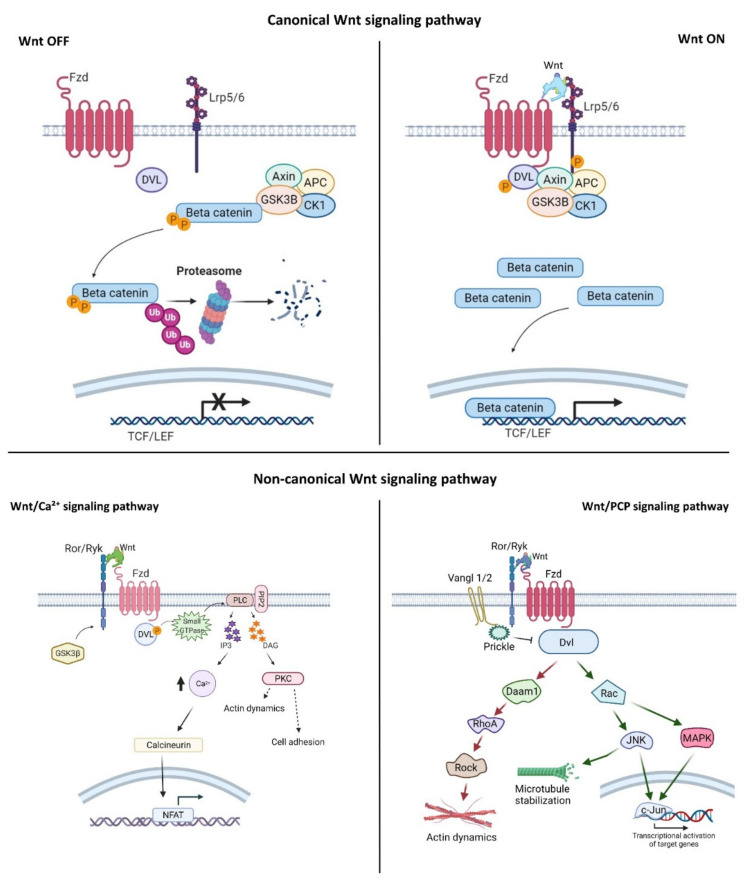
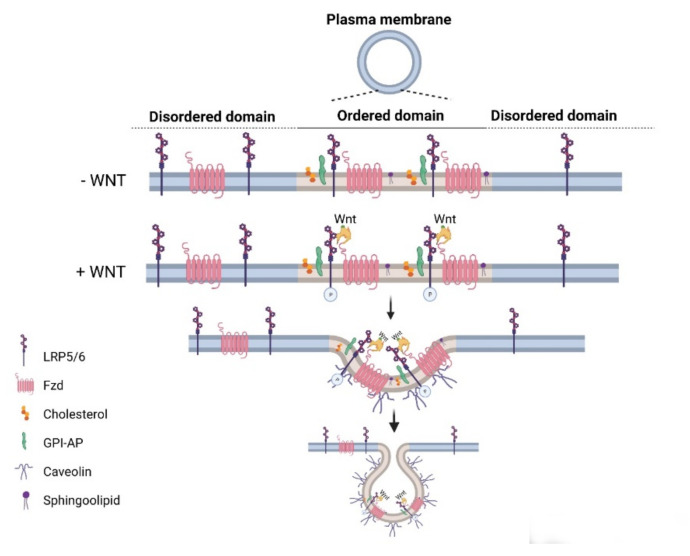
Wnt signaling pathways constitute a group of signal transduction pathways that direct many physiological processes, such as development, growth, and differentiation. Dysregulation of these pathways is thus associated with many pathological processes, including neurodegenerative diseases, metabolic disorders, and cancer. At the same time, alterations are observed in plasma membrane compositions, lipid organizations, and ordered membrane domains in brain and metabolic diseases that are associated with Wnt signaling pathway activation. Here, we discuss the relationships between plasma membrane components-specifically ligands, (co) receptors, and extracellular or membrane-associated modulators-to activate Wnt pathways in several brain and metabolic diseases. Thus, the Wnt-receptor complex can be targeted based on the composition and organization of the plasma membrane, in order to develop effective targeted therapy drugs.
Wnt信号通路构成了一组信号转导通路,这些通路指导许多生理过程,如发育、生长和分化。因此,这些通路的失调与许多病理过程相关,包括神经退行性疾病、代谢紊乱和癌症。同时,在与Wnt信号通路激活相关的脑和代谢疾病中,观察到质膜组成、脂质组织和有序膜结构域的改变。在这里,我们讨论质膜成分——特别是配体、(共)受体以及细胞外或膜相关调节剂——之间的关系,以激活几种脑和代谢疾病中的Wnt通路。因此,可以根据质膜的组成和组织来靶向Wnt受体复合物,从而开发有效的靶向治疗药物。