Adamu Musa, Ibrahim Yasser E, Al-Atroush Mohamed E, Alanazi Hani
Engineering Management Department, College of Engineering, Prince Sultan University, Riyadh 11586, Saudi Arabia.
Department of Civil Engineering, Bayero University, PMB 3011, Kano 700006, Nigeria.
Materials (Basel). 2021 Nov 17;14(22):6960. doi: 10.3390/ma14226960.
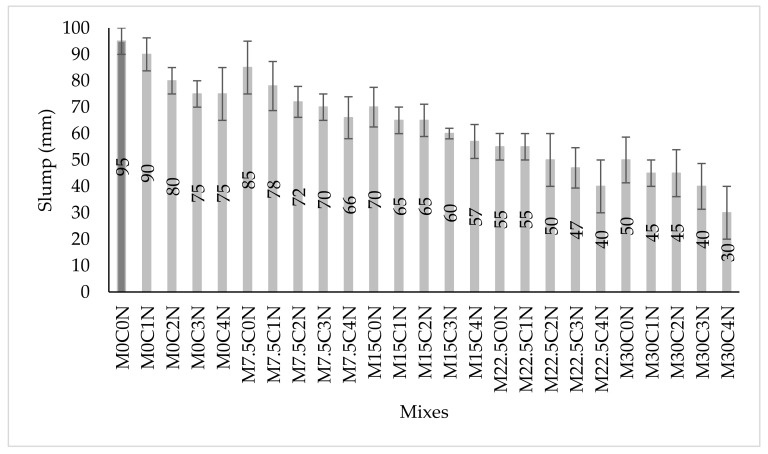
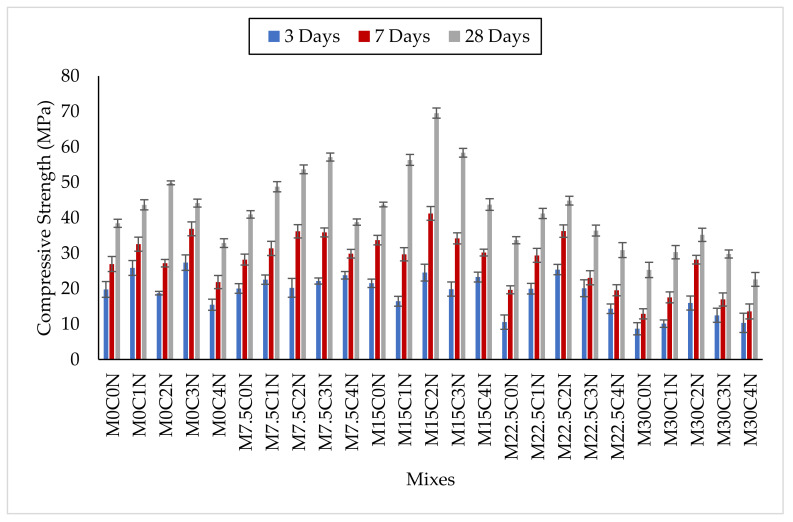
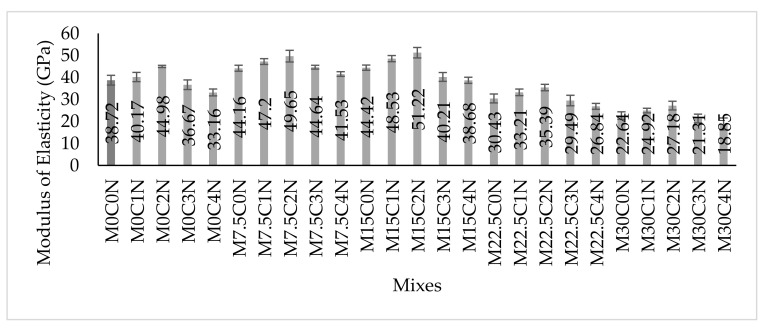
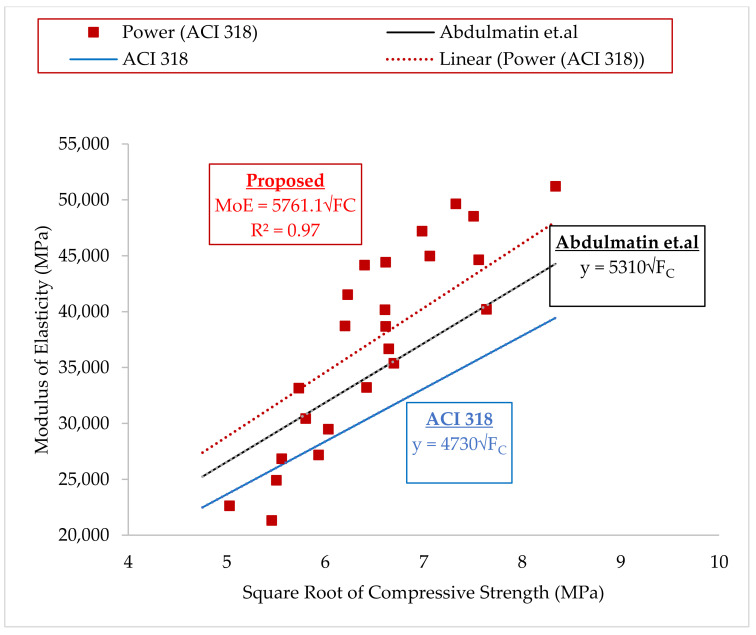
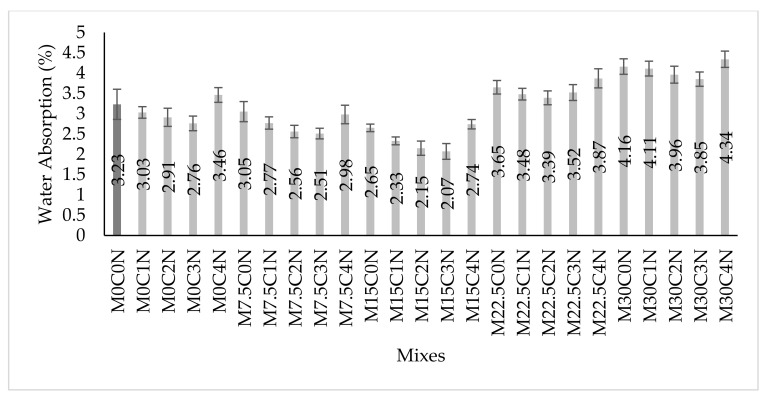
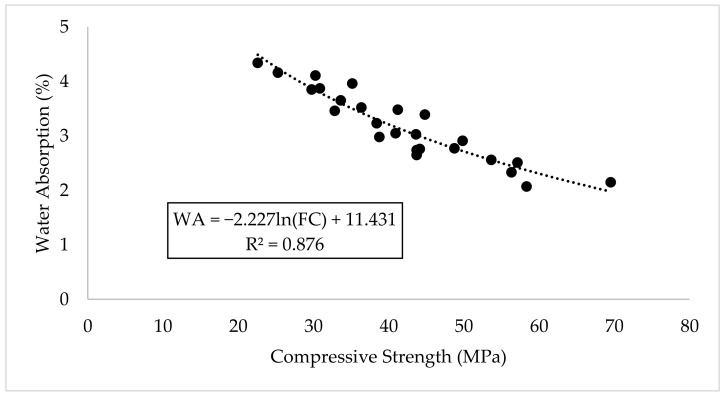
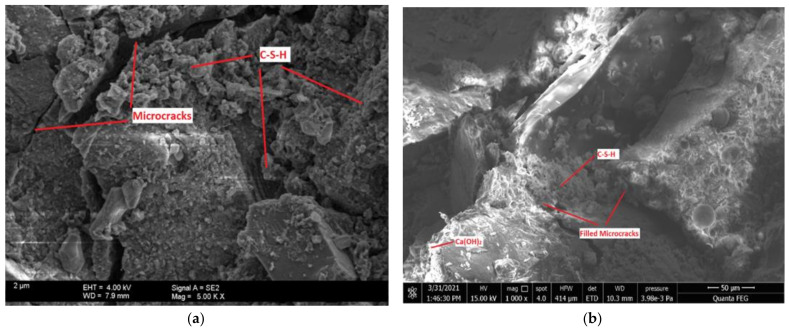
Calcium carbide residue (CCR) is the end-product of production of acetylene gas for the applications such as welding, lighting, ripening of fruits, and cutting of metals. Due to its high pH value, disposing of CCR as a landfill increases the alkalinity of the environment. Therefore, due to its high calcium content, CCR is mostly blended with other pozzolanic materials, together with activators as binders in the cement matrix. In this study, cement was partially substituted using CCR at 0%, 7.5%, 15%, 22.5% and 30% by weight replacement, and nano silica (NS) was utilized as an additive by weight of binder materials at 0%, 1%, 2%, 3% and 4%. The properties considered were the slump, the compressive strength, the flexural strength, the splitting tensile strength, the modulus of elasticity, and the water absorption capacity. The microstructural properties of the concrete were also examined through FESEM and XRD analysis. The results showed that both CCR and NS increase the concrete's water demand, hence reducing its workability. Mixes containing up to 15% CCR only showed improved mechanical properties. The combination of CCR and NS significantly improved the mechanical properties and decreased the concrete's water absorption through improved pozzolanic reactivity as verified by the FESEM and XRD results. Furthermore, the microstructure of the concrete was explored, and the pores were refined by the pozzolanic reaction products. The optimum mix combination was obtained by replacing 15% cement using CCR and the addition of 2% NS by weight of cementitious materials. Therefore, using a hybrid of CCR and NS in concrete will result in reduction of cement utilization in concrete, leading to improved environmental sustainability and economy.
电石渣(CCR)是乙炔气生产的最终产物,用于焊接、照明、水果催熟和金属切割等应用。由于其高pH值,将CCR作为垃圾填埋会增加环境的碱度。因此,由于其高钙含量,CCR大多与其他火山灰质材料混合,并与活化剂一起作为水泥基体中的粘结剂。在本研究中,水泥被CCR以0%、7.5%、15%、22.5%和30%的重量替代率进行部分替代,纳米二氧化硅(NS)作为添加剂,按粘结剂材料重量的0%、1%、2%、3%和4%使用。所考虑的性能包括坍落度、抗压强度、抗折强度、劈裂抗拉强度、弹性模量和吸水能力。还通过场发射扫描电子显微镜(FESEM)和X射线衍射(XRD)分析研究了混凝土的微观结构性能。结果表明,CCR和NS都会增加混凝土的需水量,从而降低其工作性。仅含15%CCR的混合料表现出改善的力学性能。FESEM和XRD结果证实,CCR和NS的组合显著改善了力学性能,并通过提高火山灰反应活性降低了混凝土的吸水率。此外,还探索了混凝土的微观结构,火山灰反应产物细化了孔隙。通过用CCR替代15%的水泥并按胶凝材料重量添加2%的NS获得了最佳混合组合。因此,在混凝土中使用CCR和NS的混合物将减少混凝土中水泥的用量,从而提高环境可持续性和经济性。