Jeong Seongkeun, Kang Changyu, Park Sohee, Ju Sanghyun, Yoo Jin-Wook, Yoon In-Soo, Yun Hwayoung, Jung Yunjin
College of Pharmacy, Pusan National University, Busan 46241, Korea.
Pharmaceuticals (Basel). 2021 Oct 28;14(11):1092. doi: 10.3390/ph14111092.
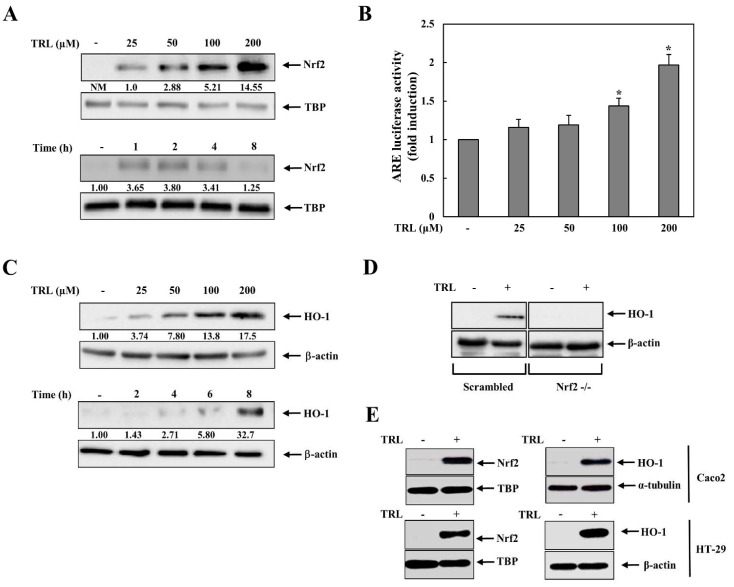
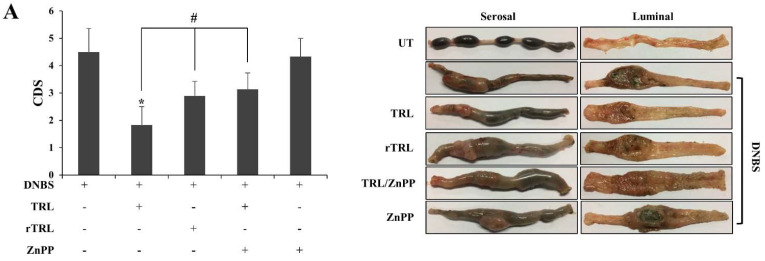
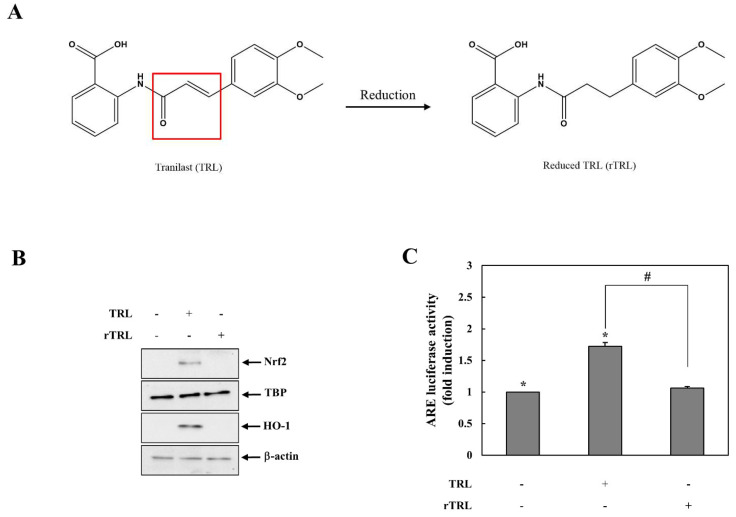
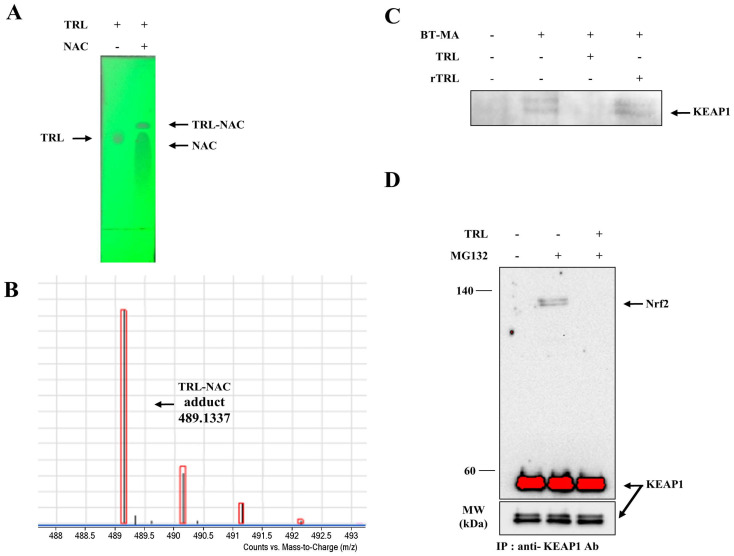
Tranilast (TRL), a synthetic derivative of a tryptophan metabolite, is an anti-allergic drug used to treat bronchial asthma. We investigated how TRL activated the nuclear factor-erythroid 2 p45-related factor 2 (Nrf2)-hemeoxygenase-1 (HO-1) pathway based on the electrophilic chemistry of the drug and whether TRL activity contributed to the treatment of rat colitis. In human colon carcinoma cells, TRL activated Nrf2, as represented by an increase in nuclear Nrf2 and induction of Nrf2-dependent luciferase and, subsequently, HO-1, a target gene product of Nrf2. TRL activation of Nrf2 and induction of HO-1 were completely prevented by chemical reduction of the electrophilic functional group (α, β-unsaturated carbonyl group) in the drug. In parallel, TRL was reactive with the nucleophilic thiol group in -acetylcysteine, forming a covalent adduct. Moreover, TRL, but not reduced TRL, binds to Kelch-like ECH-associated protein 1 (KEAP1), releasing Nrf2. TRL administration ameliorated colonic damage and inflammation in rats with dinitrobenzene sulfonic acid-induced colitis, which was partly compromised by the chemical reduction of TRL or co-treatment with an HO-1 inhibitor. Our results suggest that TRL activated the Nrf2-HO-1 pathway via covalent binding to KEAP1, partly contributing to TRL amelioration in rat colitis.
曲尼司特(TRL)是色氨酸代谢物的合成衍生物,是一种用于治疗支气管哮喘的抗过敏药物。我们基于该药物的亲电化学性质研究了TRL如何激活核因子红细胞2 p45相关因子2(Nrf2)-血红素加氧酶-1(HO-1)途径,以及TRL的活性是否有助于大鼠结肠炎的治疗。在人结肠癌细胞中,TRL激活了Nrf2,表现为细胞核内Nrf2增加以及Nrf2依赖性荧光素酶的诱导,随后激活了Nrf2的靶基因产物HO-1。通过化学还原药物中的亲电官能团(α,β-不饱和羰基),完全阻止了TRL对Nrf2的激活和HO-1的诱导。同时,TRL与乙酰半胱氨酸中的亲核硫醇基团发生反应,形成共价加合物。此外,TRL而非还原型TRL与 Kelch样ECH相关蛋白1(KEAP1)结合,释放Nrf2。给予TRL可改善二硝基苯磺酸诱导的大鼠结肠炎中的结肠损伤和炎症,TRL的化学还原或与HO-1抑制剂联合处理会部分削弱这种改善作用。我们的结果表明,TRL通过与KEAP1共价结合激活Nrf2-HO-1途径,这在一定程度上有助于TRL对大鼠结肠炎的改善作用。