Center for Computational Sciences, University of Tsukuba, 1-1-1 Tennodai, Tsukuba, Ibaraki 305-8577, Japan.
Applied Medical Virology Research Unit, Department of Microbiology, Faculty of Medicine, Chulalongkorn University, Bangkok 10330, Thailand.
Molecules. 2021 Nov 18;26(22):6967. doi: 10.3390/molecules26226967.
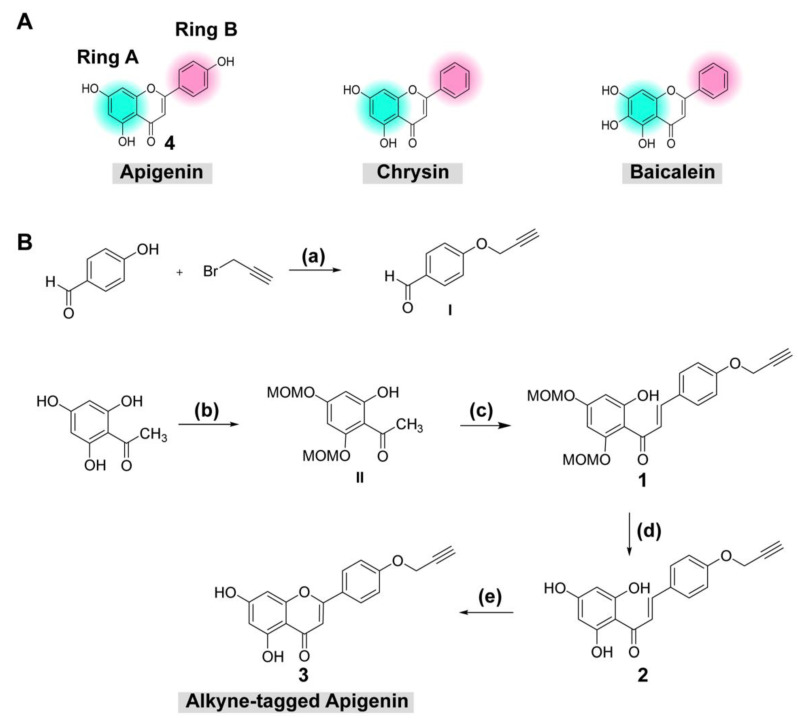
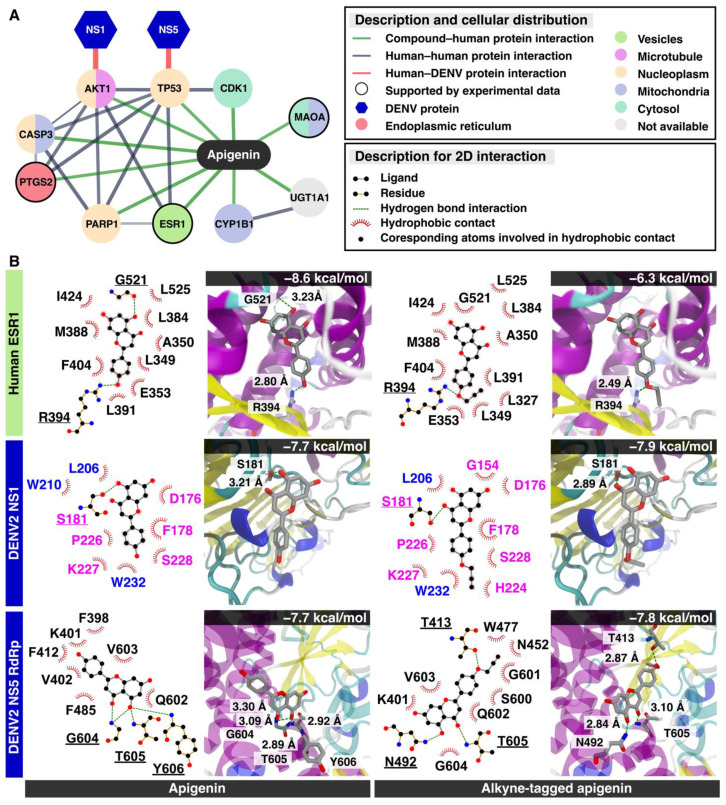
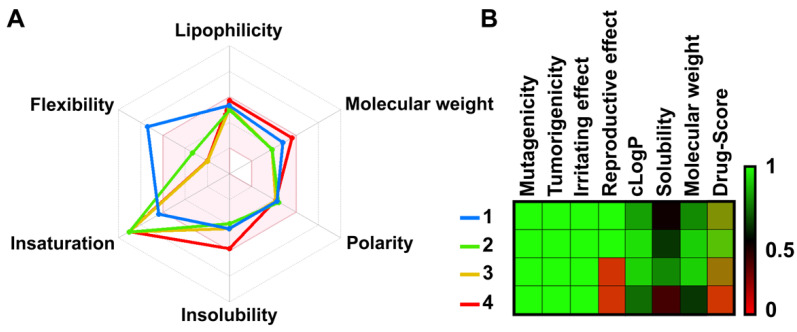
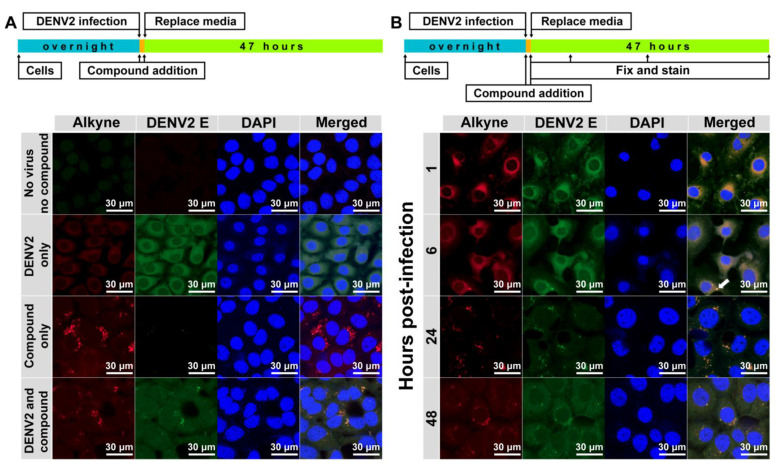
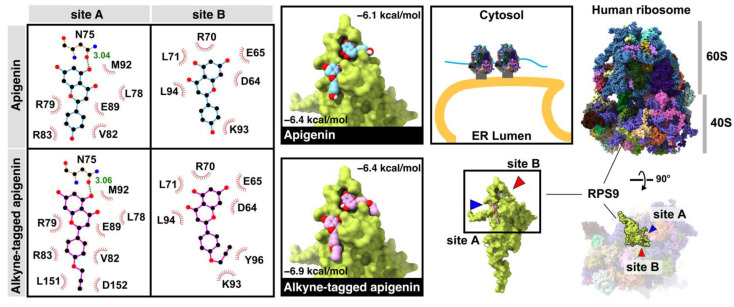
A flavonoid is a versatile core structure with various cellular, immunological, and pharmacological effects. Recently, flavones have shown anti-dengue activities by interfering with viral translation and replication. However, the molecular target is still elusive. Here we chemically modified apigenin by adding an alkyne moiety into the B-ring hydroxyl group. The alkyne serves as a chemical tag for the alkyne-azide cycloaddition reaction for subcellular visualization. The compound located at the perinuclear region at 1 and 6 h after infection. Interestingly, the compound signal started shifting to vesicle-like structures at 6 h and accumulated at 24 and 48 h after infection. Moreover, the compound treatment in dengue-infected cells showed that the compound restricted the viral protein inside the vesicles, especially at 48 h. As a result, the dengue envelope proteins spread throughout the cells. The alkyne-tagged apigenin showed a more potent efficacy at the EC of 2.36 ± 0.22, and 10.55 ± 3.37 µM, respectively, while the cytotoxicities were similar to the original apigenin at the CC of 70.34 ± 11.79, and 82.82 ± 11.68 µM, respectively. Molecular docking confirmed the apigenin binding to the previously reported target, ribosomal protein S9, at two binding sites. The network analysis, homopharma, and molecular docking revealed that the estrogen receptor 1 and viral NS1 were potential targets at the late infection stage. The interactions could attenuate dengue productivity by interfering with viral translation and suppressing the viral proteins from trafficking to the cell surface.
类黄酮是一种多功能的核心结构,具有多种细胞、免疫和药理学作用。最近,类黄酮通过干扰病毒的翻译和复制显示出抗登革热活性。然而,其分子靶点仍难以捉摸。在这里,我们通过在 B 环的羟基上加炔基来对芹菜素进行化学修饰。炔基作为炔-叠氮环加成反应的化学标记,用于亚细胞可视化。该化合物在感染后 1 和 6 小时位于核周区域。有趣的是,该化合物的信号在 6 小时后开始向囊泡样结构转移,并在感染后 24 和 48 小时积累。此外,在登革热感染细胞中进行的化合物处理表明,该化合物将病毒蛋白限制在囊泡内,特别是在 48 小时。结果,登革热包膜蛋白在整个细胞中扩散。与原始芹菜素相比,炔基标记的芹菜素在 EC 为 2.36 ± 0.22 和 10.55 ± 3.37 µM 时表现出更强的疗效,而在 CC 为 70.34 ± 11.79 和 82.82 ± 11.68 µM 时的细胞毒性相似。分子对接证实,芹菜素结合到先前报道的核糖体蛋白 S9 靶标上的两个结合位点。网络分析、同药和分子对接表明,在晚期感染阶段,雌激素受体 1 和病毒 NS1 可能是潜在的靶标。这些相互作用可以通过干扰病毒的翻译和抑制病毒蛋白向细胞表面运输来减弱登革热的产生。