Department of Biotechnology and Food Science, Durban University of Technology (Steve Biko Campus), P.O. Box 1334, Durban 4000, South Africa.
Discipline of Microbiology, School of Life Sciences, College of Agriculture, Engineering and Science, University of KwaZulu-Natal (Westville Campus), Private Bag X54001, Durban 4000, South Africa.
Molecules. 2021 Nov 22;26(22):7055. doi: 10.3390/molecules26227055.
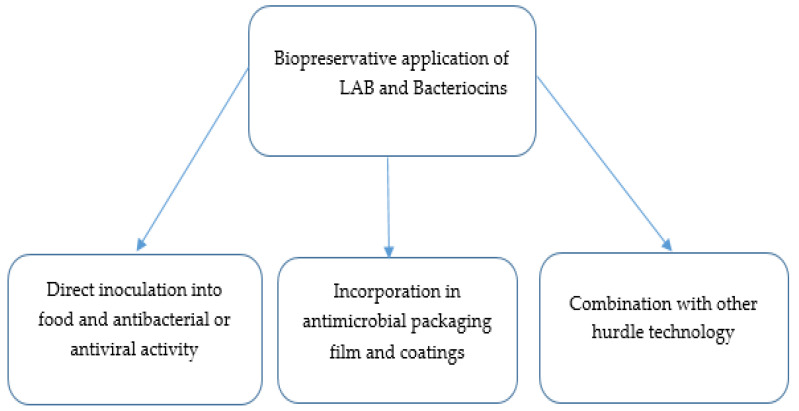
Lactic acid bacteria (LAB) are Gram-positive and catalase-negative microorganisms used to produce fermented foods. They appear morphologically as cocci or rods and they do not form spores. LAB used in food fermentation are from the and genera and are useful in controlling spoilage and pathogenic microbes, due to the bacteriocins and acids that they produce. Consequently, LAB and their bacteriocins have emerged as viable alternatives to chemical food preservatives, curtesy of their qualified presumption of safety (QPS) status. There is growing interest regarding updated literature on the applications of LAB and their products in food safety, inhibition of the proliferation of food spoilage microbes and foodborne pathogens, and the mitigation of viral infections associated with food, as well as in the development of creative food packaging materials. Therefore, this review explores empirical studies, documenting applications and the extent to which LAB isolates and their bacteriocins have been used in the food industry against food spoilage microorganisms and foodborne pathogens including viruses; as well as to highlight the prospects of their numerous novel applications as components of hurdle technology to provide safe and quality food products.
乳酸菌(LAB)是革兰氏阳性、过氧化氢酶阴性的微生物,用于生产发酵食品。它们在形态上呈球菌或杆菌,不形成孢子。用于食品发酵的 LAB 来自 和 属,由于它们产生的细菌素和酸,可用于控制腐败和致病微生物。因此,LAB 和它们的细菌素已成为化学食品防腐剂的可行替代品,这要归功于它们有资格被假定为安全(QPS)的地位。人们对有关 LAB 及其产品在食品安全中的应用、抑制食品腐败微生物和食源性病原体增殖以及减轻与食品相关的病毒感染的最新文献越来越感兴趣,以及在开发有创意的食品包装材料方面。因此,本综述探讨了实证研究,记录了 LAB 分离株及其细菌素在食品工业中对抗食品腐败微生物和食源性病原体(包括病毒)的应用程度;并强调了它们作为多种新型应用的障碍技术的组成部分,以提供安全和优质的食品产品的前景。